Full Article
about Tivissa
Historic town with a major Iberian settlement and medieval streets in a mountain setting.
Hide article Read full article
Morning Light on the Hillside
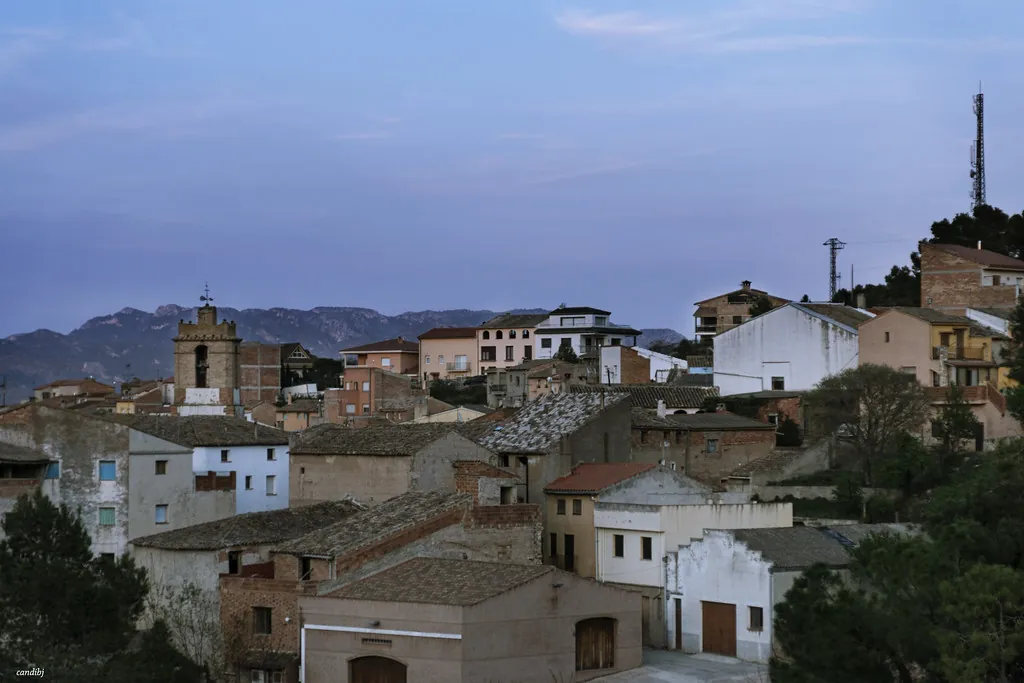
Early in the day, before the heat begins to press down, the narrow streets of Tivissa hold on to a dense quiet. A shutter creaks open, a car edges slowly up a steep lane, and the smell of firewood or coffee drifts out from behind thick walls. Tourism in Tivissa often begins like this, wandering without a plan through an old quarter that clings to the hillside. Lift your eyes and the view shifts quickly from stone façades to olive groves and the mountain ridges of the Ribera d’Ebre.
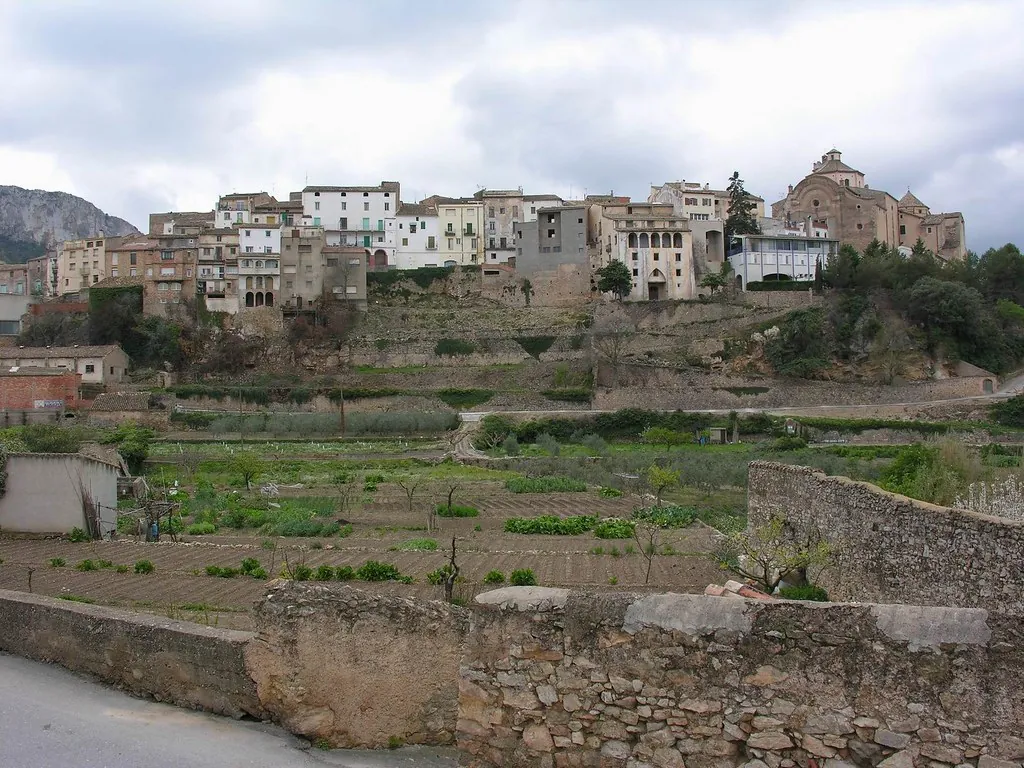
The village sits a few kilometres from the river Ebro and a little over half an hour from the Mediterranean. It feels like a calm boundary between inland Catalonia and the coast. Around it, almond and olive trees grow on uneven terraces that follow the slope of the land. On clear days, the higher streets offer a layered horizon of blue-tinged mountains closing in the distance.
In the nearby hills lies the Iberian archaeological site of the Castellet de Banyoles, occupied between the 6th and 1st centuries BC. Sections of defensive wall remain, along with cisterns cut into the rock and the outlines of several dwellings. At first glance, it may not seem striking. Stand still for a moment and the choice of location becomes obvious. The promontory commands the entire valley below.
Streets That Keep Their Own Rhythm
The old quarter of Tivissa is best explored without a map. Streets rise and twist without a clear pattern, some paved with stone worn smooth over time. The façades mix ochre tones, heavy wooden doors and small windows that let in little of the fierce summer light.
At the highest point stands the church of Sant Jaume. Its origins are Romanesque, though it has been heavily altered over the centuries. From here, the shape of the village makes sense. Houses press closely together as they descend the slope, giving way to a patchwork of fields whose colours shift with the seasons.
A short distance from the centre, the Castellet de Banyoles sits in open countryside. The route is not always clearly signposted, so it is worth checking the situation before setting out, as access can sometimes be restricted or unclear. From the top, the landscape spreads wide: cultivated terraces, patches of pine woodland and dirt tracks threading between gentle hills.
Another brief climb leads to the Calvario viewpoint. The ascent is not long, but the gradient makes itself felt. At the top, there is usually a breeze. The silence is broken only by birdsong or the faint sound of a tractor working somewhere in the valley.
Paths Through Pine and Scrub
The surroundings of Tivissa are crossed by several walking routes through Mediterranean woodland. Pines and low holm oaks grow among rosemary that releases a sharp scent as the sun warms it. Some paths follow old agricultural routes, passing abandoned terraces that hint at busier times.
Spring brings greener hillsides and easier conditions for walking. In summer, the heat builds from mid-morning. During the hottest months, setting out early and carrying water is essential, as long stretches offer little shade.
Among the natural features often mentioned locally is the Cova del Llop, a cave set in the mountainous landscape of the municipality. Not all access routes are prepared or clearly marked, so it is advisable to seek information before approaching, or to go with someone familiar with the terrain.
There are also rural tracks popular with mountain bikers. Some are gentle and cross agricultural land. Others climb towards the sierra with more demanding gradients.
A Village Marked by the Calendar
At the end of August, Tivissa changes pace for the Fiesta Mayor dedicated to Sant Jaume, the village’s patron saint. For several days, parades wind through the streets, and traditional music and dances fill the squares at night. The heat finally eases after sunset and people gather outdoors, staying out late as the village becomes louder and brighter than usual.
In January, Sant Antoni is celebrated. Bonfires are lit in different parts of the village, and it is common to see residents bringing animals for a blessing, a tradition linked to Saint Anthony Abbot, protector of animals. The scene combines smoke, cold air and quiet conversation around the fire.
Outside these dates, Tivissa keeps a steady, unhurried rhythm. In winter, cold air drifts down from the sierra and many streets are almost empty by late afternoon. In summer, open windows let out voices and the scent of cooking while orange light lingers on the façades well into the evening.
Between Interior and Coast
Part of the appeal of tourism in Tivissa lies in this balance between landscape and daily life. The Ebro flows nearby, though out of sight from most of the village, and the Mediterranean is close enough to shape the climate without overwhelming the rural character. The setting feels transitional: inland fields shaped by generations of farming, yet within reach of the sea.
The Iberian remains at the Castellet de Banyoles anchor the area in a much older past. The Romanesque origins of Sant Jaume add another layer. Around them, everyday life continues at a measured pace, shaped by the agricultural calendar and the shift of seasons across the hills.
There is little sense of spectacle. Tivissa does not present itself through grand monuments or dramatic landmarks. Instead, it reveals itself gradually: in the echo of footsteps on stone, in the breeze at the Calvario viewpoint, in the scent of rosemary along a dusty path.
For those willing to slow down, the village offers a way of travelling that follows its own rhythm. Walk uphill until the houses thin out. Pause where the terraces begin. Look across the Ribera d’Ebre as the light changes. In Tivissa, that is often enough.