Full Article
about Ripoll
Cradle of Catalonia with its Romanesque monastery; comarca capital with an industrial past
Hide article Read full article
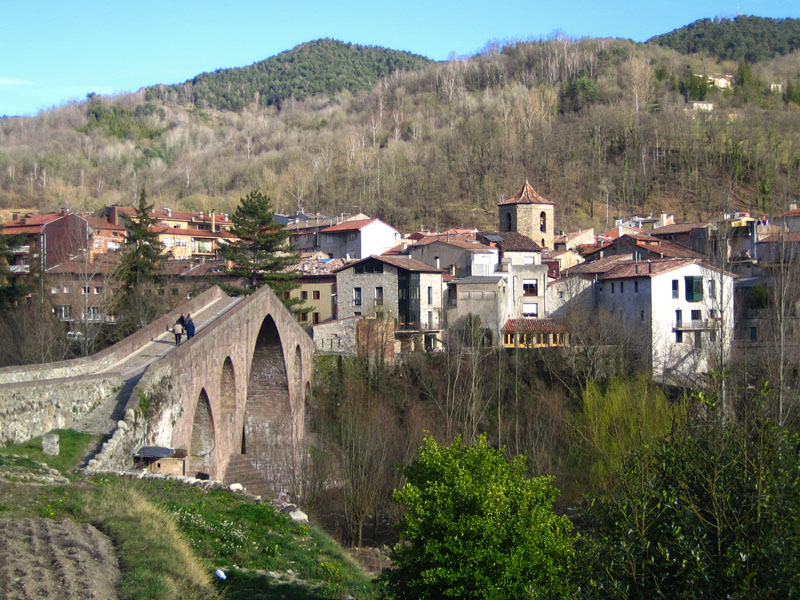
January cold bites at your ankles as you cross the white bridge over the River Ter on the way into the centre of Ripoll. Below, the water runs cloudy after several days of rain. The poplars stand bare and the sky hangs low with the dense grey typical of winters in the Ripollès, a comarca in the Catalan Pyrenees. Around nine in the morning, tourism in Ripoll is barely noticeable. The town moves slowly. A shutter rattles up, a door opens, and from inside the bars comes the smell of coffee and burning wood.
Ripoll does not rush to impress. Its streets wake gradually, as if in no particular hurry to leave the night behind. The sound of the river never quite disappears, a constant presence beneath everyday life.
Stone That Tells Stories
The main portal of Santa Maria demands that you look up. Stand too close and you see only fragments: a hand, a crown, an animal carved in relief. Step back a few paces and the whole composition begins to make sense. Biblical scenes unfold across the stone, in place since the 12th century and worn down by centuries of rain and frost. Faces have softened over time, almost as if they were moulded from clay rather than carved from rock.
Santa Maria de Ripoll is a Benedictine monastery and one of the most important Romanesque monuments in Catalonia. Its sculpted portal acts as a kind of open-air book in stone. Even without knowing the details of each scene, the weight of time is clear in every surface.
Inside, the cloister holds a particular calm. The air carries a faint scent of old incense and clean wood. Footsteps echo beneath the arches and take a moment to fade. Now and then there is the click of a camera or the low murmur of someone speaking quietly. In the rooms where the former scriptorium is explained, it takes some effort to imagine the activity that once filled this space in the Middle Ages, when monks copied manuscripts by hand with light filtering through narrow windows. The silence today makes that past easier to picture.
It is worth arriving early in the day or later in the afternoon. By mid-morning, groups often coincide and the cloister loses part of its stillness.
A Valley That Forgets the Time
When the mist lifts, sunlight begins to touch the slate roofs. Smoke rises straight from chimneys if the air is still. In Plaça Gran, life passes at an unhurried pace. Under the arcades there is usually someone chatting or playing cards. The scene does not feel staged. It has unfolded like this for years.
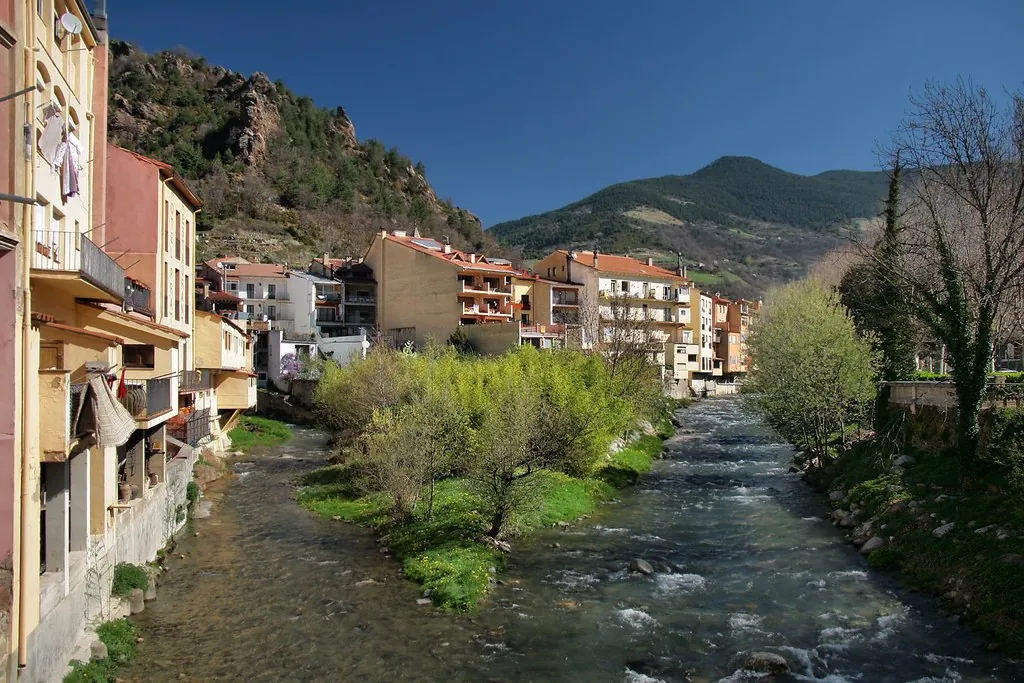
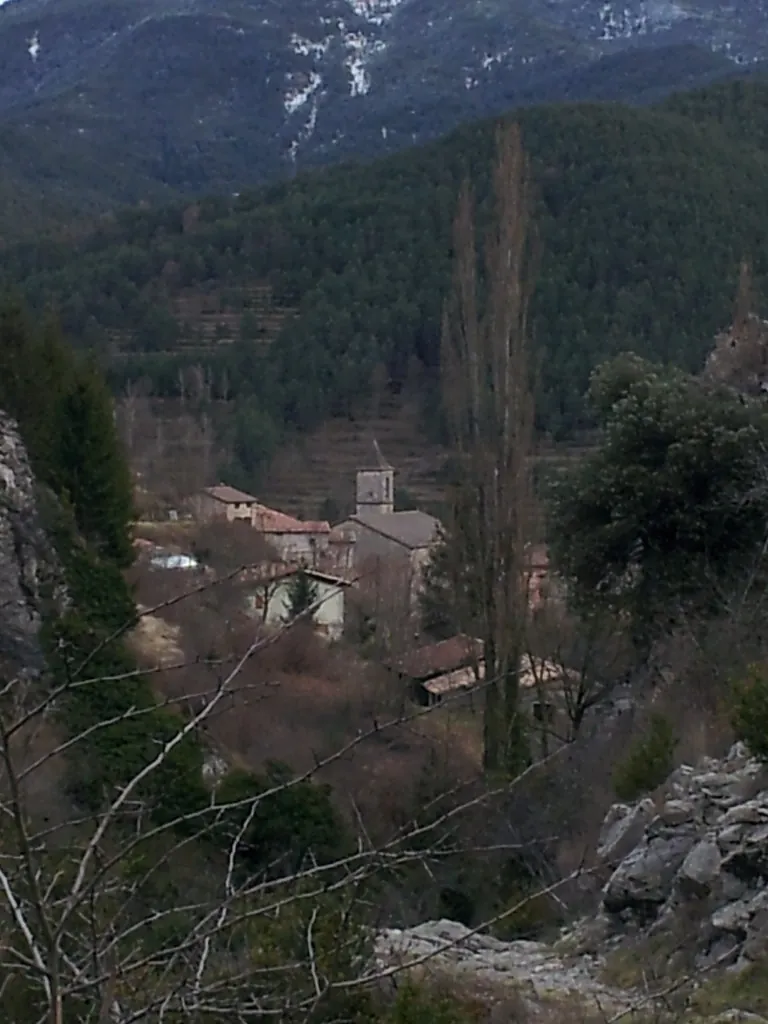
Ripoll sits at the meeting point of valleys, and the surrounding landscape shapes its rhythm. If the urge for a short walk strikes, the path that follows the course of the Ter begins almost without notice at the edge of the old town. Within minutes the noise of traffic falls away. The trail runs between trees and the sound of water becomes steady and close.
In autumn, the ground is covered with damp leaves and boots make the soft, muffled sound of a wet forest floor. From time to time a shepherd appears, bringing a flock down from the hillsides. A brief nod, and each continues at their own pace. The encounter feels natural, part of the everyday pattern of the valley.
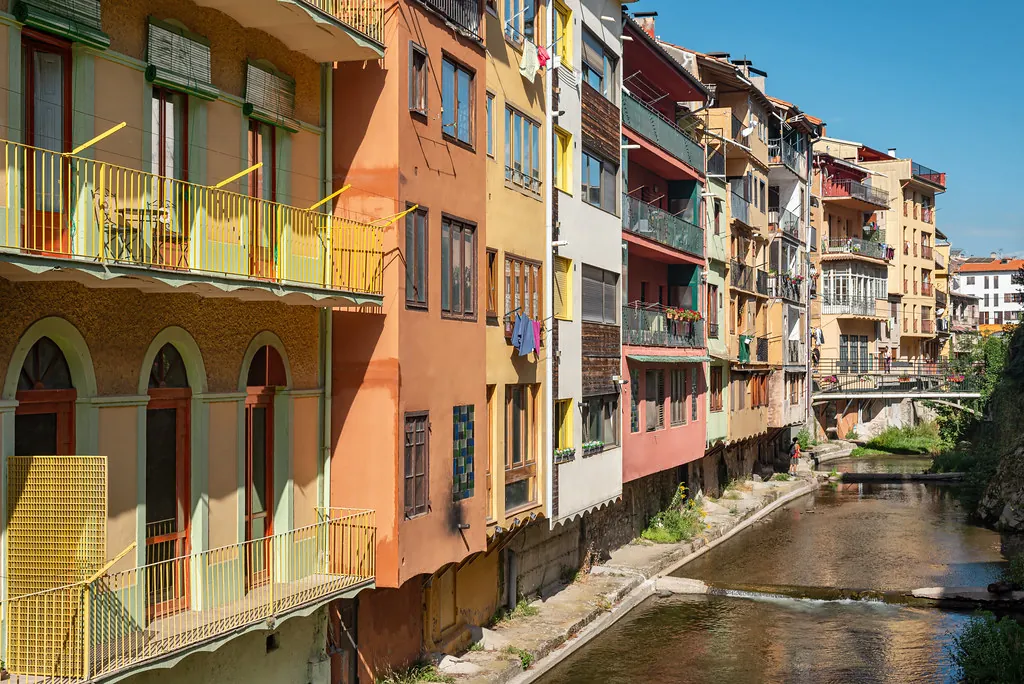
Even near the centre, Ripoll retains this sense of space. The river acts as both boundary and companion. It shapes the land and provides a background murmur that is hard to ignore once noticed.
Fire and Iron
Ripoll’s history is also written in iron. The old Farga Palau preserves the atmosphere of the hydraulic forges that operated for centuries in the valley. These forges used the power of water to move heavy hammers and machinery, turning raw material into tools and weapons that travelled far beyond the comarca.
Inside, there remains the dark scent of charcoal and damp stone. When the furnace is lit during demonstrations, the heat is felt immediately on the face. Red-hot metal briefly floods the space with an orange glow, and the blow of the hammer echoes against the walls.
The explanations tend to be straightforward, without elaborate staging. Watching water drive the mechanism and seeing iron change colour in the fire is enough to understand how work was carried out here. The process speaks for itself. The combination of river, flame and metal connects Ripoll’s industrial past to the natural setting that made it possible.
Before You Go
The monastery of Santa Maria is usually open every day, although opening times change depending on the season. In winter the afternoons are short, so it makes sense not to leave the visit too late. Admission is generally inexpensive, and there are sometimes periods of free access.
Long weekends and certain public holiday bridges can make the centre quite busy. For those looking to walk quietly through the cloister or the nearby streets, a weekday visit or an early start offers a calmer experience.
In late spring, fairs often bring extra movement to the squares. Food and craft stalls appear, and for a few days the town shifts its rhythm. The change is noticeable, with more voices in Plaça Gran and a livelier atmosphere that contrasts with the slower pace of winter mornings.
When night falls, the valley air turns particularly clear. From a dimly lit street, looking up reveals stars that seem stronger than along the coast. Ripoll settles into silence fairly early, the river continuing in the background as a steady murmur.
This is a town where the elements remain close at hand: stone shaped by centuries, water carving its course, iron transformed by fire. Ripoll does not rely on spectacle. It invites a slower look, whether in the carved figures of Santa Maria, along the banks of the Ter or inside the walls of the Farga Palau. The reward lies in paying attention to what has always been there.