Full Article
about Camprodon
Mountain tourist town with an iconic bridge; known for its biscuits and cured meats.
Hide article Read full article
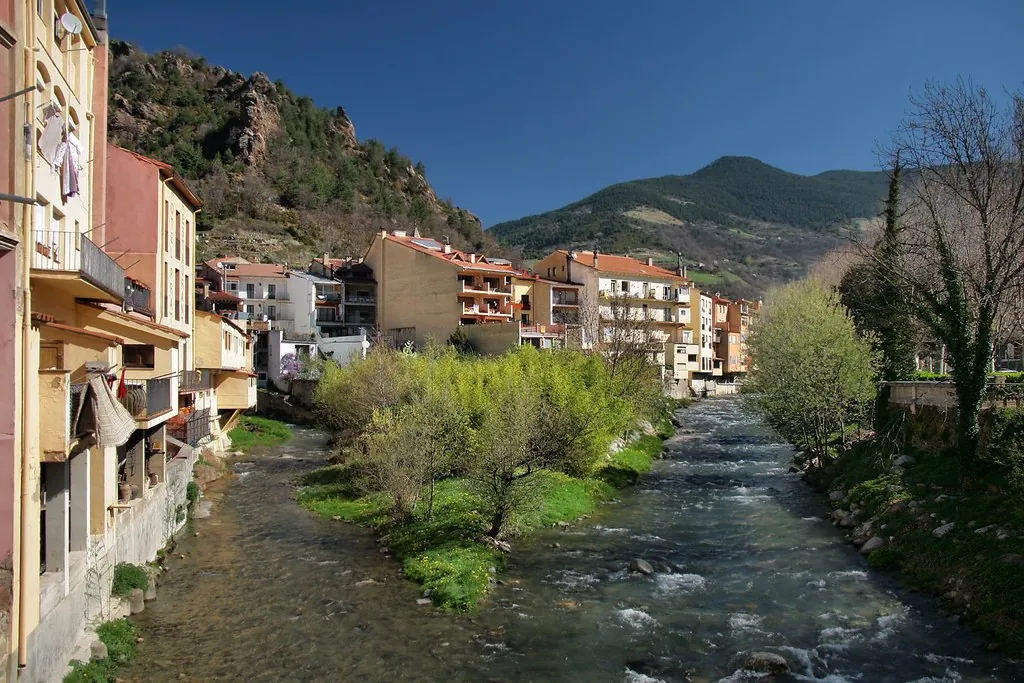
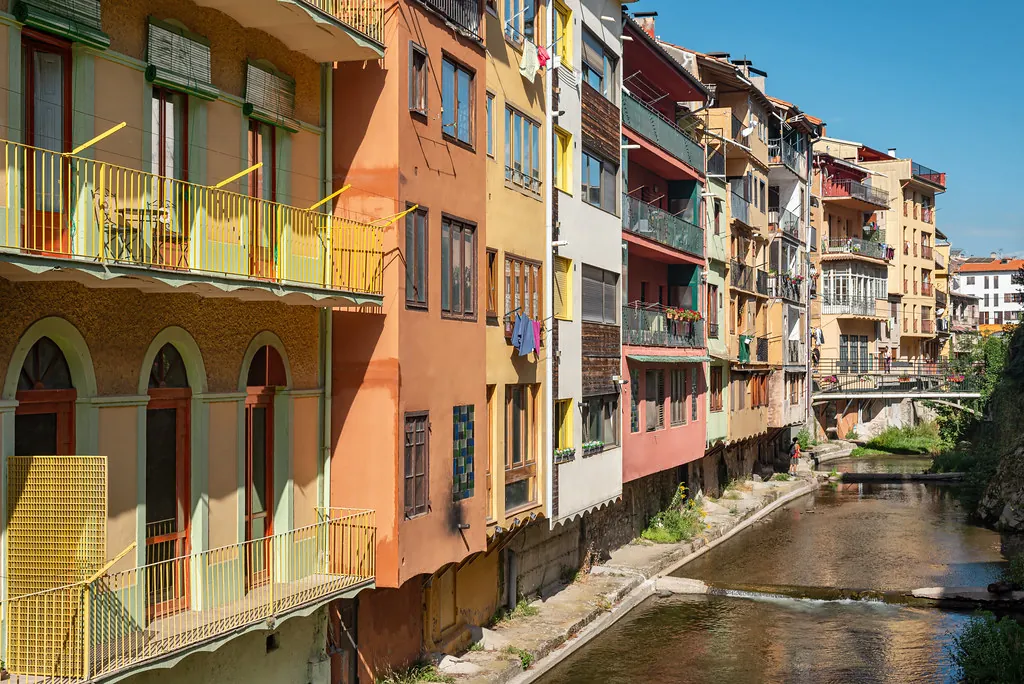
At seven in the morning, Camprodon smells of freshly baked bread mixed with the cool air rising from the River Ter. Metal shutters rattle upwards along the stone houses, the sound bouncing off narrow streets that still belong to the night. From almost any window in the centre, the valley slopes appear half hidden by mist, thick and low, caught against the hillsides like damp cotton. For a while the town moves slowly, before the first cars arrive and hikers set off towards the mountains.
Camprodon sits in the Ripollès region of Catalonia, in a Pyrenean valley shaped by water and old routes through the hills. Its pace shifts with the light and the season. Early hours feel private and quiet. Later on, especially in summer, the streets fill with people who have come up for the day or the weekend.
The Bridge That Splits Time
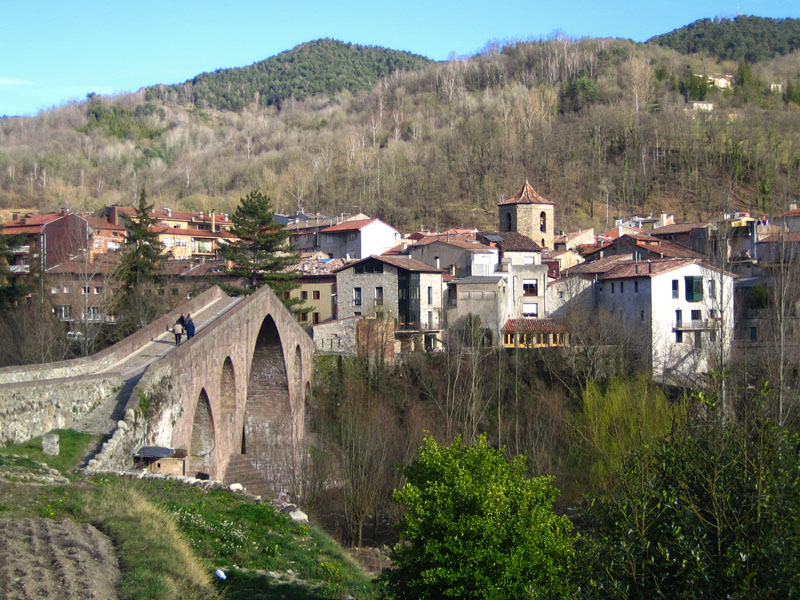
The Pont Nou, of medieval origin, draws a clear line through Camprodon. On one side lies the older core, where streets climb towards the church and houses press tightly against the slope. On the other begins the Passeig Maristany, a broad avenue where many late 19th century summer residences were built, each set back behind a garden and iron railings.
The change is noticeable as soon as the bridge is crossed. Footsteps echo, hollow against stone worn smooth by centuries of crossings. Rain alters the surface and makes the slabs slippery, so care is needed underfoot.
From the Pont Nou there is also a view of the monastery of Sant Pere, another of the town’s historic buildings. Its square bell tower rises above a small meadow beside the River Ritort, which joins the Ter here. In the morning, when sunlight enters the valley at a low angle, the shadows of the columns stretch across the grass. The monastery usually opens in the middle of the morning. Anyone arriving earlier will find the place almost silent, apart from the sound of water moving nearby.
The bridge changes character throughout the day. Towards sunset the stone turns a warmer shade and the river seems louder beneath the arches, once the bustle has eased and the promenade slows. After dark, the surrounding hills disappear into shadow and only scattered lights from other villages in the valley show between the pines.
Albéniz and the Music That Remains
Camprodon is the birthplace of Isaac Albéniz, and a small space dedicated to the composer occupies one of the houses in the centre. For years the building was a family shop, and it still keeps the layout of a narrow, multi-storey home. On the top floor stands an old piano that recalls the musician’s early years.
Summer often brings a cycle of concerts linked to Albéniz. On certain evenings, when the town is busy with visitors who have come up for the weekend, music drifts into the street if windows are left open. It mingles with the constant sound of the river and with conversations from terrace tables.
The atmosphere shifts sharply when autumn arrives. Temperatures drop quickly in the valley. Fairs organised in the wider comarca begin to feature stalls focused on mushrooms and other mountain produce. The scent in the streets changes as well. Wood smoke becomes noticeable, and hearty dishes return to menus as soon as the air cools.
Mushroom season draws many people into the surrounding hills. Baskets appear in car boots and by front doors. Local residents tend to keep quiet about the best spots. At most, directions come in vague hints such as “above the pass” or “near the hermitage”, nothing more precise than that.
Paths That Leave the Town
A well-known walking route starts behind the cemetery on the edge of Camprodon. The path winds through woodland and links several springs scattered among beech and oak trees. Taken at an unhurried pace, the walk usually lasts a couple of hours. Even in summer, the water that flows from these springs is very cold.
Sections of the GR‑11 also pass through Camprodon. This long-distance footpath crosses the Pyrenees from one end to the other. Heading west, it leads towards the valley of Beget. To the east, the trail climbs gradually in the direction of Setcases and the higher mountains of the Ripollès. These are not short strolls. Weather conditions need checking in advance, and daylight hours matter, particularly outside the summer months.
Certain stretches open suddenly onto wider views. The valley spreads out and the town remains below, small in scale, with the Pont Nou tracing a curved line over the river. From that distance the division between old streets and the Passeig Maristany is easy to read.
Before You Go
August brings a noticeable increase in movement. Many cars arrive from Barcelona and other nearby areas, and parking in the centre can require patience from the middle of the morning onwards. Those looking for a quieter experience benefit from setting out early. Before eight o’clock the town is still half asleep.
At that hour, bakers are lifting their shutters and trays of cocas and biscuits begin to appear in central pastry shops. A coca is a traditional Catalan baked good that can be sweet or savoury, and here the sweet versions tend to dominate the morning display. The air carries the smell of warm butter and freshly made coffee.
Shops tend to close relatively early in the evening. As night falls, lamps along the Passeig light up one by one and shadows stretch across the cobbles. A few conversations continue in bars. When temperatures drop, the scent of chimneys returns. From the bridge, looking towards the dark slopes, small clusters of light mark other villages in the valley.
Camprodon does not rely on a single monument or viewpoint. The experience rests on how stone, water and mountain air interact over the course of a day. Early quiet, midday activity and evening calm follow one another in a rhythm shaped by the rivers Ter and Ritort and by the surrounding Pyrenean landscape.