
Full Article
about Gombrèn
Mountain village tied to the legend of Count Arnau; wild landscape and ruined castles
Ocultar artículo Leer artículo completo
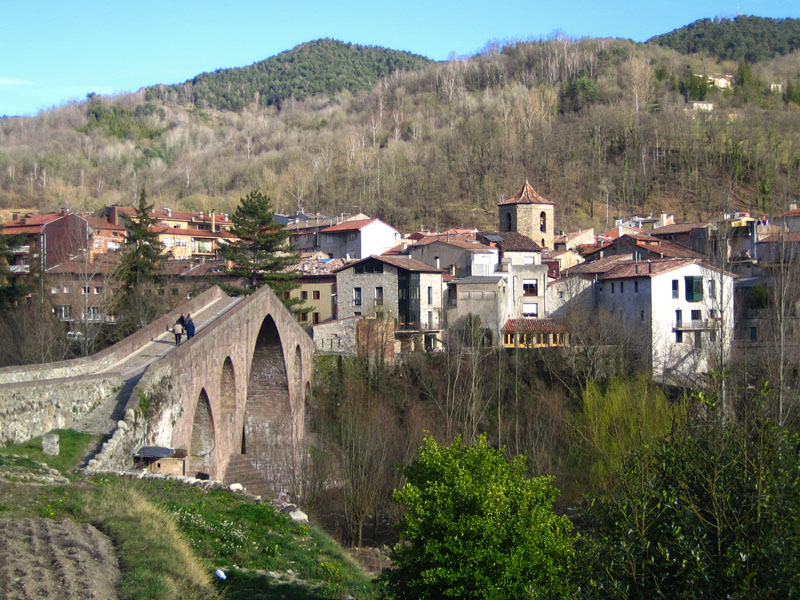
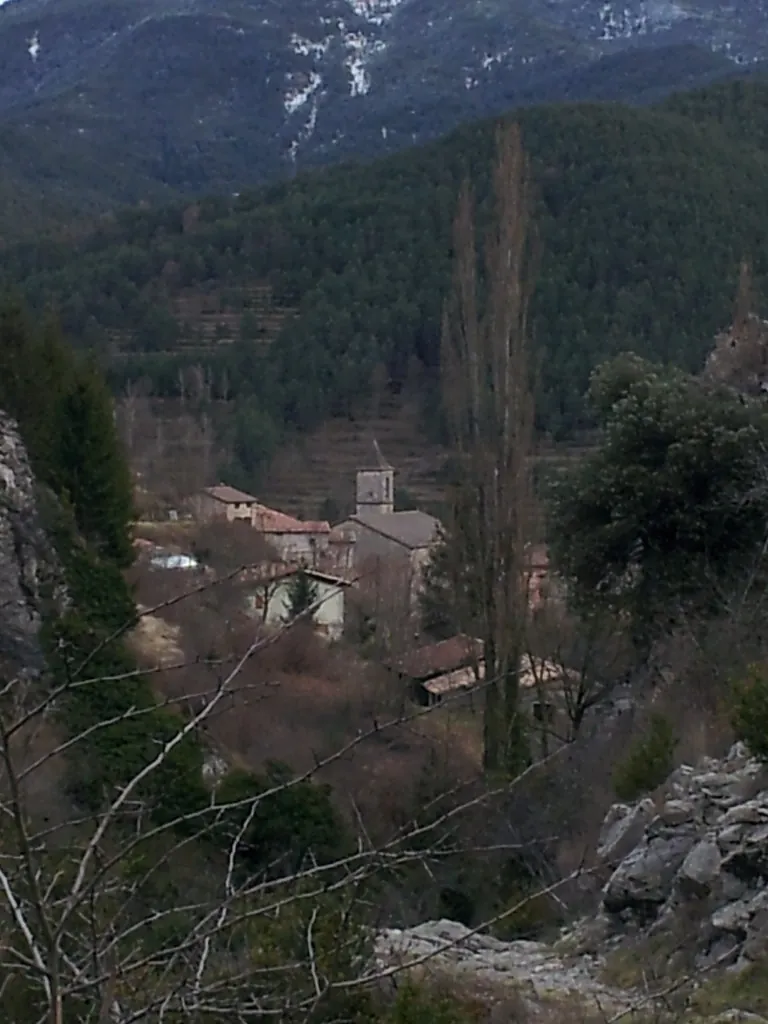
The church bell of Sant Pere strikes noon, and only three things answer back: a tractor grinding up the hill, a dog who's learnt the echo, and the mountains. Gombren sits at 900 metres, but the real conversation here is with peaks twice that height. The village doesn't so much have a skyline as a wall of limestone, beech and pine that starts where the last roof finishes.
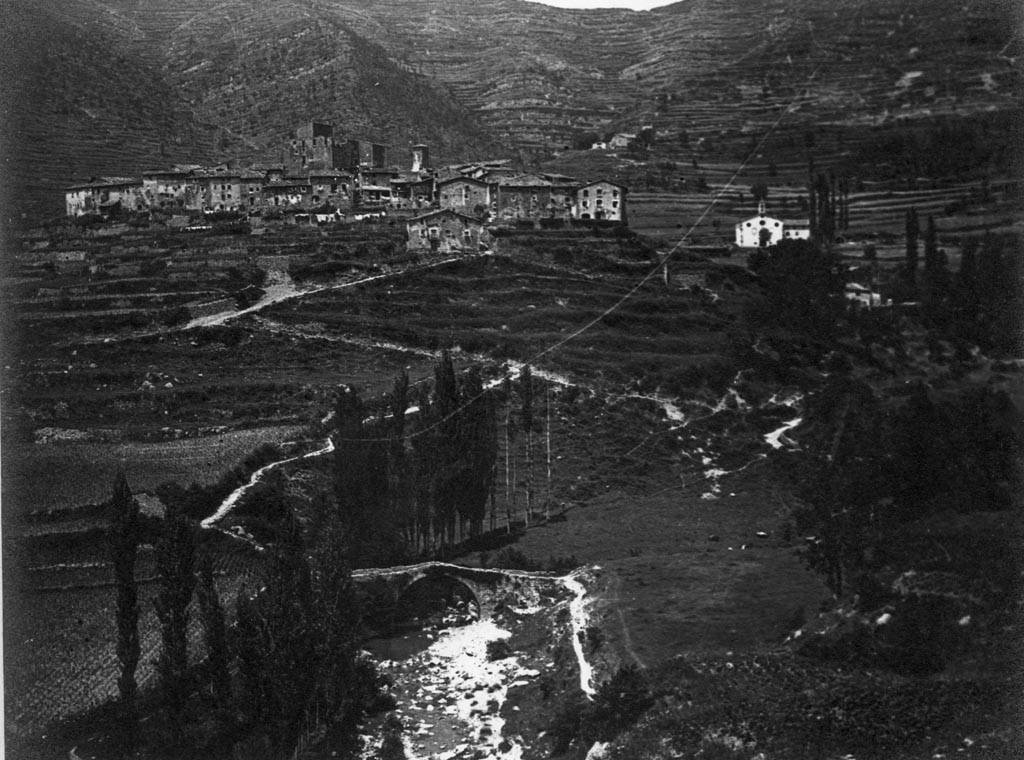
This is the Ripollès, the Catalan Pyrenees' lower rampart, and Gombren is less a single settlement than a scatter of stone houses trying to keep warm. Officially 200 souls live in the parish; unofficially the cattle outvote them. Motorways, souvenir shops and anything resembling a chain store stop an hour south in Vic. What continues is a road that narrows, climbs and finally gives up at the Coll de la Creu, 1,400 m above sea level. In winter that road can ice over before breakfast; in August it doubles as a goat track and a delivery route for hay bales.
Stone, Silence and the Smell of Manure
British visitors arriving from Barcelona airport (two hours on the C-17 and C-26, car essential) usually expect a plaza, a bar, perhaps a photogenic old man in a beret. Gombren distributes its drama differently. The council office, chemist and only grocery occupy three different hamlets; the nearest cash machine is 12 km away in Campdevànol. Orientation is done by church towers, not street signs. Sant Pere itself is Romanesque in foundation, 18th-century in rebuild and 21st-century in the slow drip of rainwater that stains the side aisle every March. Step inside and the temperature drops five degrees; the stone floor is worn into shallow bowls by four centuries of farmers checking the weather before mass.
Around the building cluster a dozen houses, a handful still lived in, others sealed against the wind with metal shutters. Balconies of dark timber project over lanes barely wider than a Land Rover. Tractors park where they stop; licence plates suggest some were old when Spain joined the EU. The smell is of wet earth, diesel and the aforementioned livestock. It is not unpleasant; it is simply honest.
Walk five minutes in any direction and the settlement dissolves into masías—stone farmhouses built like small castles against winter. Many keep traditional arched doorways just high enough for a loaded mule; a few have been restored by weekenders from Girona who’ve discovered that under Catalan law you can still graze sheep on the common. Their London-plated SUVs look faintly apologetic beside rusting hay cutters.
Walking into Empty Map
Gombren’s real monuments are vertical. The Serra Cavallera rises immediately north, topping out at the Taga (2,040 m). The standard ascent starts from the chapel of Sant Aniol, 3 km above the village, and climbs 1,100 m in barely six. Path markings are improving—red-and-white stripes painted by the hiking club of Ripoll—but a downloaded GPX file still beats optimism. On a clear June morning the summit gives a straight-line view to the Costa Brava, 70 km away; on an April afternoon you can stand in sunshine while a blizzard sweeps across the next ridge. The descent often takes longer than the climb: knees age faster than ambition.
Shorter circuits thread the beech woods that cloak the lower slopes. One favourite follows the torrent de Gombren to the Roca Foradada, a limestone fin pierced by a wind-carved hole the size of a wagon wheel. Instagram has discovered it, so expect a queue of Catalan schoolchildren at half-term; arrive before ten or after four and you’ll share the view only with red kites. The round trip from the church is 7 km and 300 m of ascent—moderate by Pyrenean standards, but enough to remind you that 900 m of altitude still thins the lungs.
Mountain-bike tracks exist, though they’re really stone delivery routes used by local builders. Tyres narrower than 2.2 inches will pinch-flat; full suspension is overkill until the first cattle grid. The village’s single bike pump stands outside the ayuntamiento and hasn’t worked since 2019.
When the Snow Line Moves In
Winter transforms the arithmetic. Daytime highs hover just above freezing; night frosts are guaranteed from November to March. The road to neighbouring Campdevànol is gritted, but side tracks become toboggan runs. Chains or winter tyres are compulsory after the first snowfall—not advice, but a €200 on-the-spot fine if the Mossos d’Esquadra find you lacking. Yet the season brings advantages: the nearest ski-field, Vall de Núria, is 35 minutes by car plus a rack railway, and weekday hotel prices in the valley halve. Some British families base themselves in Gombren for a quiet, semi-affordable snow week, commuting to the pistes while returning to stone hearths and zero disco beat.
Accommodation options are thin. Mas Merolla, a converted 17th-century farmhouse two kilometres below the church, offers four apartments around a heated pool that steams like a kettle when the air is below zero. Repeat visitors from Kent and Cheshire praise the firewood stacks, the absence of light pollution and the owners’ willingness to accept supermarket deliveries on your behalf. Expect to pay €140 a night for a two-bedroom unit in shoulder season, breakfast not included; bring slippers—the stone floors are authentic and frigid.
Food that Apologises to No One
There is no restaurant in Gombren itself. The nearest table is at Can Ventura in nearby Ogassa, 8 km down a switch-back road. Menu del dia runs to €16 mid-week and features river trout when the Freser is high, wild mushrooms in October, and year-round stews of veal and mountain beans thick enough to grout tiles. Vegetarians get escalivada (smoked aubergine and peppers) and little sympathy; vegans should pack lentils. Local wine comes from the Empordà, two hours east, and tastes better after 12 km of uphill walking.
If you’re self-catering, the grocery in el Pujol opens 9–1, 4–7, six days a week (closed Tuesday). Stock is basic: tinned tuna, UHT milk, local sausage labelled simply “embotits”. Fresh bread arrives at 10:30; if the delivery van is late, the queue waits without complaint. The nearest supermarket is a Spar in Ripoll, 20 minutes by car—plan accordingly if snow is forecast.
Fiestas and other Population Spikes
The Festa Major at the end of August triples the head-count. Sardana dancers occupy the lane outside Sant Pere, a mobile bar serves Estrella from steel drums, and teenagers who’ve spent the year in Barcelona suddenly remember their grandparents’ addresses. A single British family turning up on the Saturday will be welcomed, plied with cava and asked politely whether Brexit really happened. Sunday lunchtime brings a communal paella cooked in a pan two metres wide; donations are accepted, elbows are essential.
Outside fiesta week, evenings revolve around the porch light and the occasional guitar. Mobile coverage is 4G on Vodafone, patchy on EE; most cottages have fibre courtesy of a rural EU grant. Streaming is fine, but the mountains still block the BBC’s satellite footprint—download before you travel if you need your fix of Radio 4.
Leaving without the Hard Sell
Gombren will not suit everyone. Access demands a car, a head for heights and a relaxed attitude to closing times. Rain can last three days straight; the village offers no cinema, boutique or spa. What it does provide is an unfiltered slice of Pyrenean life where landscape, not lifestyle, sets the agenda. Turn up with decent boots, a paper map and no expectation of being entertained, and the place quietly hands over its surplus: silence, space and the certainty that the mountains will still be talking long after the last flight home has landed.