Full Article
about Les Llosses
Large, sparsely populated municipality; unspoiled nature and winding roads perfect for bikers.
Ocultar artículo Leer artículo completo
The road signs end before the tarmac does. Beyond the last stone farmhouse, the track becomes a stony ribbon climbing through holm-oak scrub towards the Cadí ridge. This is the edge of Les Llosses, a parish-sized municipality that behaves more like a scatter of hamlets than a recognisable village. Twenty-odd masías, a twelfth-century church, two places to eat and 203 residents: that is the sum total, spread across 94 km² of Catalan pre-Pyrenees.
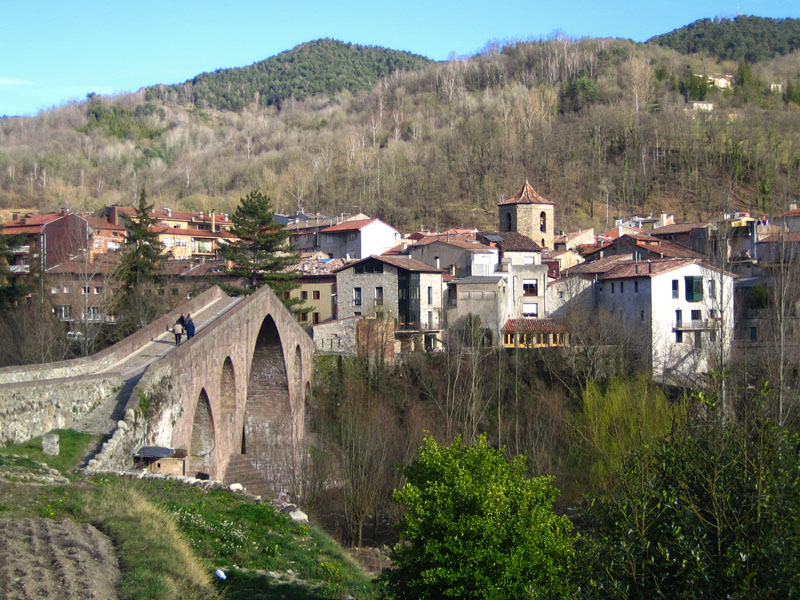
Most visitors race past on the C-17, heading for the ski resorts of La Molina or the postcard town of Besalú. Turn off at Ripoll, however, and the valley narrows fast. After Ribes de Freser the tarmac twists through beech forest, gaining 500 m in twenty minutes. Phone coverage flickers out; the thermometer drops a degree with every bend. Then the trees part and you see Sant Vicenç’s single-slot belfry standing guard over a handful of stone roofs. You have arrived, though “arrived” is relative: your accommodation may still be another 10-minute drive up a dirt spur.
What passes for a centre
There is no plaza mayor, no row of souvenir shops, no Saturday market. The administrative heart is a two-room ajuntament open three mornings a week. Next door, Dachs Restaurant doubles as the social hub. On weekday evenings locals drift in for a cafè amb llet and stay to discuss sheep prices in Catalan laced with the occasional French loan-word – proximity to the border keeps the accent fluid. English is rarely heard; phrase-book Spanish will get you further than confident Castilian, but Catalan greetings (“Bon dia”) earn warmer nods.
Dachs is also the only reliable place to eat within a 20-minute radius. Grilled mountain lamb arrives simply seasoned with rosemary and salt; the river trout is served skin-on with toasted almonds. Prices hover around €15–18 for a main, cheaper than coastal Catalonia but remember to bring cash – the card machine fails when the generator hiccups. Across the road the tiny grocery opens 9–1, stocks UHT milk, tinned mussels and local sheep cheese that tastes of thyme and rainwater. Bread is delivered from Ripoll at 10 a.m.; by midday it is usually gone.
Maps and silence
The village’s greatest monument is its absence of monuments. Instead, 120 km of waymarked footpaths radiate like capillaries through oak, Scots pine and abandoned meadow. The PR-C 200 loops north for 11 km to the ruins of the Castell de Llosses, a fortress once loyal to the counts of Besalú. You will meet more griffon vultures than humans; the only soundtrack is the wind scraping over slate roofs and, in May, cowbells drifting up from the valley floor.
Mountain-bikers share the same web of farm tracks. Gradients are honest: expect 300 m climbs that reward you with balconies over the Pedraforca massif, the limestone face glowing bone-white against storm clouds. There is no bike shop, no repair stand, no uplift. Bring spares and a chain tool; the nearest mechanic is 25 km away in Ripoll.
Winter sharpens everything. At 895 m snow is common from December to March, yet the road is usually kept open as far as the church. Strap on snowshoes and you can follow the old drove road towards the Coll de Pendís; frozen waterfalls glint on south-facing cliffs and your footprints may be the first of the week. Check the MeteoCat forecast obsessively: weather rolls in from the Cerdanya basin without warning and the temperature can drop ten degrees in an hour. If the wind swings north-east, the pass closes and you are staying the night whether you planned to or not.
Stone, slate, seasons
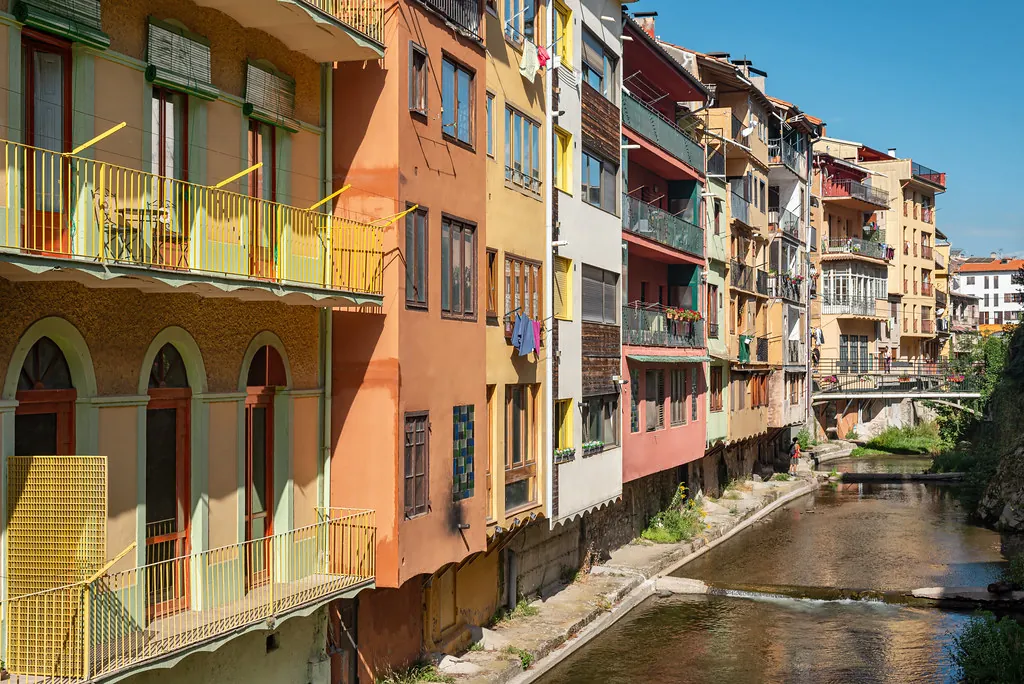
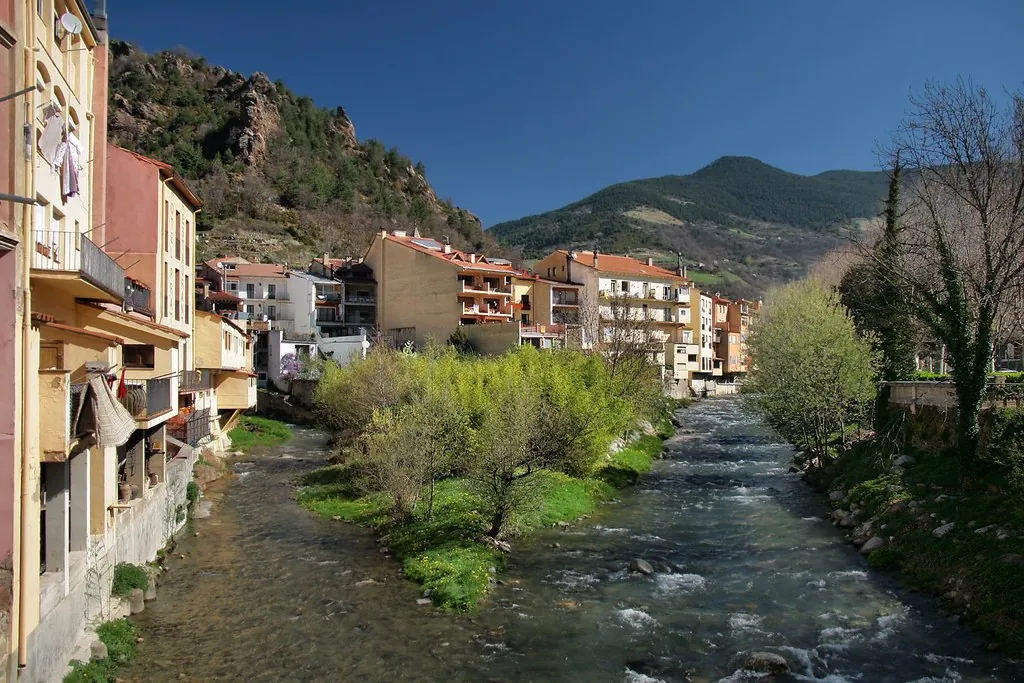
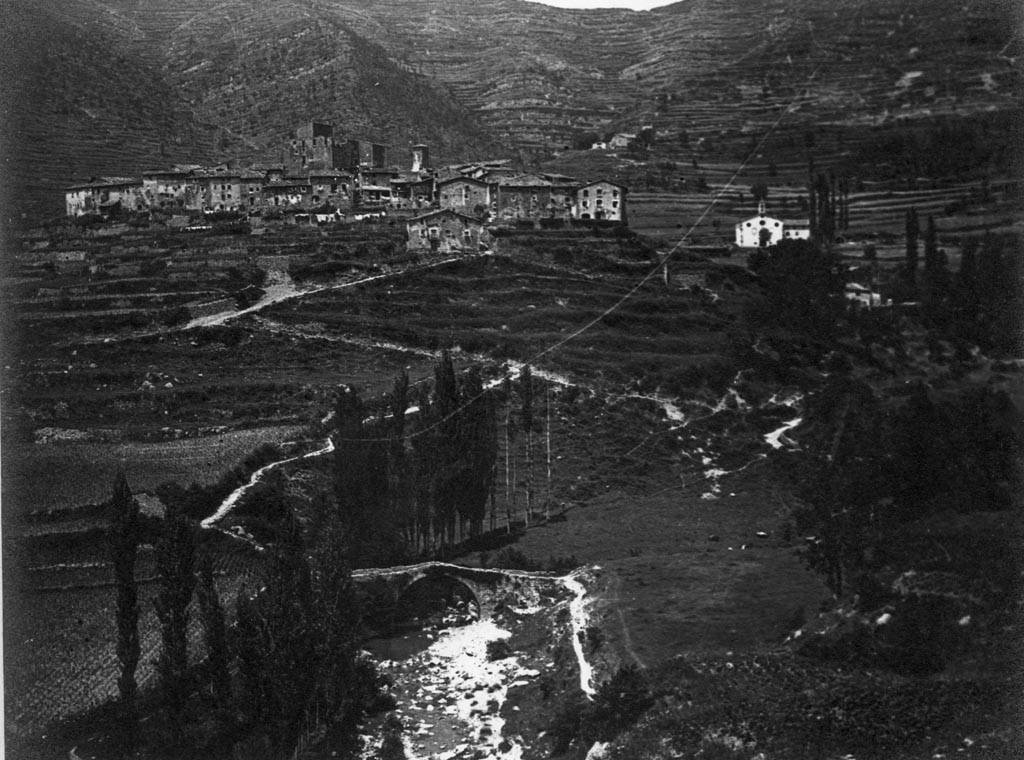
Architecture here is geography turned upright. Barns are built into hillsides to shelter animals from the tramontana; roofs pitch at 45 degrees so snow slides off before it collapses the beams. Many houses still carry the date stone: 1634, 1789, 1832. Some have been restored by weekenders from Barcelona who discovered they could buy a four-bedroom masía for the price of a flat in Gràcia. Others slump gently back into rubble, their wooden balconies warped like old gramophones. Planning rules forbid PVC windows and bright paint; the palette is restricted to slate grey, oxidised iron and the honey colour of local sandstone. The result is cohesive without feeling museum-like – washing lines and satellite dishes remind you that people live here, not curate.
Spring arrives late. Swallows return in the second week of April, the same week that almond blossom appears 40 minutes down the valley. By May the meadows are knee-high with yellow cowslips; farmers cut the first hay before the grass flowers, filling the air with a scent halfway between tea and fresh rainwater. Autumn is briefer but louder: beech leaves ignite into copper, wild boar root up the verges and mushroom hunters park their 4x4s at crazy angles before disappearing into the fog with wicker baskets and truffle knives.
Getting here, getting stuck, getting out
Girona airport is 90 minutes away on fast dual-carriageway until Ripoll, then 30 minutes of switchbacks. Barcelona adds another 45 minutes but flights from the UK are cheaper and run year-round. Either way, hire a car: there is no bus service into the municipality and the nearest railway halt at Ribes de Freser is 18 km down a road that feels longer. Petrol stations close at 8 p.m.; on Sundays the pumps in Ripoll are the only ones working for 40 km.
Accommodation divides into two tribes. In the village core, Subirana Rural offers four rooms above the old schoolhouse; breakfast is yoghurt, local honey and the thick country bread called pa de pagès. If you prefer a pool, Mas Moreta sits ten minutes up a graded track – a seventeenth-century farmhouse converted by a Anglo-Dutch couple who left the City in 2008. Be sure you are booking the house itself, not one of the satellite barns mis-labelled “Les Llosses” on booking sites; Google Maps can leave you stranded on a forestry road that even the postman avoids.
When the valley wins
Even the smitten admit the place can tip from tranquil to stultifying. Rain for three days and you will know every crack in the church plaster. Mobile data stutters on 3G good enough for email, hopeless for Netflix. A snapped clutch cable on a Friday evening means a weekend in second gear or an €80 tow to the garage in Ripoll. The nearest A&E is 45 minutes away; night-time emergencies travel by helicopter from Berga, weather permitting.
Yet that is part of the contract. Les Llosses offers no entertainment beyond what you carry in your boots or panniers. If you need artisan gin bars, give the C-17 another 40 kilometres. If you want to remember how Europe sounded before the internal-combustion engine, park below Sant Vicenç at dusk and listen. The valley exhales; a dog barks once; somewhere a gate chain clinks. Then the wind picks up, the slate roofs creak like old ships, and the mountains settle around you, heavy and absolute.