Full Article
about Molló
Mountain village in the Camprodon Valley; noted for its Romanesque church and Molló Parc.
Hide article Read full article
A Village Scattered Across the Landscape
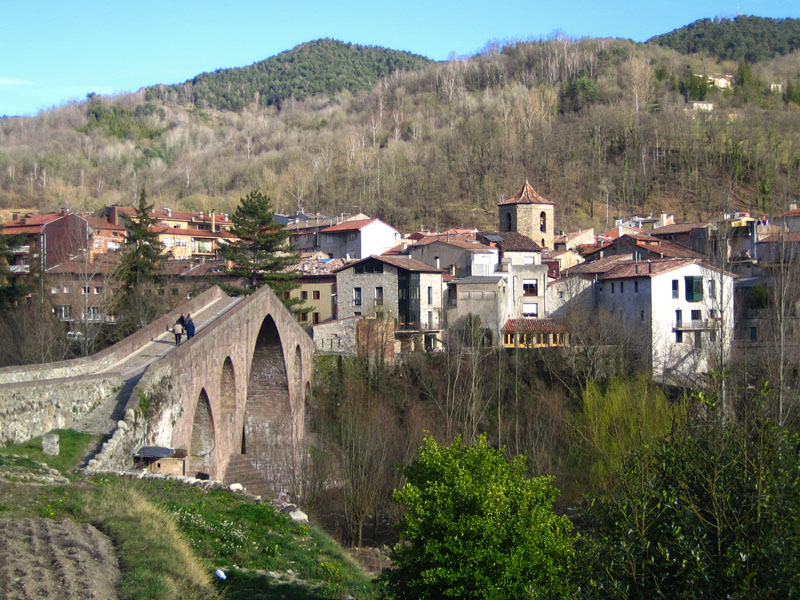
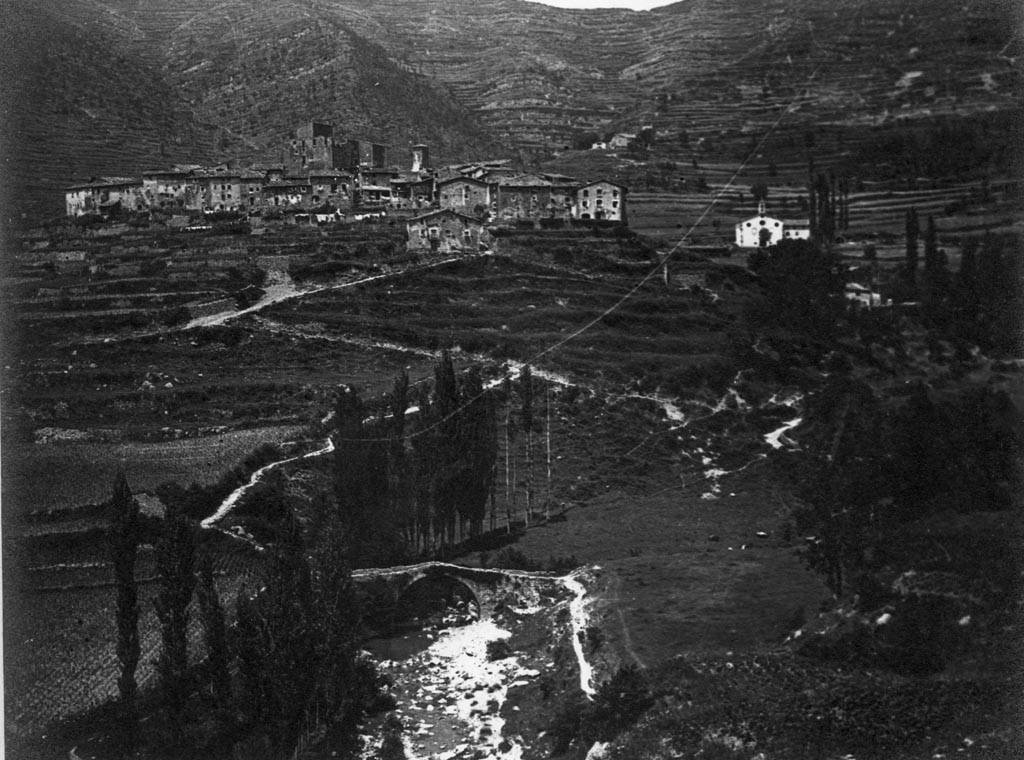
Early in the morning, when the mist still lingers low in the valley, Molló emerges between damp meadows and dark slate roofs. The air carries the scent of freshly cut grass and cold wood. At around 1,180 metres above sea level, in the upper reaches of the Camprodon Valley, this is a place that spreads itself out without hurry, across stone houses, isolated masías and tracks that climb towards the forest.
Tourism in Molló does not revolve around a compact old quarter or a square lined with café terraces. The municipality is dispersed. Farmhouses stand apart from one another across pastureland, linked by narrow roads and paths that disappear into pine and beech woods. After walking for a while, it can feel as though the village is not a single point on the map but the entire landscape around it.
The French border lies just a few kilometres away. The road that climbs from Camprodon winds between woodland and open fields until it reaches the mountain pass, a crossing that has shaped life here for centuries. There has long been steady exchange with the other side of the Pyrenees: trade, shared grazing land and families moving from one valley to another with relative ease.
Life today still follows a mountain rhythm. Tractors pass along the lanes, livestock graze behind fences and, in winter, smoke rises from chimneys. This is not a destination designed for ticking off sights in quick succession, and that is part of its character.
Sant Cebrià and the Small Centre
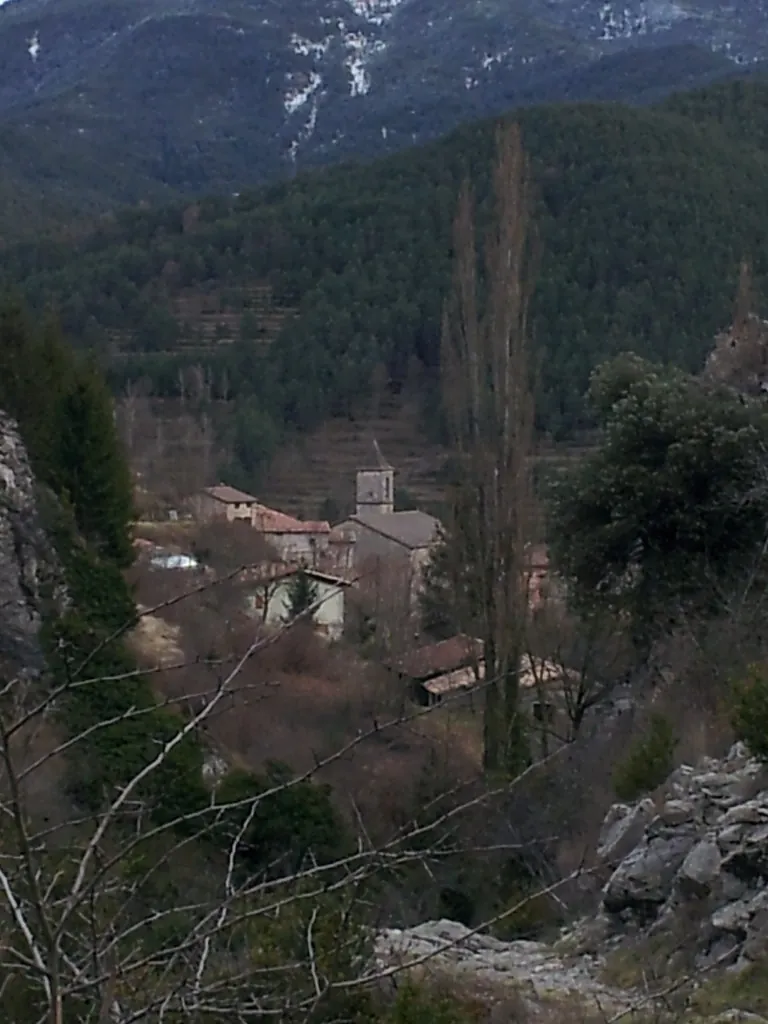
In the main cluster of buildings stands the church of Sant Cebrià, a Romanesque structure that has evolved over time. Its walls are thick and built from irregular stone, and the square bell tower is visible from some distance as you approach along the road.
Inside, light filters in sparingly through small windows. Mountain churches often share this restrained atmosphere: bare stone, limited decoration and a quiet that persists even when visitors step through the door.
A handful of houses gather around the church, forming a modest centre. Yet it takes only a few minutes on foot to find yourself back among open meadows and rural tracks, with the settlement thinning out once more.
Forests, Beech Woods and Working Masías
The natural surroundings define Molló more than anything else. On the nearby slopes, beech woods turn almost golden in autumn. Under the trees, the ground is covered in damp leaves that crunch underfoot. On overcast days the forest feels darker and hushed; when the sun comes out, light slips between the trunks in narrow bands.
Masías are scattered throughout the municipality. The term refers to traditional Catalan rural houses, often linked to farming and livestock. Many are still in use. They are large stone buildings with steeply pitched roofs designed for snow, and barns or enclosures where animals are still kept. From the paths, they are usually seen at a distance, sometimes with a dog barking at the slightest movement.
These are not buildings created for display. They continue to serve a practical purpose.
From certain clearings in the valley, the views open up towards peaks of the eastern Pyrenees. Puigmal, for example, appears to the north when the sky is clear. There are no viewing platforms or interpretive panels here. Just rock, grass and the wind moving across the meadows.
Walking Between Pines and Pastures
Many people who come to Molló do so to walk. Some paths cross open pastureland where cows and sheep graze. Others head straight into the forest and begin to gain height gradually.
In places, waymarks from long distance footpaths appear painted on stones or trees. Even so, it is sensible to carry a map or a walking app with routes downloaded, as signposting can be limited at certain junctions.
Gentle walks through the valley work well in spring and autumn. In summer, the sun can be intense in the open meadows, although temperatures drop several degrees once you are under the trees. In winter, some tracks may be icy or covered in snow, especially in the morning.
If heading to higher ground, it is worth checking the weather forecast. In this part of the Pyrenees, the wind can shift quickly and mist may appear without warning, even on days that begin clear.
With luck, roe deer may be spotted among tall grass, or a bird of prey gliding above the valley. More often, it is a matter of hearing before seeing: the bells of grazing cattle, birds along the forest edge, water running through a hidden stream.
In houses and restaurants in the area, particularly in the wider valley, the food is closely tied to mountain life. Local meats, cured embutidos, seasonal mushrooms and hearty stews are common, the sort of dishes that suit a place where hours are spent outdoors.
Quiet Traditions in the High Valley
The festival linked to Sant Cebrià is usually held around mid September. During those days, many families with roots in Molló return to the village, even if they now live elsewhere.
Celebrations maintain a simple tone. Religious services, gatherings between neighbours and activities organised by local residents form the core of the programme. It is not a festival designed to draw large crowds.
Molló does not present itself with spectacle. Its appeal lies in its scale and in the way daily life continues among meadows and forest, close to the French border and high in the Camprodon Valley. Stone houses, grazing livestock and quiet paths define the experience more than any landmark. For those who prefer walking to queuing and open horizons to busy squares, this corner of Catalonia offers a slower pace that remains firmly rooted in the mountains.