Full Article
about Pardines
High-mountain village with a rustic feel; starting point for the climb to Taga
Hide article Read full article
Where Pardines Sits in the Landscape
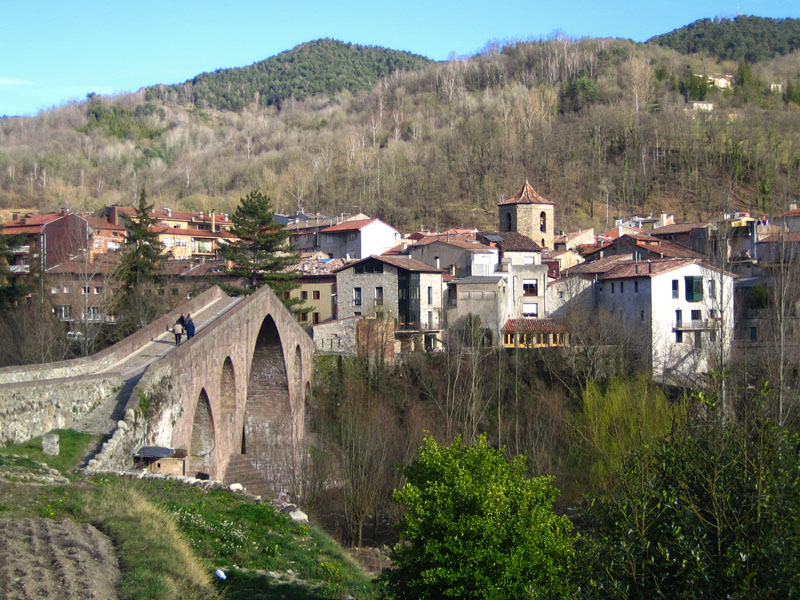
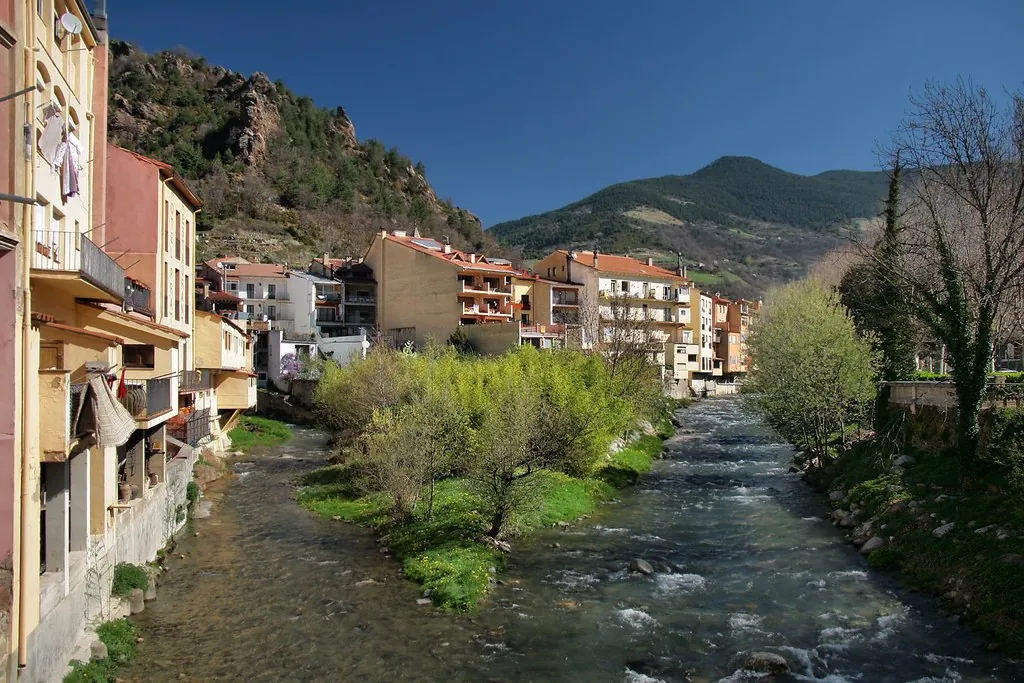
Understanding tourism in Pardines begins with its setting. The village stands on the northern slope of the river Freser valley, at more than 1,200 metres above sea level. It faces the mountains that close off the Ripollès comarca to the north, in the Catalan Pyrenees, and occupies an open hillside shaped by altitude and climate.
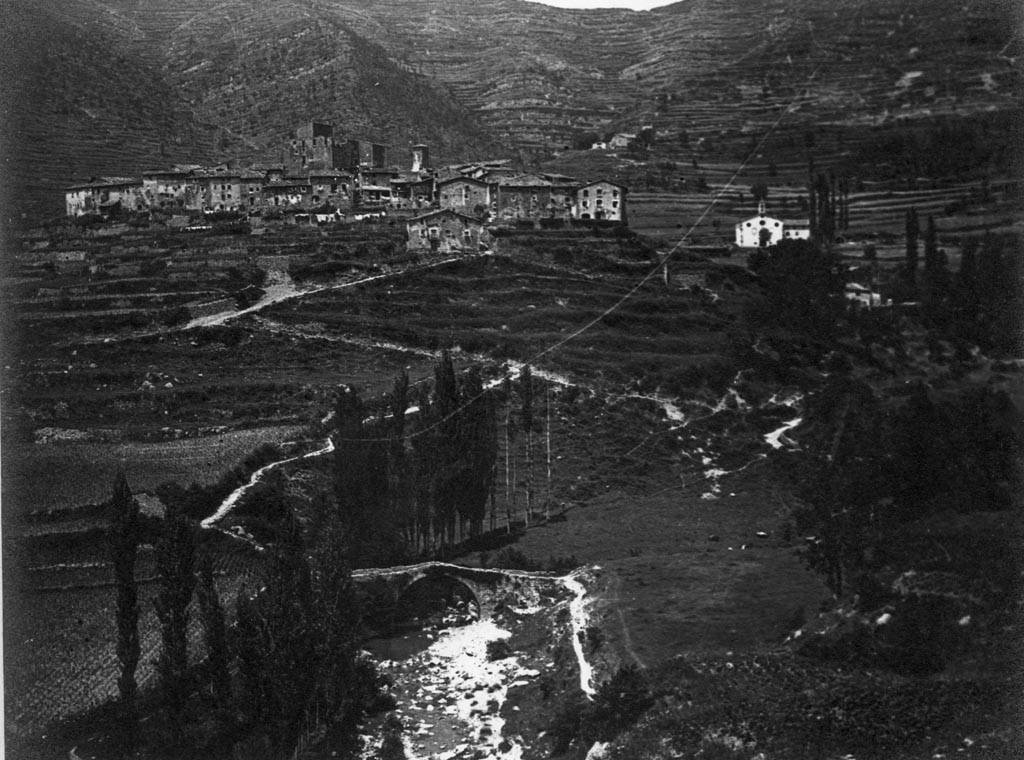
Pardines is small and slightly removed from the valley’s main transport routes. For centuries, daily life here revolved around livestock farming and the use of woodland resources. That background still defines the surroundings. Fenced meadows stretch around the village, tracks link scattered masías, or traditional farmhouses, and slopes are covered with pine and beech.
Although it was never a principal transit point, Pardines formed part of a network of local paths connecting dispersed farms with the route that climbs towards Vall de Núria. Vall de Núria is today a well-known mountain destination, and historically these paths helped tie Pardines to that wider highland territory. The layout of the village and its relationship with the nearby landscape make more sense when seen in light of that network.
Sant Pere and the Rural Romanesque
The parish church of Sant Pere is usually dated to the 12th century. It belongs to the rural Romanesque tradition that spread across the Catalan Pyrenees during the Middle Ages. Later alterations have modified the building, so the Romanesque character is most clearly visible in its overall structure and in certain sections of the walls.
Sant Pere is a simple church, built to serve a small community. The façade is restrained, without elaborate decoration. Its bell gable, a flat wall rising above the roofline with openings for bells, is practical rather than monumental. It marks the centre of the village and once called residents together.
In places such as Pardines, the church also functioned as a territorial reference point. It is visible from nearby paths and fields, reinforcing its role not just as a religious building but as a landmark within a dispersed rural setting. There are no grand artistic programmes or imposing towers here. The interest lies in its modest scale and its continuity within a mountain environment that has changed gradually over time.
A Compact Mountain Settlement
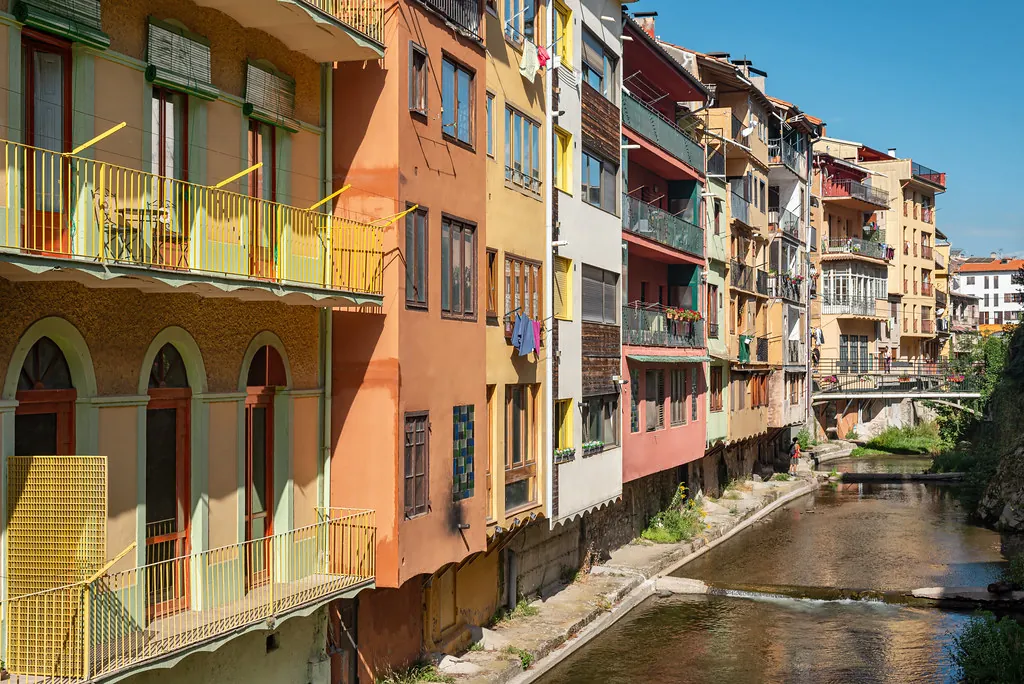
Today Pardines has around 170 inhabitants. Its urban core can be explored in a matter of minutes. The houses follow the construction logic typical of mountain villages. Thick stone walls provide insulation, pitched roofs shed snow and rain, and openings are relatively small to protect interiors from the cold.
Walking slowly through the streets reveals details that speak of practicality. Old wooden doorways survive in some buildings. Balconies are functional rather than decorative. Stonework is often laid without elaborate ornament. Architecture here responds above all to climate and to the materials available locally.
The village is organised around a handful of short streets and small open spaces. There are no large squares and no major public buildings beyond the church. The overall impression is of a compact nucleus shaped by agricultural life rather than by trade or administration. Pardines does not present a monumental skyline or a dense historic centre. Its scale remains domestic and closely tied to the surrounding land.
Paths, Forest and High Ground
The immediate surroundings are likely to shape any visit more than the village streets themselves. Pardines is encircled by mountain meadows and woodland. From the edge of the settlement, several footpaths lead outwards, linking up with traditional routes across the valley.
Some follow former itineraries between masías, tracing patterns of movement that were once essential for farming communities. Others climb towards higher elevations where the landscape becomes more open and stony. In certain areas, altitudes exceed 2,000 metres, and the environment feels unmistakably Pyrenean.
These changes in terrain are gradual but noticeable. Lower down, forests of pine and beech frame the paths. Higher up, vegetation thins and the ground becomes rockier. The relief is abrupt in places, and weather conditions in the mountains can shift quickly. Anyone planning a longer walk should carry a map or a digital track. Orientation is not always straightforward, especially once beyond the immediate surroundings of the village.
The network of paths helps explain Pardines’ historical role. Even if it was not a major stop on regional routes, it remained connected through these smaller arteries. That sense of connection persists for walkers today, who can use the village as a starting point for exploring the Freser valley and its uplands.
Winter Quiet and Practical Notes
When snow falls, the landscape around Pardines changes markedly. Slopes and meadows are covered, and some paths can be used for walking with snowshoes when conditions allow. The village itself has no ski lifts or related facilities. Winter here unfolds at a quieter pace.
For downhill skiing, the nearest resorts are located in the wider area of the Freser valley and in La Cerdanya. They are within reasonable driving distance. Pardines, by contrast, remains a small settlement focused on its own rhythm rather than on large-scale winter tourism.
The urban centre can be covered in less than an hour. Pardines is often visited as a brief stop or as a base for walking in the valley. Services are limited and may vary depending on the season. For shopping or a broader range of facilities, it is advisable to head to Ribes de Freser, which acts as the valley’s main service hub.
Pardines does not rely on spectacle. Its appeal lies in the coherence between village and landscape: stone houses adapted to the cold, a Romanesque church that anchors the settlement, and a web of paths climbing towards higher ground. For those interested in how mountain communities have shaped and been shaped by their environment, this small corner of the Ripollès offers a clear and unembellished example.