Full Article
about Planoles
Sunny town in the Rigat valley; family tourism and nature
Hide article Read full article
A village that carries on being a village
Some places appear almost by accident. You drive through the Vall de Ribes in Catalonia, watching the mountains close in around the road, and a turning points towards somewhere small and unassuming. Planoles is exactly that sort of place. When people talk about tourism in Planoles, what they really mean is spending a few days in a village that still functions as a village rather than a rural backdrop.
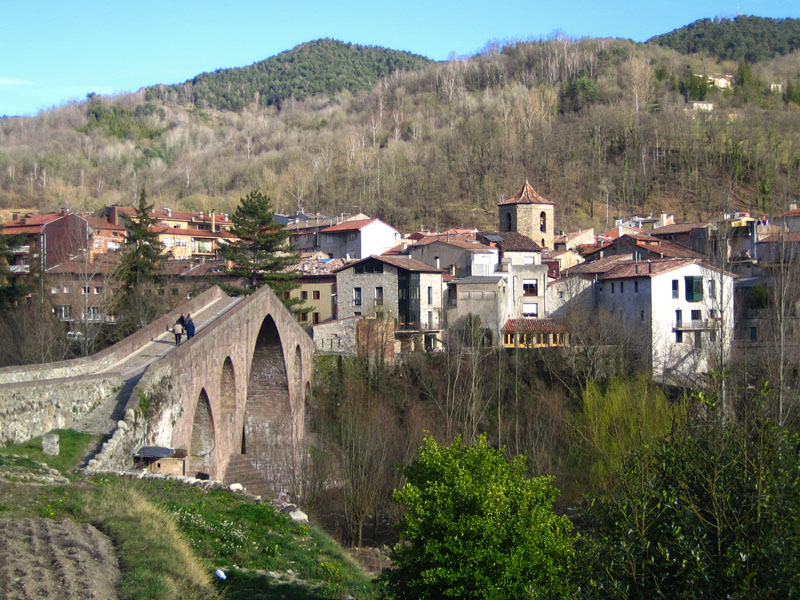
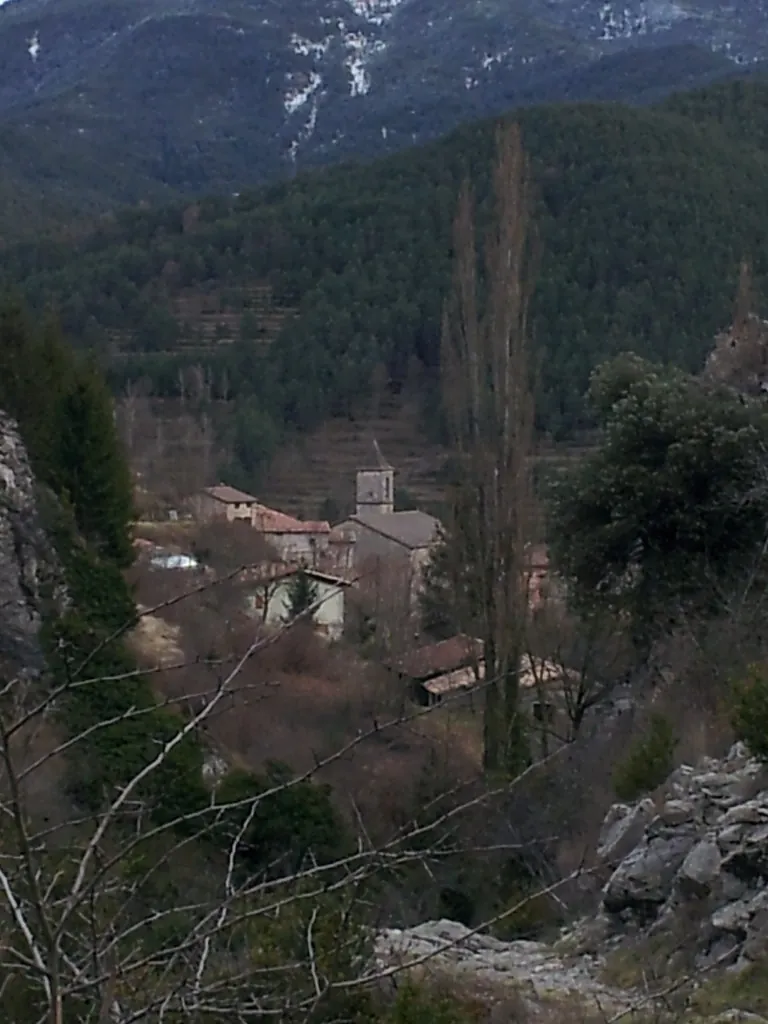
Planoles sits at the foot of the Puigmal massif, surrounded by meadows and woodland where the shade of green shifts with the seasons. Just over 300 people live here, and the change of pace is obvious as soon as you step out of the car. There is no sense of a staged mountain retreat. Instead you find short streets, stone houses and the feeling that daily life continues much as it always has, even when weekend visitors arrive.
Small hamlets scattered through the valley
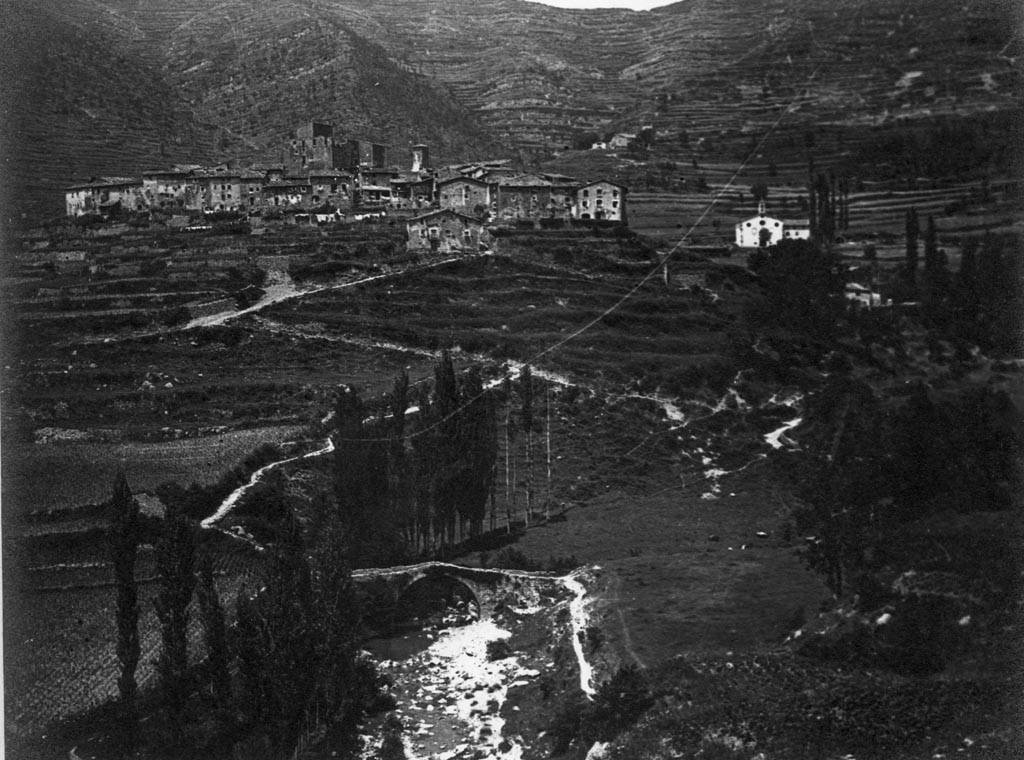
The municipality is not limited to the main settlement. It also includes Fornells, Serfontanet and Nevà, small clusters of houses dotted along the valley. A short drive makes the pattern clear: stone walls, dark slate roofs and arched doorways that have stood longer than many of the region’s roads.
Some houses still have wooden balconies and small windows designed to cope with harsh winters. Kitchen gardens sit close to the buildings, and there are meadows where livestock graze. There is less of it than decades ago, but it remains part of the everyday landscape.
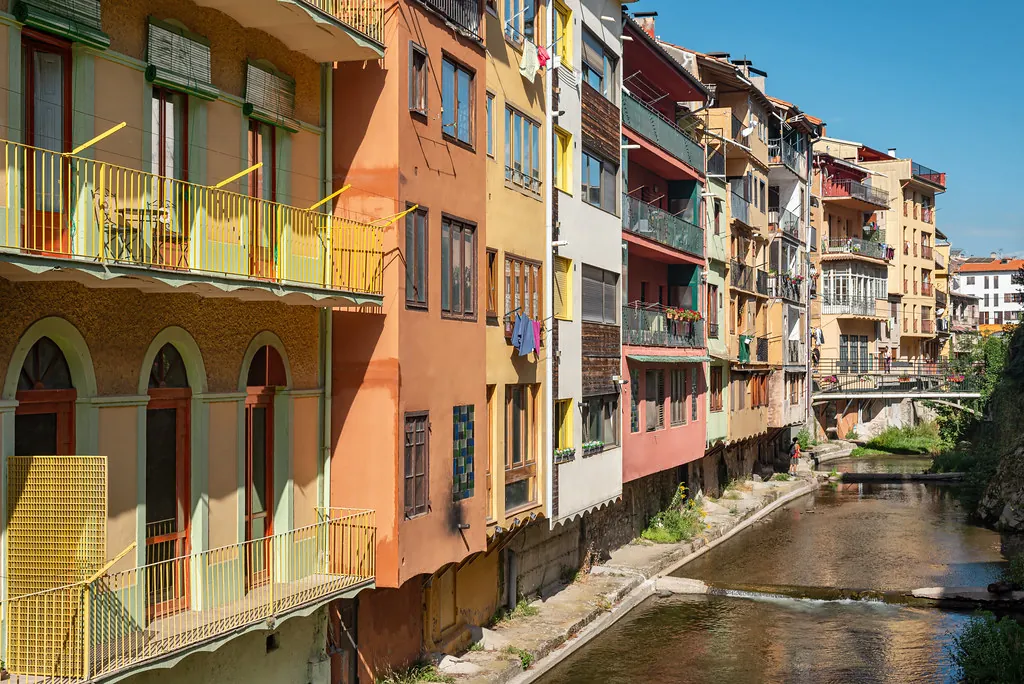
This is a lived-in place rather than a polished façade. You notice details that speak of practicality, thick walls, compact streets and buildings shaped by weather more than by fashion.
Sant Martí and the quiet centre
In the centre stands the church of Sant Martí. It is not a grand monument, yet it anchors the village visually. The bell tower can be seen from various points in the valley, the sort of landmark that helps you get your bearings while walking.
The church has Romanesque origins, although it has been altered over the years. Its sober appearance reflects its mountain setting. Thick masonry, little in the way of decoration and a clear sense that durability mattered most when heavy snow arrived each winter.
Around it, the village remains compact. Streets are short, houses cluster close together and there is little traffic. Planoles does not try to compete with larger destinations in the Pyrenees. It simply holds its place in the landscape.
Walking out towards Puigmal
One of the main draws of Planoles is how easily you can head out on foot. There is no need for elaborate planning. Within minutes of leaving the village you are on paths that cross meadows or slip into woodland.
Many walkers use the valley as a base for exploring the Puigmal area. Puigmal is one of the best-known peaks in the eastern Pyrenees. Climbing it is another matter entirely, with serious elevation gain and high mountain terrain. It is not a casual stroll and requires proper preparation.
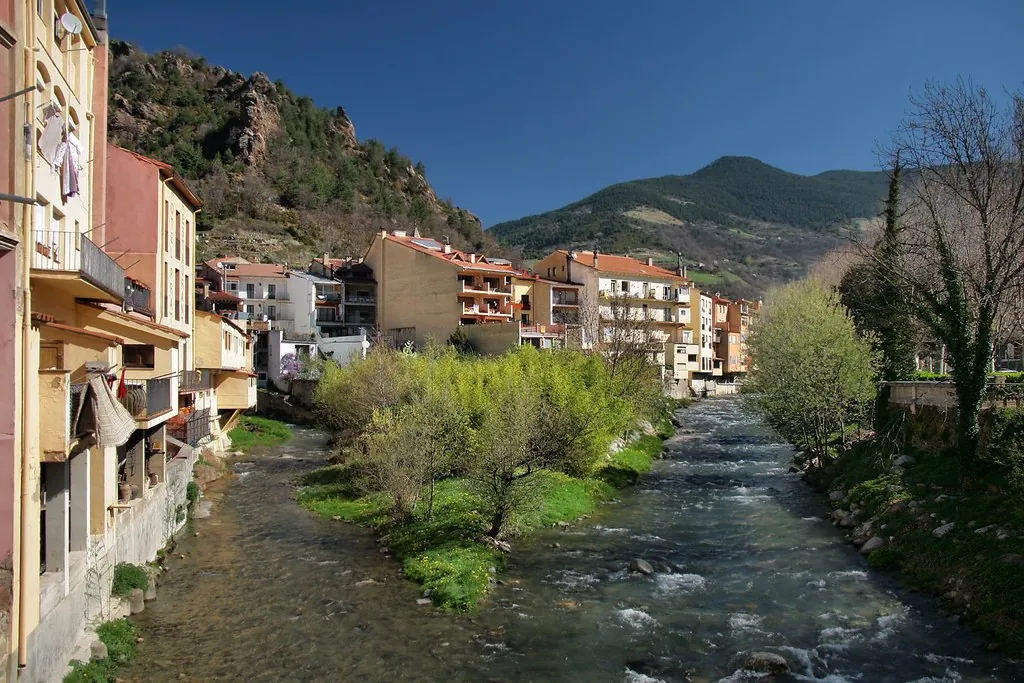
For those who prefer gentler routes, there are quieter options along the valley floor. Paths link neighbouring villages or follow the course of the River Rigard. On these walks you might spot chamois on the higher slopes. With a bit of luck, a marmot may appear among the rocks in fair weather.
The experience is straightforward. You leave the houses behind, follow a track and allow the valley to open up around you. The rhythm is set by the terrain rather than by signposts or attractions.
When winter changes the mood
Snow alters the atmosphere considerably. Planoles becomes a place where many people stay while travelling to nearby ski areas such as Núria or La Molina. Even so, the village itself tends to remain calm during the ski season. It does not have the bustle of resorts built right beside the pistes.
The routine is simple. People return in the afternoon, park the car and the streets settle again. If heavy snowfall arrives, some paths remain covered for several days. Walks at that time have a distinct feel: deep quiet, smoke rising from chimneys and the crunch of snow underfoot.
Winter in the valley has character. It can be beautiful for those who enjoy snow and mountain landscapes in their starkest form. For others, it may be more appealing to visit when the ground is not frozen.
Mountain food when the cold sets in
The cooking in the valley matches the climate. It is hearty, direct and built to warm you up rather than to impress on camera.
Trinxat appears frequently, a traditional dish made with cabbage and potato worked together until smooth and satisfying. There are also grilled meats, locally cured embutidos and stews that make sense after time spent outside in the cold. In winter, thick broths or escudella are common on the table. Escudella is a traditional Catalan soup, substantial enough to stand as a meal in its own right.
This is food designed to restore warmth and energy. Presentation comes second to comfort.
Choosing the right season
Summer is an appealing time to visit. While heat builds along the coast, Planoles offers milder temperatures that make walking comfortable. Afternoon storms sometimes roll in, a typical feature of the Pyrenees in warmer months.
Spring and autumn change the valley noticeably. In spring, the meadows turn vivid and water rushes down from the mountains. Autumn darkens the surrounding woods, and the air begins to carry a hint of the winter to come.
Each season shifts the colours and the pace, yet the underlying character remains steady. Planoles does not call attention to itself. Perhaps that is why it works. A couple of days here might involve little more than walking, looking up at Puigmal and hearing cowbells in the distance. When it is time to leave, it does not feel like a destination ticked off a list. It feels more like time spent in a mountain village that continues, quite simply, to be itself.