Full Article
about Sant Joan de les Abadesses
Historic town with a major monastery; old bridge and the Count Arnau myth.
Hide article Read full article
A village that smells of milk
The smell of raw milk reaches you almost as soon as you step out of the car. It hangs in Carrer Major by mid-morning, where a man unloads rounds of cheese from a small van. Steam drifts out from a nearby interior and mixes with the spring sunlight falling in blocks between the arcades. Tourism in Sant Joan de les Abadesses often begins like this, with that milky scent lingering over warm stone, as if the whole place still moves to the rhythm of an old kitchen.
There is no rush to it. The streets hold onto everyday routines, and even brief moments feel tied to something slower and more practical. Food is not presented as spectacle here. It simply exists, present in the air, in the shopfronts, and behind open doors.
The monastery that began with a child
In the year 887, Guifré el Pilós founded a female monastery here and placed his daughter Emma at its head. She was just seven years old. It is difficult to picture now, looking out over the calm valley of the Ripollès, with the river Ter still young as it moves between dark rocks and beech trees.
The stones of the old monastic complex retain something of that distant beginning. The cloister is formed by low arches and slender columns that seem almost fragile. A major earthquake in 1428 damaged parts of the church and forced large sections to be rebuilt. Even so, the walls still reveal small irregularities: a joint slightly out of line, a crack running through the stone like a dry leaf.
It is worth going inside early in the morning. When the space is nearly empty, the silence becomes very tangible. Footsteps echo on the floor, a door creaks somewhere out of sight, and wind slips in through an opening high above.
The tomb of Abbess Ingilberga carries a story still told in the Ripollès: that of Count Arnau, condemned to ride endlessly through these valleys. Older residents continue to speak of him on stormy nights or around the time of Sant Joan, when the legend feels closer to the surface.
Crossing the Ter: the Pont Vell
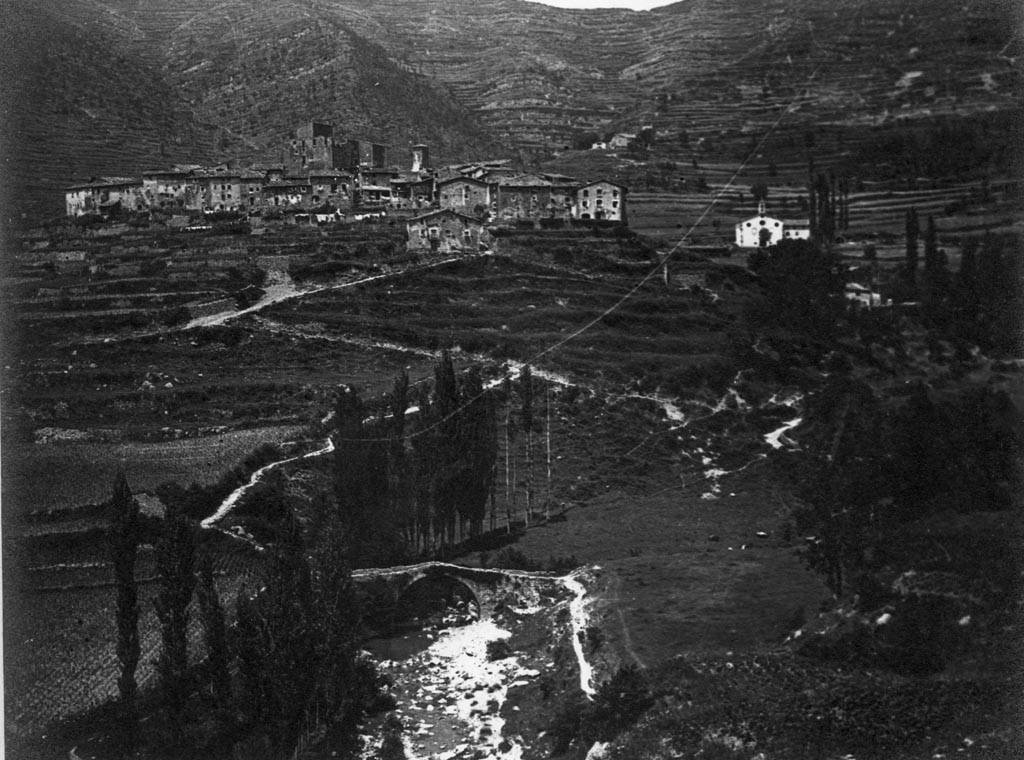
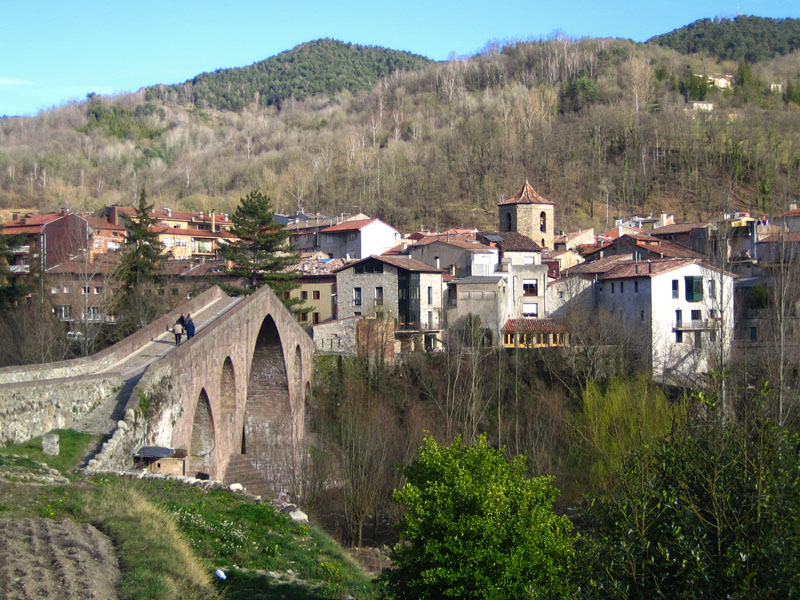
A short walk from the monastery leads to the Pont Vell, which spans the Ter with the slightly arched shape typical of many medieval bridges. Over time, the stone has shifted in colour. Near the water it remains a damp grey, while areas exposed to more sun take on a pale ochre tone.
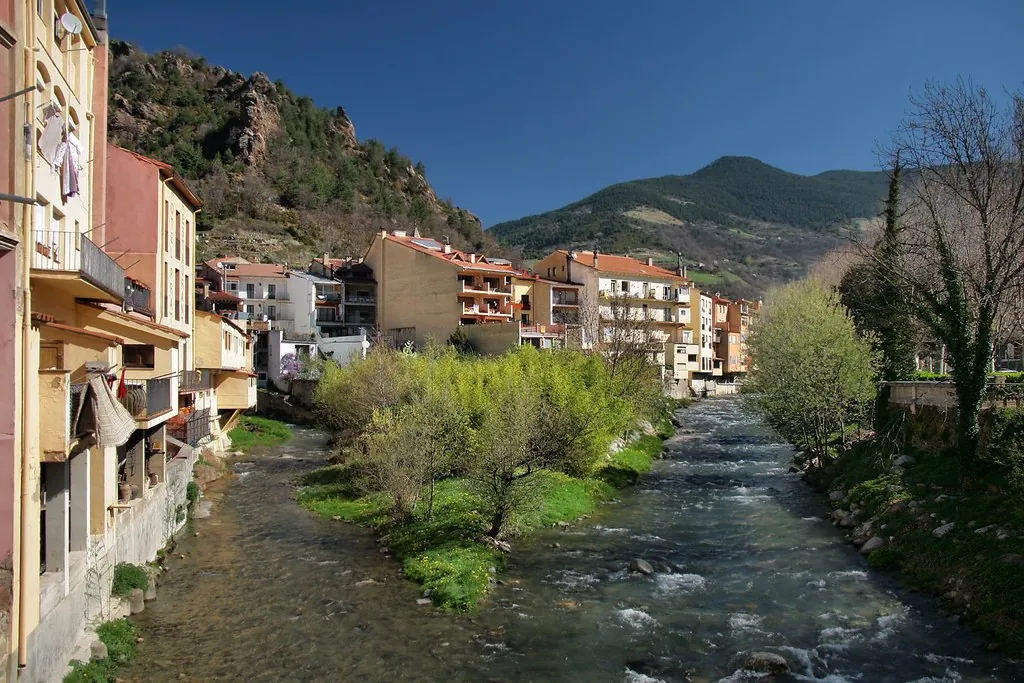
Cars cross it today, yet if you step to one side the sound that dominates is the river. The water here is a deep green and stays cold even at the height of summer. Some local children venture in during July and come out shivering from the chill.
As evening approaches, the light slips under the arch and turns the stone pink for a brief stretch. It is a good moment to cross slowly and look down at the paving slabs. Several dip slightly towards the centre, shaped by centuries of footsteps passing over them.
Cheese, broth and midday light
Milk continues to play a central role in Sant Joan de les Abadesses. Some shops in the centre sell raw milk cheese made locally, with a slightly damp rind and an aroma that recalls both stable and freshly cut grass.
Around midday, Carrer Major shifts in tone. Sunlight filters between the façades, and the slate surfaces reflect uneven flashes. From open windows comes the smell of escudella, a traditional Catalan dish: a rich broth with pork and cabbage. That scent blends with the warmth of the stone and, if it coincides with a service, with incense drifting out from the church.
The combination is distinctive without being staged. It belongs to daily life rather than to any organised display, and it changes subtly depending on the hour or the season.
Early September and the Misteri
At the beginning of September, the town marks the Santísimo Misterio, a tradition with deep local roots. During those days the atmosphere shifts. There are more people in the square, bells ring out, and candles are lit as night falls.
Processions move slowly through the historic centre. The wind rising from the river often causes the flames to flicker. It is not a loud event. The opposite tends to happen: when conversations drop away, footsteps on stone become clearly audible, along with the low murmur of the Ter in the background.
The pace remains measured throughout. Nothing feels hurried, and the focus stays on the act itself rather than on spectacle.
The valley, the road and the seasons
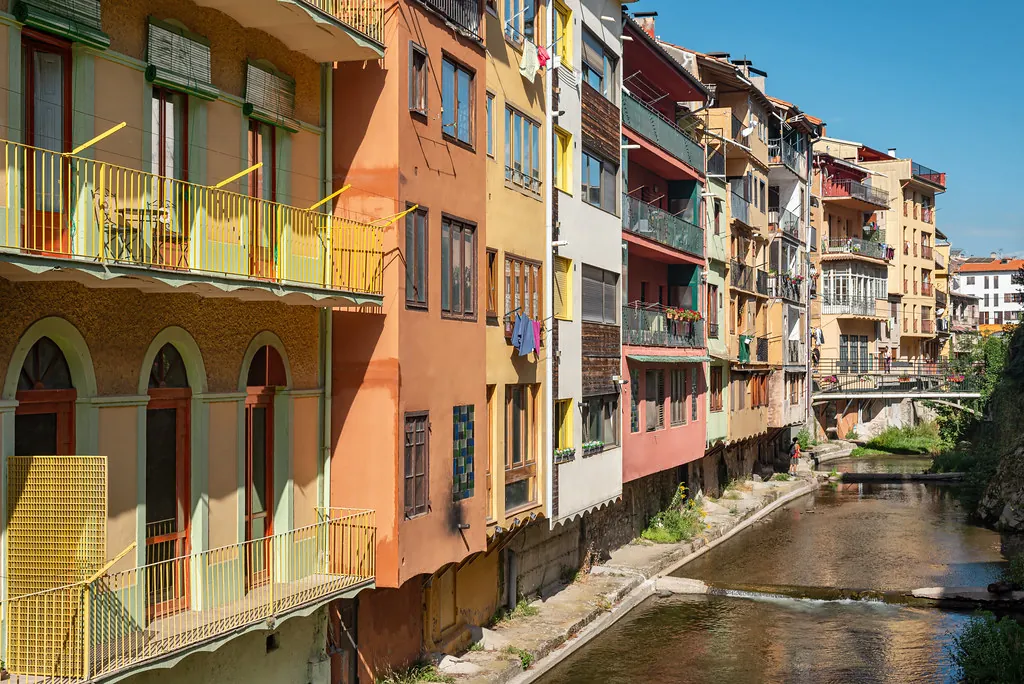
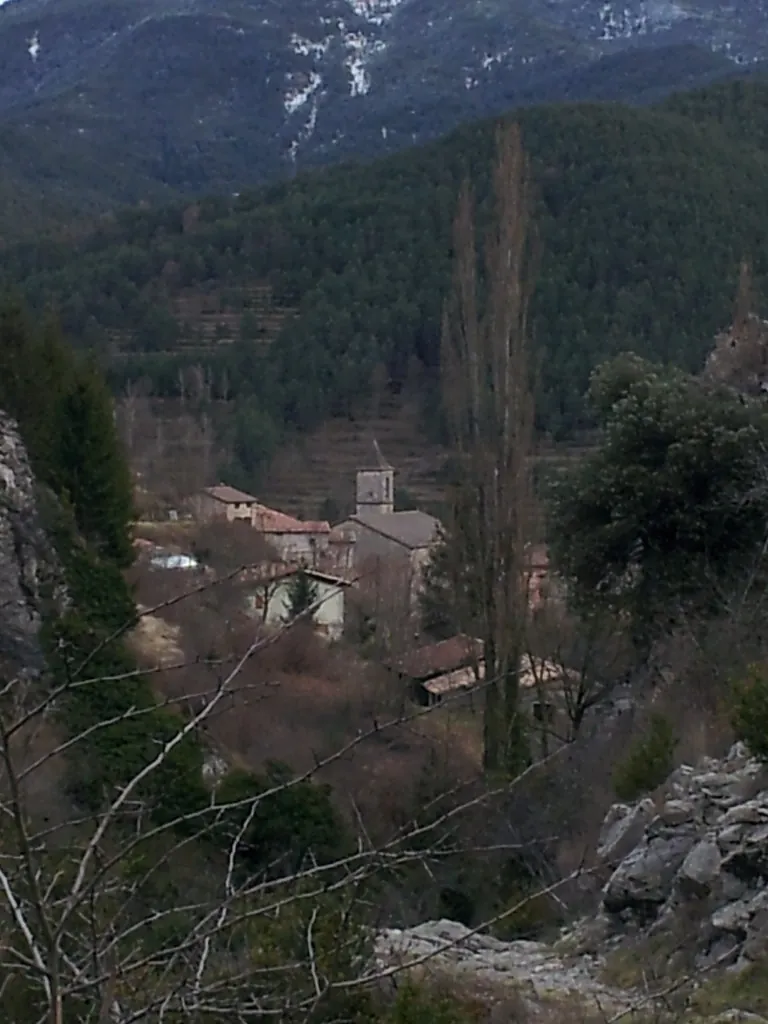
The road from Ripoll follows the course of the river as it climbs into the valley. Sant Joan de les Abadesses appears quite suddenly, with its bell tower rising above dark rooftops and a scattering of masías on the surrounding slopes.
In August, weekends bring more movement, particularly around the bridge and the centre. Those looking for a quieter atmosphere tend to find it on weekdays in May, June, or early autumn.
Even in summer, it is wise to have a jacket. Once the sun drops, the moisture from the Ter slips into the narrow streets and the temperature falls quickly, especially near the river. The change can be felt within minutes, as the warmth held in the stone gives way to a cooler, damp air that settles in for the evening.