Full Article
about Sant Pau de Segúries
Gateway to the Camprodon valley; a Roman road still runs through it.
Hide article Read full article
Between the Ter and the Capsacosta
Tourism in Sant Pau de Segúries makes most sense when you first look at where it sits on the map. The village lies in the Ter valley, in the heart of the Ripollès region of Catalonia, at around 867 metres above sea level. Close by is the natural pass of Capsacosta, one of the historic routes that once linked La Garrotxa with the interior of the Pyrenees.
With a population of roughly 700, Sant Pau de Segúries remains a small settlement where agriculture and livestock farming still shape daily life. This is not a place that has turned its back on its rural roots. Fields and grazing land stretch out from the centre, and working farms continue to define the landscape.
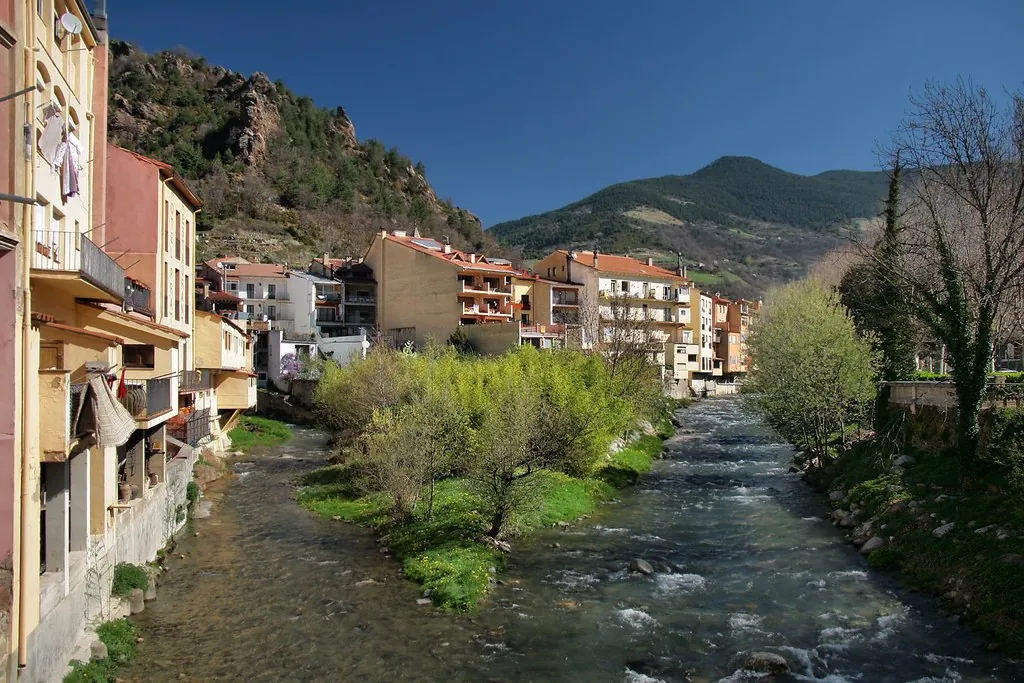
The river Ter runs through the municipality and organises much of its territory. Meadows and small livestock holdings extend along its course, many of them still active. At certain times of year, agricultural machinery can be seen in the fields, and the smell of cattle drifts across the valley. These are not staged rural scenes but part of a way of life that has continued for generations.
A Compact Village of Stone and Wood
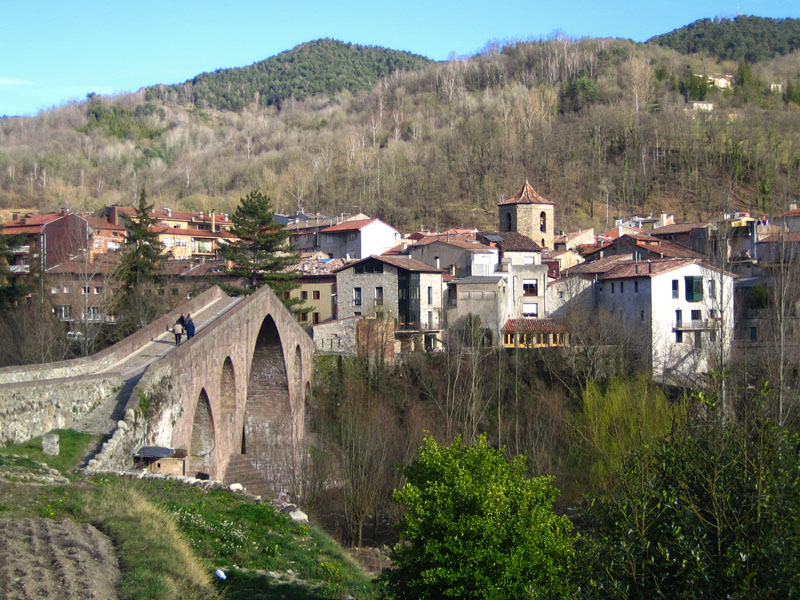
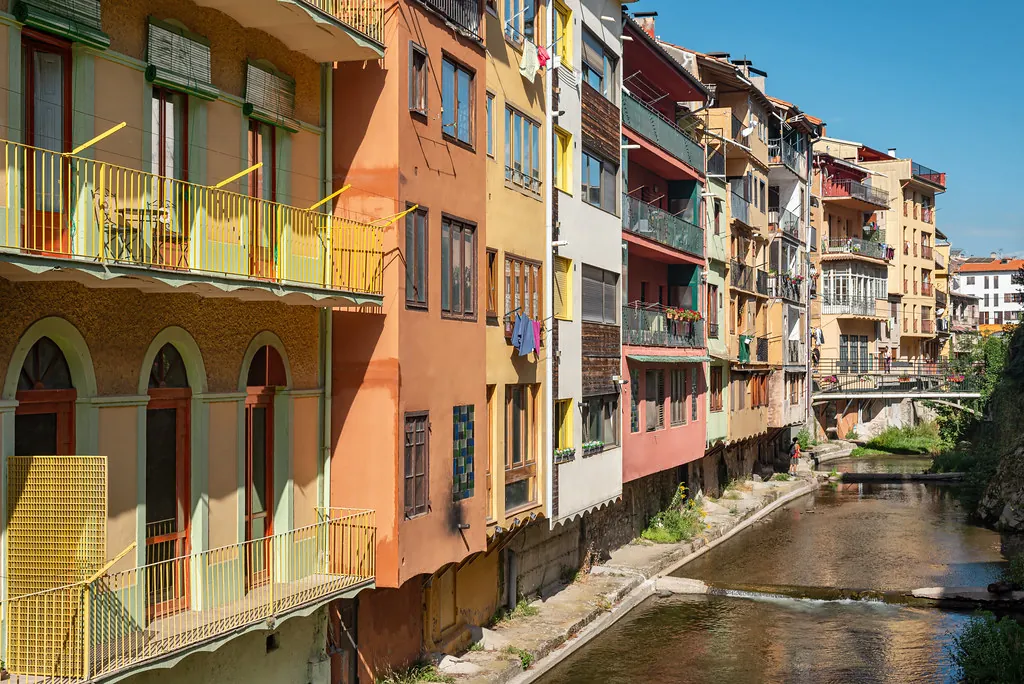
The urban centre is small and easy to explore on foot. Stone houses dominate the streetscape, some with wooden balconies and galleries. Built from local materials and designed to withstand long mountain winters, these homes reflect practical decisions shaped by climate and terrain.
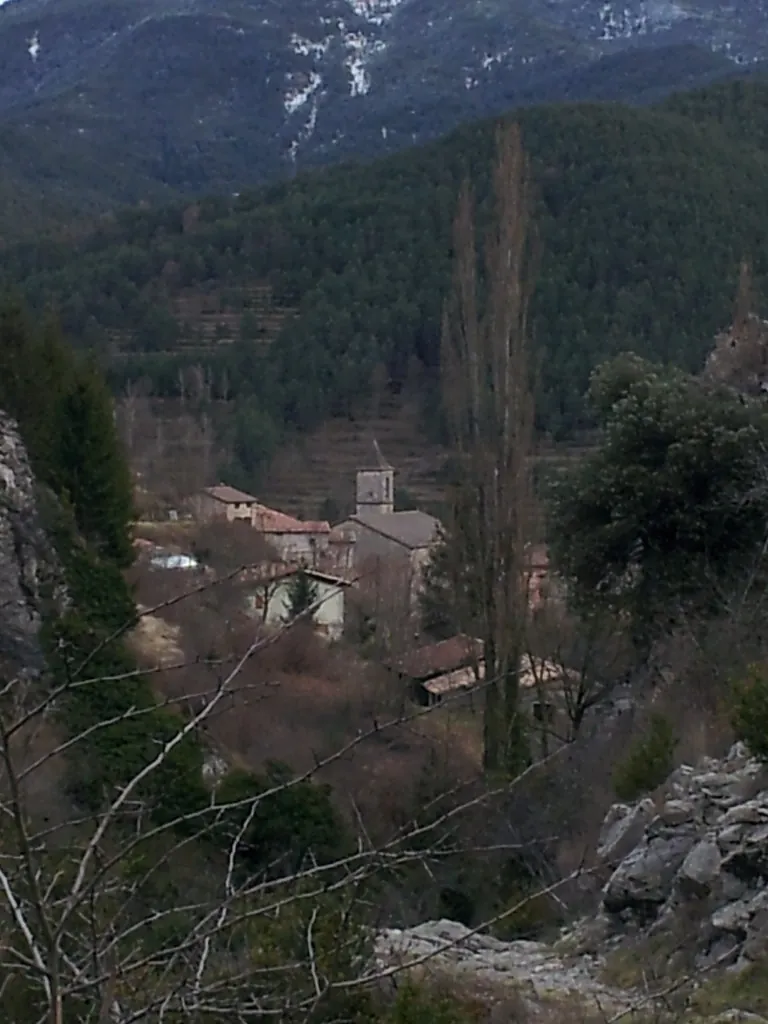
At the heart of the village stands the parish church of Sant Pau. Its origins lie in the Romanesque period, although it has been altered over the centuries. It is not a monumental church, yet it represents a clear example of religious architecture in the Pyrenees: sober walls, local stone and a bell tower that still provides a visual anchor for the compact centre. More than its decoration, it is the building’s role that stands out. For centuries, the parish organised local life and structured the community.
Beyond the centre, the landscape has changed little in decades. The Ter forms calm stretches bordered by riverside trees such as poplars and willows. Further out lie open meadows dotted with scattered masías, the traditional Catalan farmhouses. Many remain linked to the agricultural and livestock activity of the valley, continuing to structure the rural space much as they always have.
Heritage in the Landscape
The church of Sant Pau is the main heritage landmark in the municipality. Its Romanesque origins are still visible in the exterior structure, which remains restrained and solid despite later modifications. Rather than elaborate ornamentation, it offers insight into how the village developed historically, with the parish as its centre of gravity.
A walk through the village streets reveals details of traditional domestic architecture. Stone walls combine with wooden elements in balconies and enclosed galleries. In many cases, the houses are oriented towards the sun and the nearby meadows, a practical response to mountain conditions where light and warmth matter.
On the outskirts, the river Ter creates small shaded spots where the environment feels more humid. Nearby meadows show a territory in active use: grazing cows, fenced plots, farm tracks and masías that continue to organise the valley’s rural layout. The sense of continuity is strong. Sant Pau de Segúries does not present a frozen past but a living agricultural landscape.
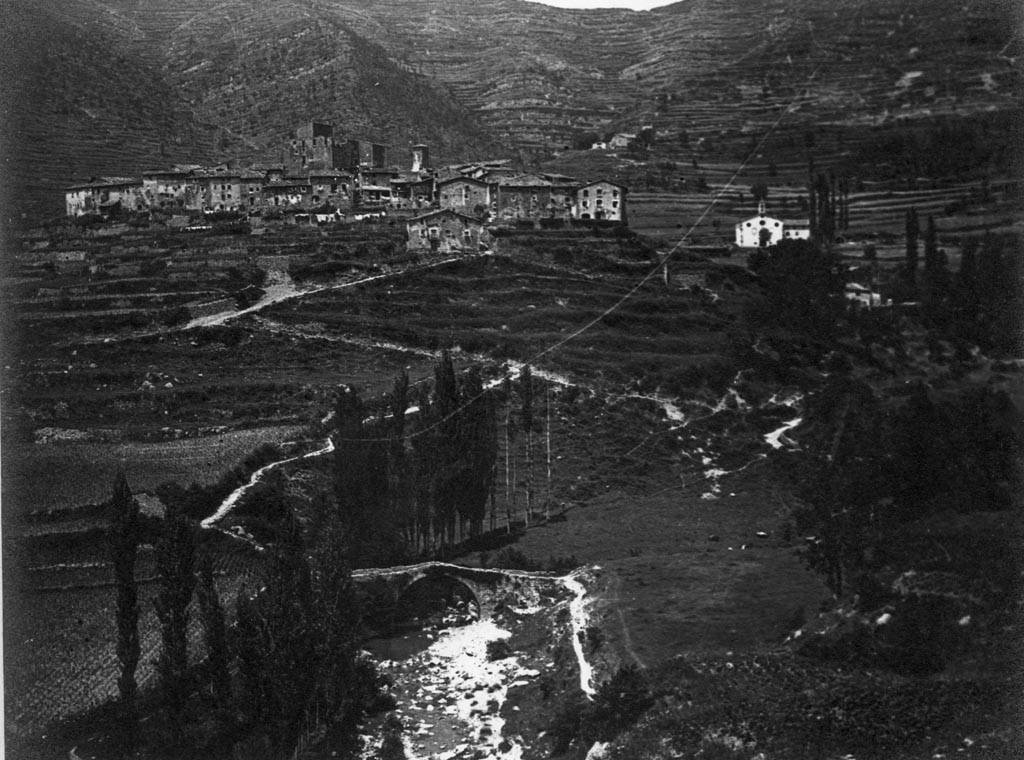
Another key element in the surrounding area is the old Capsacosta road. Generally accepted as having been used since Roman times, this pass connected the plain of Olot with the Ripollès. Today, different stretches survive as a historical and walking route in the wider area. Following it offers a tangible link to the long history of movement between valleys, when mountain passes were strategic corridors rather than scenic detours.
Walking, Cycling and Everyday Flavours
Sant Pau de Segúries is often used as a starting point for exploring the Ter valley on foot or by bicycle. Paths leave directly from the village and connect with forest trails and tracks that cross beech woods, fir forests and pastureland. The terrain varies. Some routes follow old communication paths between valleys, while others head into woodland where the gradient quickly becomes noticeable.
Checking maps or GPS tracks before setting out is advisable. Certain sections are shared with agricultural vehicles or may be used for moving livestock, which reflects the fact that these are working tracks rather than purpose-built leisure routes.
For those who prefer gentler outings, it is possible to stay close to the village. Walks along the banks of the Ter or on paths skirting the meadows offer quieter circuits. These routes make it easier to understand how the agricultural landscape of the Ripollès still functions, with fields, grazing areas and farm buildings forming a coherent whole.
Local cooking remains closely tied to the territory. Dairy products feature prominently, as do traditional cured meats such as bull, a type of Catalan sausage. Meat dishes typical of mountain comarcas, or counties, are also common. The choice within the municipality itself is limited, yet sufficient for a straightforward meal after a day spent walking or cycling.
A Base in the Ripollès
In winter, Sant Pau de Segúries does not have its own snow-related infrastructure. There are no dedicated facilities within the village for winter sports. Its position in the Ripollès, however, allows visitors to drive to other points in the Pyrenees where winter activities are concentrated.
What defines tourism here is not a long list of attractions but a particular setting. The Ter valley, the presence of the Capsacosta pass and the continued importance of farming all shape the experience. Sant Pau de Segúries offers a clear view of how a small Pyrenean village functions today, where river, pasture and stone buildings remain part of everyday life rather than a backdrop prepared for visitors.