Full Article
about Vilallonga de Ter
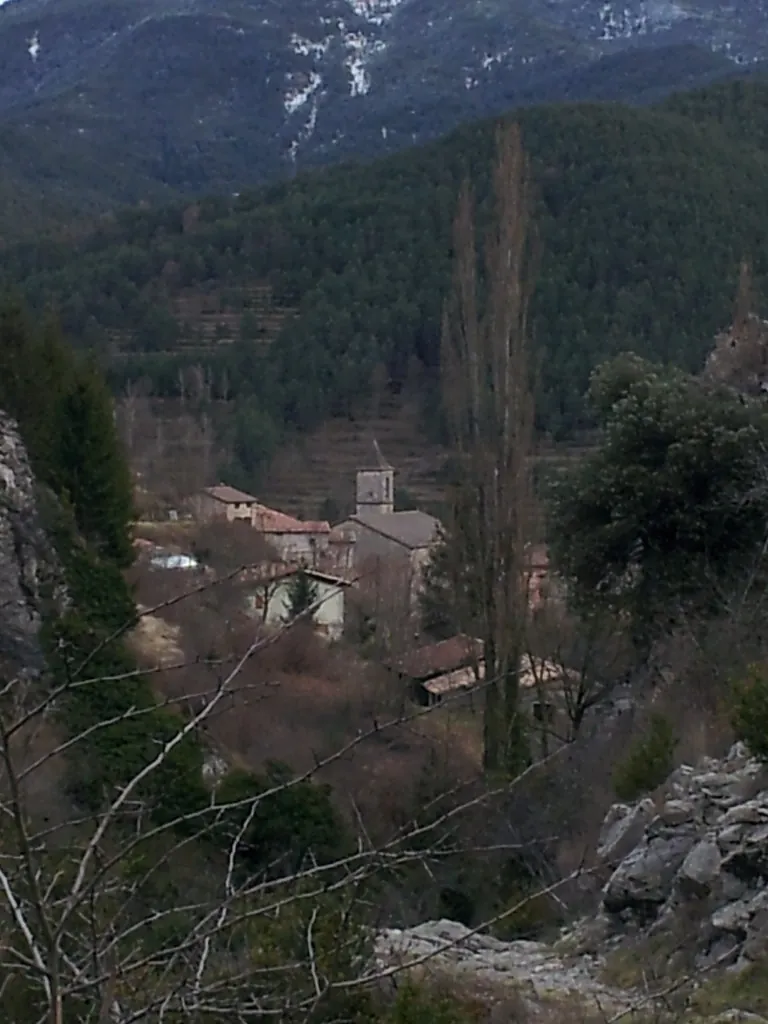
Picturesque village in the Camprodon valley; includes the Roca de Pelancà.
Hide article Read full article
A Quiet Village at 1,067 Metres
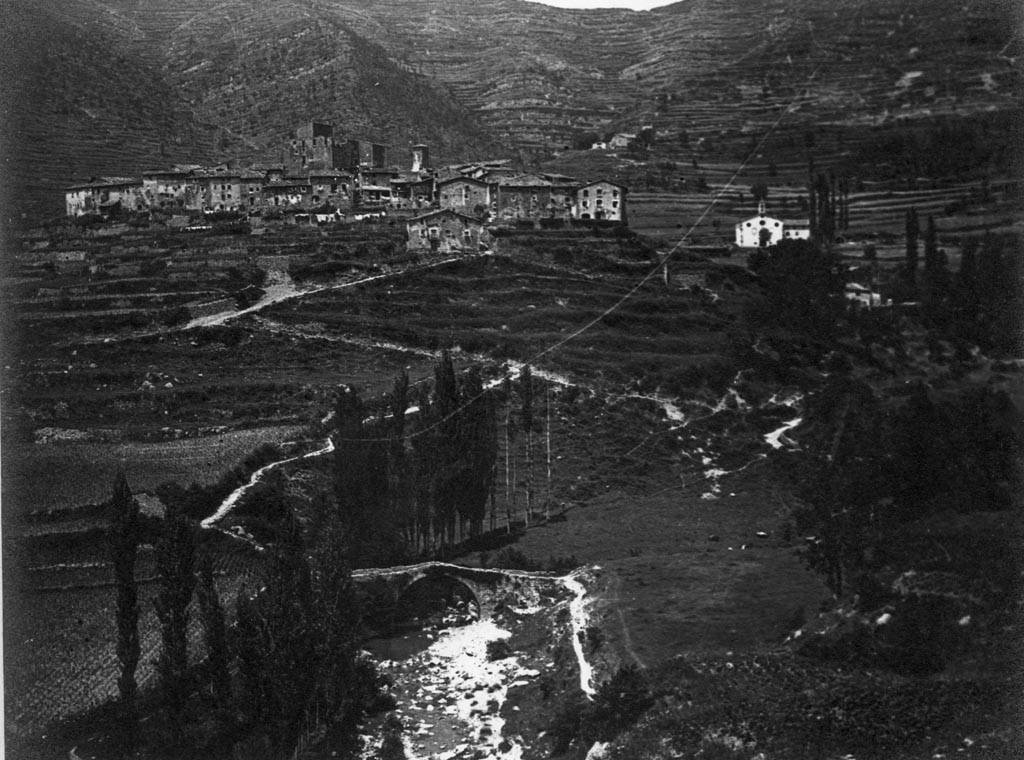
Early in the morning, the main square of Vilallonga de Ter is almost silent. There is little to hear beyond the creak of wooden boards and the call of a few birds. Light arrives from the north, slipping between stone and slate houses and casting grey and ochre tones across their façades. At 1,067 metres above sea level, this small Pyrenean municipality carries a sense of stillness shaped by altitude and valley life.
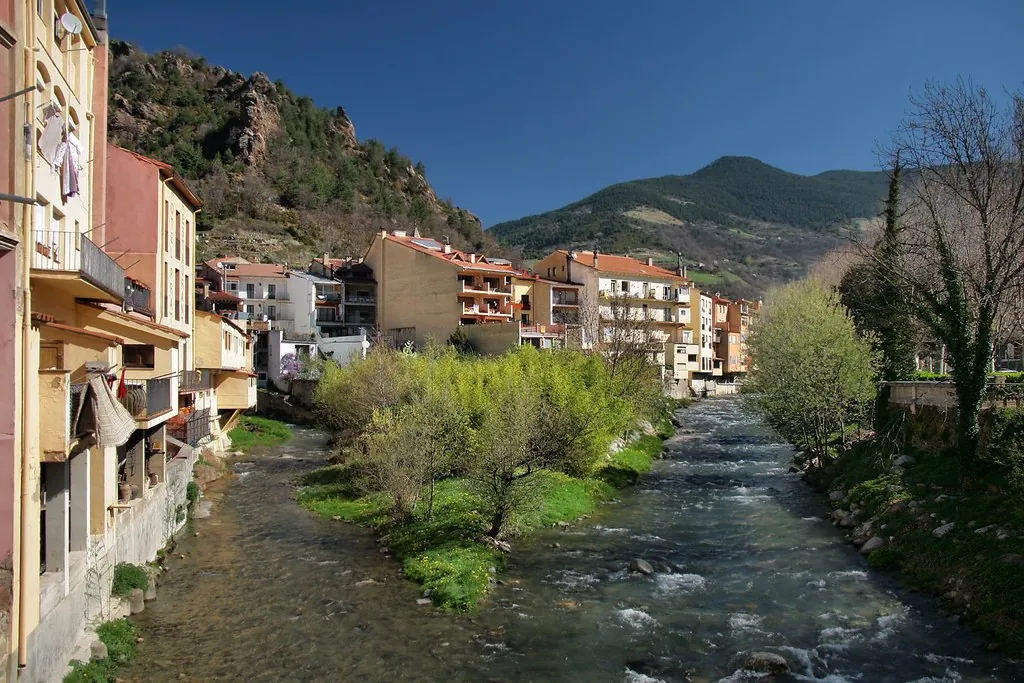
Vilallonga de Ter has fewer than 400 inhabitants, spread across several scattered clusters rather than concentrated in a single dense centre. It does not present itself as a place to rush through. The river Ter runs close by, its presence felt in the sound of water striking rock and in the dampness that settles over nearby woodland. From the village streets, the surrounding peaks rise beyond 2,000 metres. On clear days, summits such as the Pic de la Dona and the Puig de la Canal stand sharply outlined against the sky.
The pace here is unhurried, shaped by the rhythms of mountain seasons rather than passing traffic. Life unfolds in relation to the landscape, and the landscape is never far from view.
Stone Houses and Sant Martí
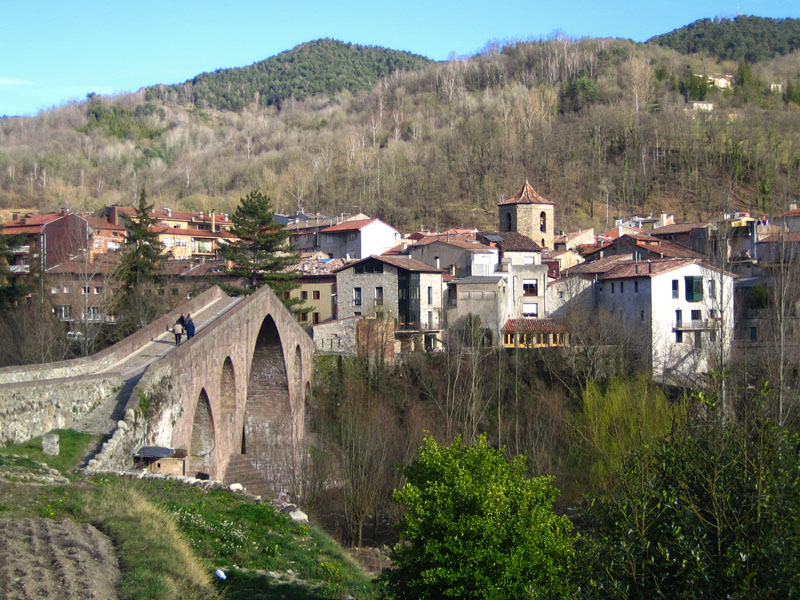
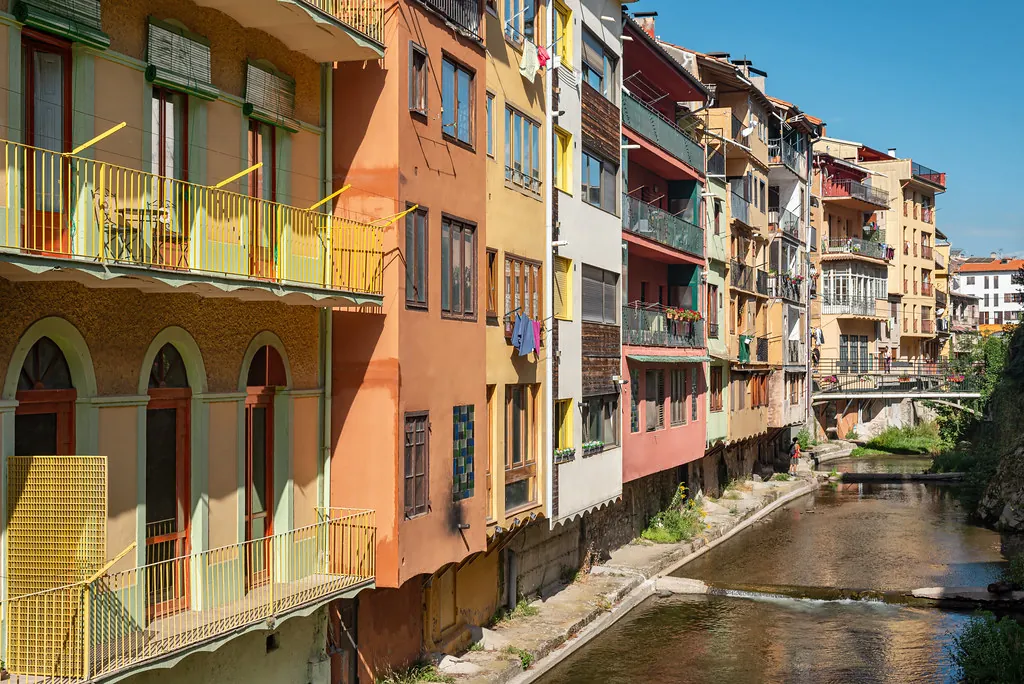
The main settlement is formed of houses built with stone and timber, topped with dark slate roofs that seem to absorb winter light. Their construction reflects the demands of the Pyrenees, where cold months require solid materials and compact design. Small windows and wrought-iron balconies reveal an architecture adapted to rigorous winters rather than decorative excess.
At the centre stands the parish church of Sant Martí. Its structure is simple yet solid, and its bell tower overlooks the square. The church anchors the village visually and socially, as churches often do in rural Catalonia. A walk without a fixed route brings attention to small details: the texture of masonry, the weight of wooden doors, the way roofs angle against snow and rain.
The true strength of Vilallonga de Ter lies beyond its buildings. The village opens directly onto a landscape that encourages pause. The rustle of leaves and the steady movement of the river shape daily life as much as any timetable. Mountains form a constant backdrop, enclosing the valley without making it feel confined.
The River Ter and the Turn of the Seasons
The character of Vilallonga de Ter shifts with the seasons. In spring, fields turn intensely green and meadows stretch towards the horizon. Cows and horses graze slowly across the open land, marking time in their own way. The air carries the freshness of recent growth, and the river runs lively with meltwater.
Autumn brings a different palette. Nearby forests take on ochre and gold tones, creating scenes that attract those interested in nature photography. The transformation is gradual but unmistakable, as foliage moves from green to warmer shades before falling.
The river Ter remains central throughout the year. Its clear pools and small waterfalls draw attention in summer, when some choose to take a brief dip in its cold waters. The current is strong and the temperature rarely inviting beyond a short plunge. Caution is essential, both because of the force of the water and its depth in places.
In colder months, the atmosphere tightens. Frost and snow alter the outlines of fields and roofs, and the surrounding mountains feel closer. The valley’s altitude ensures that winter is not a passing phase but a defining season.
Walking Trails and High Ground
For those who wish to explore beyond the streets, paths lead through beech woods and across open meadows. Some routes follow the course of the river, keeping close to the water and remaining relatively gentle. Others climb steadily towards higher ground.
The ascent to the Pic de la Dona demands preparation and careful attention to weather conditions. The route follows stony paths that require experience and a good level of fitness. Mountain conditions can change quickly, and foresight is essential before setting out. Those less inclined towards demanding climbs can choose quieter trails that cross pastures or skirt woodland, where the main sounds are leaves underfoot or birdsong overhead.
During the colder months, Vilallonga becomes a starting point for skiers heading to Vallter 2000, located a few kilometres away. The resort offers pistes for alpine skiing and ski touring. When snow conditions allow, snowshoe routes open up across white-covered terrain. As in any high mountain environment, sudden changes in weather are possible, so checking forecasts before venturing out is always advisable.
Autumn in these forests also brings edible mushrooms. Gathering them is part of local custom, provided it is done responsibly. It is important not to pick specimens without precise knowledge and not to disturb the areas where they grow. The river Ter supports fishing during authorised seasons, though its current and depth require care and adherence to local regulations.
Food, Festivities and Valley Traditions
The gastronomy of Vilallonga de Ter reflects the straightforward character of the valley. Traditional dishes centre on grilled meat, artisanal embutidos and potatoes boiled or roasted with aromatic herbs. The emphasis is on hearty, mountain fare suited to cold weather and physical work outdoors.
On special occasions and during traditional festivities linked to the seasons, recipes such as trinxat and escudella appear. Trinxat is a rustic combination typical of the Pyrenean area, while escudella is a rich soup associated with communal meals and celebrations in Catalonia. These dishes speak of agricultural cycles and shared tables rather than elaborate presentation.
The proximity of Camprodon allows visitors to sample its dry pastries and homemade biscuits, which continue to be made from recipes passed down through generations. The connection between villages in the valley is practical and cultural, with food traditions travelling easily from one to another.
Local celebrations keep collective memory alive. Festivities tied to harvests or patron saints bring neighbours together in simple activities that carry meaning within a small community. These gatherings show how traditions remain present between mountains and meadows, sustained by those who live there rather than by outside display.
Vilallonga de Ter does not rely on large attractions or commercial spectacle. Its appeal rests on the constant presence of the surrounding landscape and on a way of life closely linked to the natural rhythms of the Catalan Pyrenees. It is a place to slow down, to notice the sound of water against stone, and to understand how a small settlement endures at high altitude without losing its connection to river, forest and peak.