Full Article
about Sant Esteve Sesrovires
Industrial and residential municipality with a golf course and musical tradition.
Hide article Read full article
There is something slightly ironic about Sant Esteve Sesrovires. It rarely appears on postcards of Catalonia, yet it sits confidently between the Baix Llobregat and the Alt Penedès, where vineyards meet industrial estates and old masías share space with major factories. In the course of a single walk you can move from rows of vines to one of the country’s largest car plants. For years, one of the world’s best-known lollipops was also made here.
This is not a place that trades on a single, tidy image. Instead, it reflects a stretch of Catalonia where agriculture and industry have grown side by side, shaping a town that feels practical, lived-in and closely connected to Barcelona.
A town that swells with the seasons
Arrive in summer and Sant Esteve seems to stretch. The resident population rises noticeably as houses fill with people spending holidays or weekends here. New faces appear on the streets and the atmosphere shifts, even though the town itself does not change shape.
The local station of the Ferrocarrils de la Generalitat, the regional railway network that links this area with Barcelona and several inland towns, acts as a kind of lifeline. Many residents live here and commute to the Catalan capital or to Martorell for work, so the train is part of everyday routine rather than a tourist novelty.
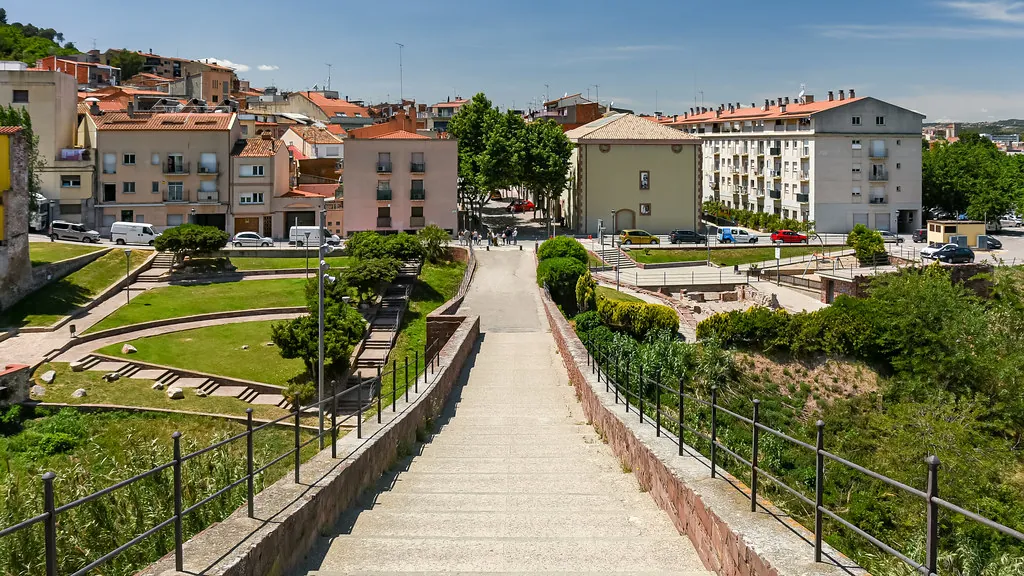
In the older part of town, the parish church built at the end of the 19th century with help from local residents remains a clear reference point. It is not monumental or elaborate. Instead, it serves the same function as many village churches across Spain: if you arrange to meet “by the church”, everyone knows exactly where that is.
Vineyards on one side, factories on the other
If Sant Esteve Sesrovires were a set menu, it would combine traditional home cooking with something more substantial. The municipality includes a vast car manufacturing plant that provides work for thousands of people in the surrounding area. Its presence is hard to ignore and has shaped the local economy for decades.
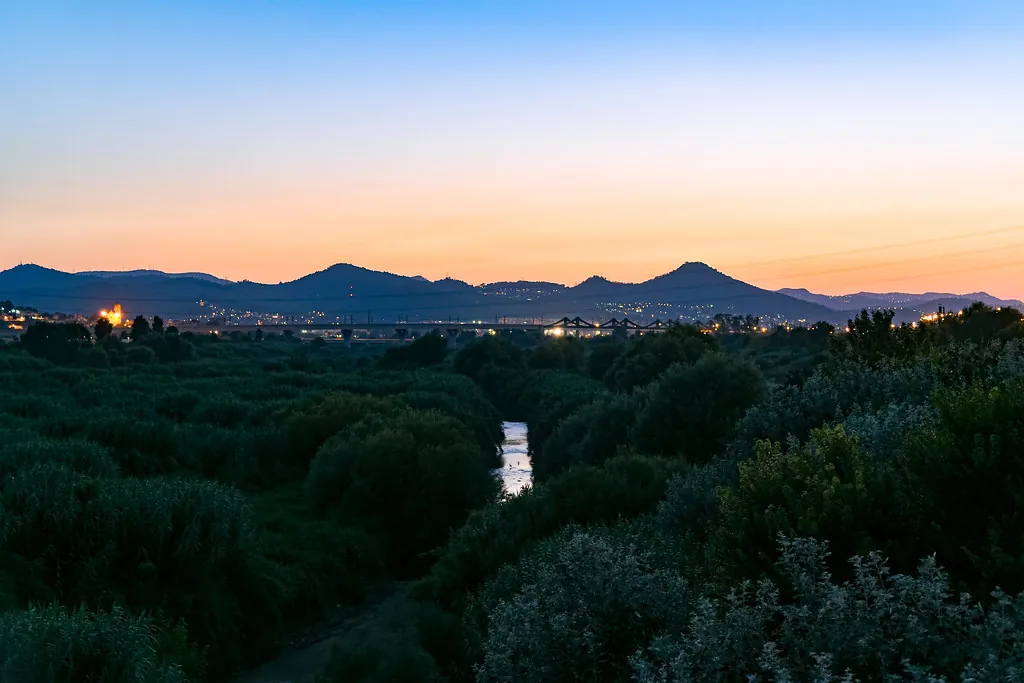
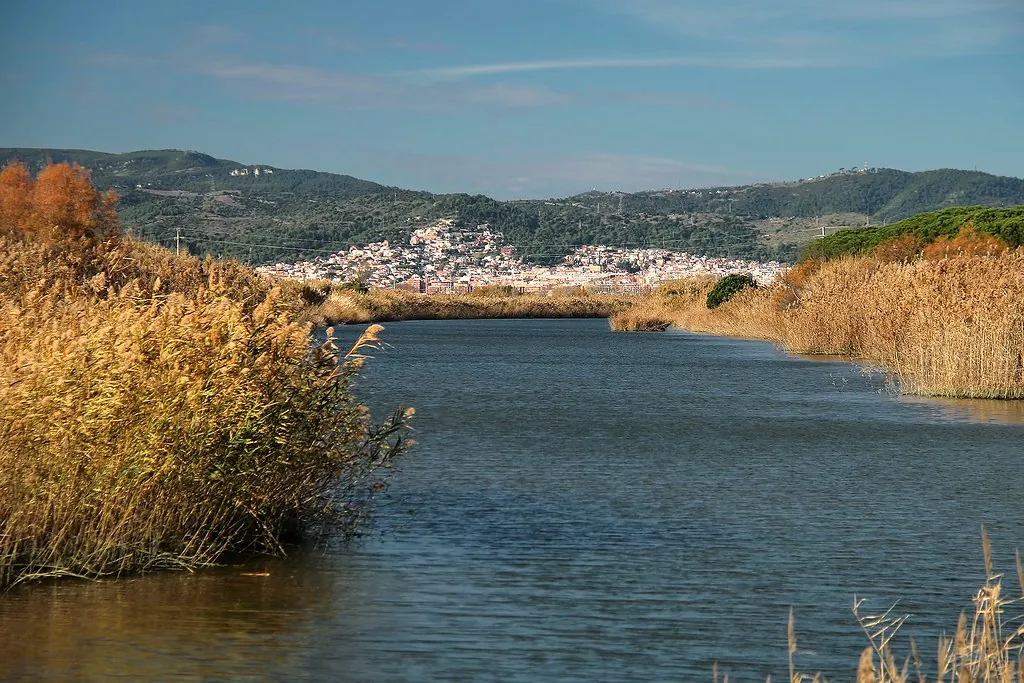
Yet only a few kilometres away, vineyards continue to define the landscape. Old masías, the traditional Catalan farmhouses often linked to wine and cava production, still stand among the fields. This coexistence is typical of the strip of territory between the Baix Llobregat and the Penedès: farmland and heavy industry occupying the same ground without cancelling each other out.
One anecdote surfaces again and again in conversation. For many years, one of the most famous lollipops in the world was manufactured here. Almost everyone has tried it at some point. The idea that such a globally recognised sweet came from a relatively small town adds a certain twist to Sant Esteve’s story.
Food in Sant Esteve follows the logic of inland Catalonia. Expect mongetes del ganxet con butifarra, a local white bean variety served with Catalan sausage, along with savoury cocas topped with roasted vegetables. Dishes are straightforward and rooted in market cooking rather than elaborate presentation.
Festivals that anchor the year
The local calendar revolves around the Festa Major de invierno, linked to the day of Sant Esteve. Like many winter patronal festivals in Catalonia, it continues to draw back people who have moved away but return for the celebration. It is one of those events that reinforces ties to the town, regardless of where daily life now takes place.
During the year there are also fairs connected to wine and cava, which makes sense given the vineyards that surround the municipality. These events underline how closely Sant Esteve remains tied to the wider Penedès wine culture.
In winter, the tradition of los Tres Tombs has been revived. This historic festival, common in many Catalan towns, features horses and carriages parading through the streets. On the right day, the atmosphere recalls older village celebrations when much of the community would gather outdoors to mark the occasion.
Walks among masías
Beyond the urban centre, Sant Esteve keeps one of its quieter attractions. A number of historic masías remain scattered around the municipality. Some have been restored, others continue to function as agricultural properties.
Signposted routes connect several of these old rural houses. The walks are not epic hikes or demanding treks. They are long, steady rambles along country paths, between vineyards and low pine woods. One of the striking aspects is the sense of proximity to Barcelona. You can be walking among fields and farmhouses while the metropolitan area lies relatively close by.
One of the best-known masías in the area now operates as a cultural space. It is an example of how agricultural buildings have gradually found new purposes, adapting to contemporary needs while retaining their original structure.
What kind of place is Sant Esteve Sesrovires?
Whether Sant Esteve Sesrovires is worth a visit depends largely on expectations.
Anyone picturing a medieval stone village with narrow alleys will need to look elsewhere. Here, history sits alongside housing developments, industry and regional roads. The town reflects growth and change rather than preservation in a single architectural style.
On the other hand, those curious about how this part of Catalonia really functions may find it revealing. The meeting point between the vineyards of the Penedès and the working towns of the Baix Llobregat is visible in everyday life. A short wander through the centre, followed by a walk out towards the surrounding masías and a look across the vine-covered landscape, tells much of the story.
Sant Esteve Sesrovires does not try to impress. It simply shows how agriculture, manufacturing and community life intersect in a corner of Catalonia that sits within reach of Barcelona yet keeps its own rhythm.