Full Article
about Sant Gregori
Gateway to the Llémena Valley; a residential area with plenty of nature near Girona
Hide article Read full article
You know when a friend says they're popping out to their village, and you realise their "village" is a ten-minute drive from the city centre? That's Sant Gregori. It's not one place, really. It's more like a collection of small settlements, about four thousand people spread out, that got grouped under one name on the map. The kind of place where you might catch the distinct, salty smell of curing meat from a local factory on the air. It makes you glance at your watch to see if it's lunchtime yet, even if it's only eleven.
It sits in the Vall de Llémena, practically on Girona's doorstep. Most people come for a quick look and end up staying for a slow morning.
How This Place Works: A Scattered Puzzle
The first thing to understand is the geography. Sant Gregori isn't a single, neat town square with radiating streets. It's a municipality made up of distinct little nuclei: Sant Gregori itself, Cartellà, Constantins, Ginestar, Sant Medir. You drive two minutes down a lane and you're in another one, past fields and over small streams. It feels less like exploring a town and more like visiting someone's extended family across several houses.
Back in the 70s, some of its historical territory was absorbed by Girona city itself. But what remained kept this fragmented, village-hopping character. Life here still operates on that scale.
Each nucleus clings to its own festa major. If you're around in summer, there's a good chance you'll stumble into one. They run on different weekends, so you might find chairs being set up in a plaza in Cartellà one Saturday and hear music from a square in Constantins the next. It’s local life, not put on for show.
Stone Walls and Second Chances
You'll see the Castell de Sant Gregori first. It’s medieval in origin, privately owned now, and used for events sometimes. You mostly look at it from the outside. But it has that solid, no-nonsense presence of something built to last, watching over the valley for centuries.
Then there’s the Castell de Tudela. Call it a fortified house more than a castle proper. It’s a reminder that this quiet valley was once a route someone wanted to control.
The real talker is the chapel of Sant Bartomeu de Segalars. It’s a 12th-century Romanesque hermitage that’s been put to work as an agricultural storehouse. If you're hoping for perfectly preserved arches and altarpieces, you'll be disappointed. But if you want to see how rural Catalonia pragmatically reuses what it has, it’s a pretty direct lesson.
For When You Feel Like Pedalling
Sant Gregori has carved out a name with mountain bikers. A network of signed routes start here, tracing the Riera de Llémena and climbing into the surrounding hills.
You don't need to be an expert; there are options. But don't be fooled by the gentle look of the valley floor from your car window. Once you're on two wheels, those slopes announce themselves quickly. They're the kind that make you suddenly very interested in the scenery directly in front of your front tyre.
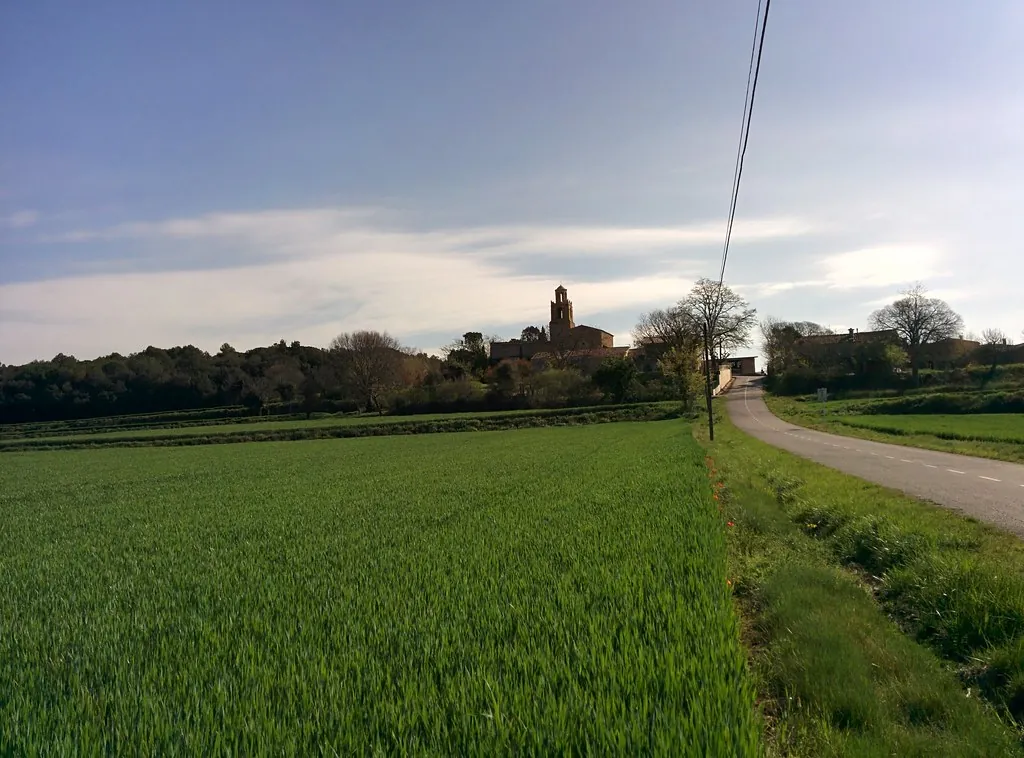
Even if you're walking, this landscape sets the tone: open fields framed by low hills. You can see Girona isn't far, but the rhythm here is all tractors and bird calls.
The Scent of Practical Things
Come autumn, they usually hold a bread and chocolate fair. It's a local thing—stalls, kids running around, maybe someone demonstrating how to shape a loaf. Its charm is its modesty; it feels like it's for the people who live here first.
The food follows suit: straightforward stuff from the land around here. Embutits (those cured meats), simple breads, savoury cocas topped with whatever's good.
And about that smell I mentioned earlier? There's a sizeable cured meats factory nearby. When the wind turns right, it wraps the whole area in this rich aroma of paprika and pork fat. Locals don't even mention it anymore; it’s just part of the air some days.
A Morning Out of Girona
Let's be clear: this isn't a multi-day destination unless you're deeply into bike routes or absolute quiet. Sant Gregori works best as a morning escape from Girona.
Come for two or three hours. Walk through one or two of the nuclei. Look at that castle. Follow a bit of path along the stream. Then sit with a coffee in whatever square looks most alive. That’s it.
It won't blow your mind with beauty, but that’s not really the point. What sticks with you is how it functions: several villages sharing one name, a rural valley that starts almost where city bus routes end, and that peculiar mix of country life with city convenience just down road. You come for quick look and leave feeling like you understood something simple, and useful, about how this corner of Catalonia actually lives