Full Article
about Sant Sadurní d'Anoia
World-renowned cava capital, famous for its many underground cellars.
Hide article Read full article
A Town Built on Bubbles
Tourism in Sant Sadurní d'Anoia inevitably revolves around cava. That is no coincidence. It was here, in the Alt Penedès region of Catalonia, that sparkling wine production took firm root in the late 19th century. When phylloxera devastated French vineyards, it created an unexpected opportunity for winegrowers on this side of the Pyrenees. Some local families began experimenting with a second fermentation in bottle, following the traditional method they had learned from French technicians.
At the time, Sant Sadurní was a small settlement of around two thousand inhabitants. Today it has close to thirteen thousand, yet its identity remains closely tied to the surrounding vineyards and to an industry that has shaped both its economy and its streetscape.
The parish church of Sant Sadurní stands at the heart of the old town. Its octagonal bell tower dates from the 16th century and was built over earlier Gothic structures. From the atrium, it is easy to grasp how the modern town expanded around this older core.
One of the key developments in that growth was the arrival of the Barcelona–Tarragona railway in the second half of the 19th century. The station made it far easier to send wine towards Barcelona and the ports, a decisive advantage once local wineries began producing sparkling wines more consistently.
Prosperity from the wine trade also left its mark on domestic architecture. In the centre, façades from the late 19th and early 20th centuries still display glazed ceramics, ornate balconies and balanced compositions typical of the transition between Catalan modernisme and noucentisme. They are not grand palaces, but they reflect the presence of a small local bourgeoisie connected to the cava business.
Between the Anoia and the Foix
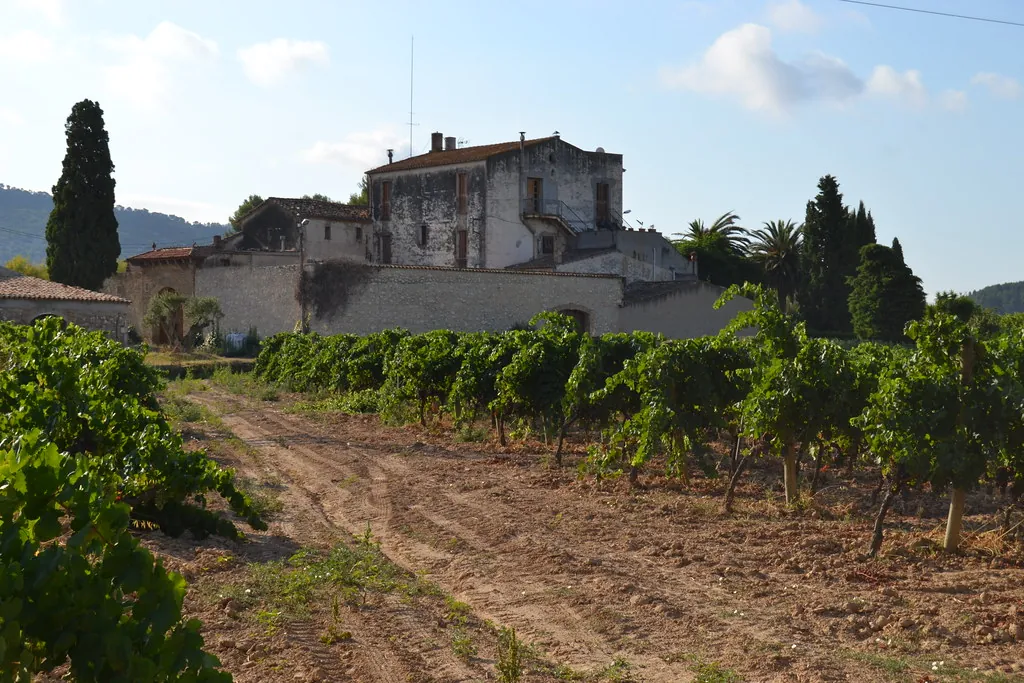
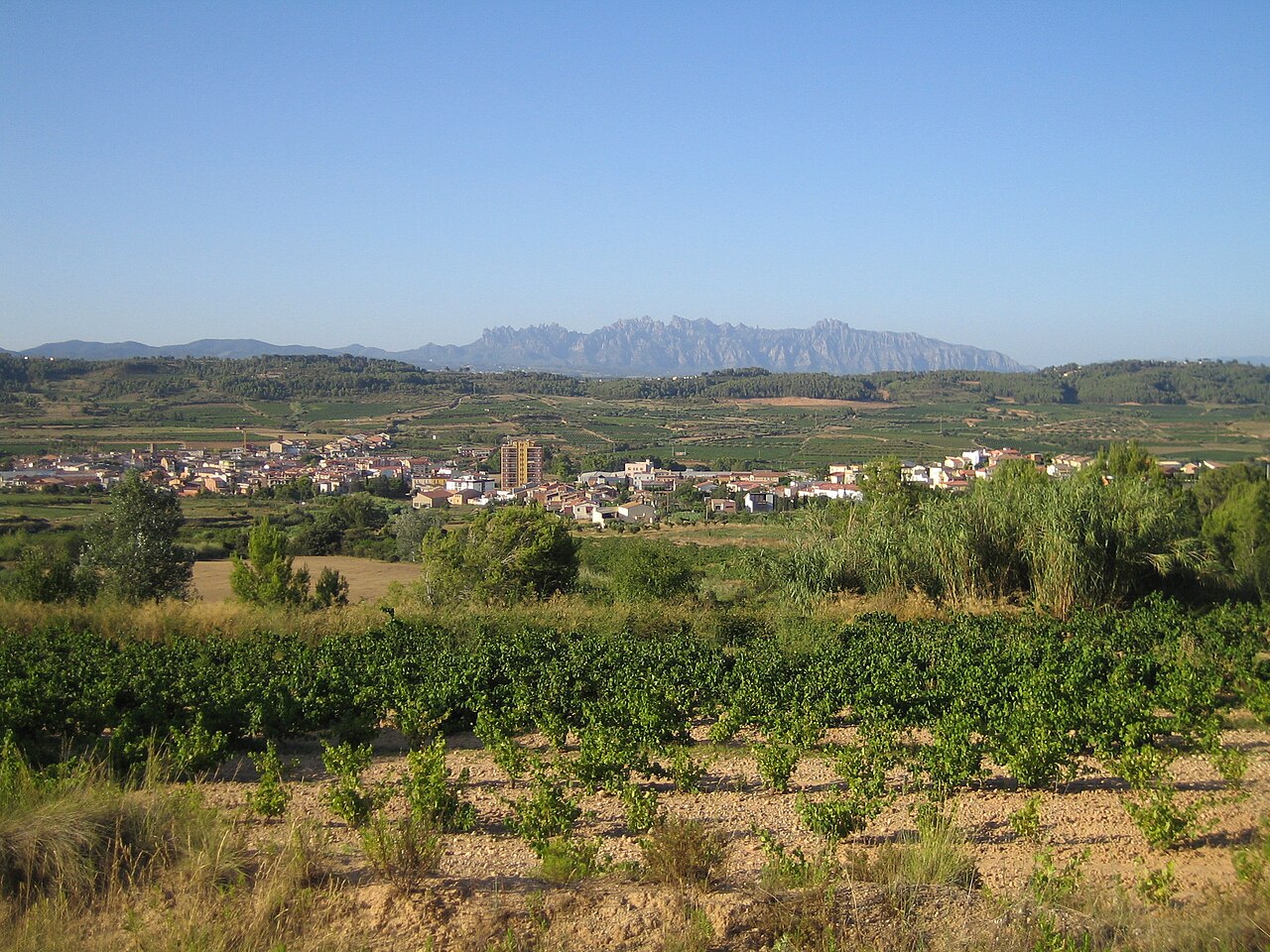
Sant Sadurní lies in the Alt Penedès, between the rivers Anoia and Foix, in a gently undulating landscape almost entirely covered with vineyards. The plots rise and fall over low hills reaching around 200 to 300 metres in altitude. It is a soft landscape rather than a dramatic one, shaped more by cultivation than by abrupt natural features.
The soils are largely limestone, formed when this area lay beneath the ancient Tethys Sea. That composition forces the vine roots to dig deep in search of water. The result is often more concentrated grapes, well suited to producing the base wines used for sparkling cava.
Around the municipality, several signposted routes cross this agricultural terrain. Some follow traditional paths threading between vineyards and masías, the rural farmhouses typical of Catalonia. Others lead towards the river Anoia along flatter trails. Among residents, walking along the riverside path is a common weekend habit.
Spending time on these routes helps to make sense of Sant Sadurní’s specialisation in sparkling wine. The scale of the vineyards, the continuity of the landscape and the proximity of the town all point to a place where agriculture and daily life have long been intertwined.
Cava Beyond the Glass
In Sant Sadurní, cava does not remain confined to the glass. It also finds its way into the kitchen. In many homes it is used in poultry stews, whether with chicken, duck or turkey depending on the season, often combined with nuts or fruit. The sparkling wine adds acidity and lightens sauces that might otherwise feel heavier.
There are also cured meats made with wine or with cava must, a practice that some local butchers have maintained for decades. It is another example of how closely food traditions mirror the area’s main product.
In local bakeries, sweets appear that incorporate cava liqueur or marc de cava, the spirit distilled from grape pomace. One well-known example in the area is a simple coca, a flat, cake-like pastry whose dough is hydrated with cava instead of milk. The substitution probably arose during years of scarcity, yet it endured because of the result: a lighter crumb with a faintly sharp edge.
These culinary uses show how cava permeates everyday life. It is not treated solely as a celebratory drink, but as an ingredient woven into familiar recipes.
Remembering Phylloxera
Each September, Sant Sadurní commemorates the episode that marked its recent history: the arrival of phylloxera in the Penedès at the end of the 19th century. The pest destroyed much of the vineyard within a few years and forced growers to replant using American rootstocks resistant to the insect.
The popular celebration recreates that dramatic moment. Figures represent both the insect and the winegrowers, and the programme includes parades and fire. The festivities culminate in a final performance in the main square symbolising the defeat of the plague.
Later in the autumn, a fair dedicated to cava usually takes place. Different wineries from the municipality present their wines, and the atmosphere remains largely local. Farmers, residents and visitors share a glass while discussing the year’s harvest.
These events offer a glimpse of how deeply the story of phylloxera and recovery remains embedded in local identity. What began as a crisis ultimately redirected the area towards sparkling wine and reshaped its future.
Getting There and Timing a Visit
Sant Sadurní d'Anoia is connected by train to Barcelona and Tarragona via the railway line that runs through the Penedès. The station is just a few minutes’ walk from the centre, making the town straightforward to reach without a car.
If the aim is to see Sant Sadurní at its most active, the harvest period, usually between late summer and early autumn, changes the rhythm of the place. Early in the morning, tractors and lorries loaded with grapes move through the streets, and the sweet scent of freshly pressed must lingers in the air.
The urban centre can be explored without difficulty in a couple of hours. With more time, it is worth visiting one of the spaces open to the public that are linked to cava production, or heading out onto the vineyard paths that encircle the municipality. In those surroundings, the reasons behind this part of the Penedès specialising in sparkling wine become easier to understand.