Full Article
about Els Plans de Sió
Municipality that groups several villages with notable castles such as the one in Concabella.
Ocultar artículo Leer artículo completo
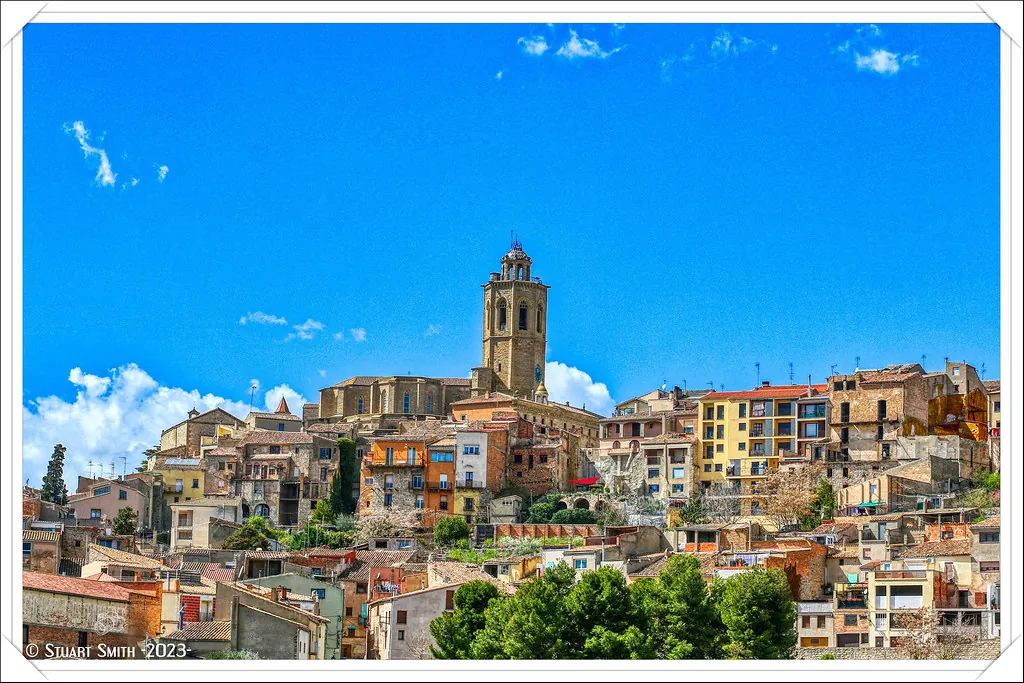
The church bell tower of Sant Pere rises from wheat fields so flat they seem pressed by a giant hand. At 400 metres above sea level, Els Plans de Sió sits in the middle of Catalonia's cereal belt, where the horizon stretches uninterrupted for kilometres in every direction. This is the antithesis of coastal Catalonia—no cruise ships, no souvenir shops, just stone farmhouses scattered across an agricultural sea that shifts from emerald to gold with the seasons.
The View from the Plains
Drive the C-53 from Lleida and the landscape flattens dramatically. By the time you reach Els Plans de Sió's 494 inhabitants, the Pyrenees have shrunk to a jagged outline on the northern horizon. The village name translates roughly to "plains of the Sió," referring to the modest river that snakes through these fields. It's a landscape that demands patience—beauty emerges slowly, in the way morning mist pools in shallow valleys, or how the afternoon sun turns wheat stubble into a copper carpet.
The agricultural calendar dominates here. April brings bright green shoots that ripple like water in the breeze. June sees combines crawling across fields like mechanical beetles. By August, the stubble burns gold under a relentless sun that pushes temperatures past 35°C. Winter strips everything back to bare earth and stone, revealing the fortified farmhouses that dot the landscape—these masías with their defensive towers recall centuries when this frontier land sat between warring kingdoms.
Stone and Silence
Sant Pere's church anchors the village physically and socially. Built with chunks of local sandstone, it incorporates Romanesque elements from the 12th century alongside later additions. The bell tower serves as navigation beacon—walk in any direction for ten minutes and you can still spot it rising above the wheat. Inside, the atmosphere is cool and dim, heavy with the scent of incense and centuries of candle smoke. Sunday mass at 11am still draws a decent crowd; visitors are welcome but expected to dress modestly.
Beyond the church, Els Plans de Sió dissolves into agricultural land within minutes. The streets aren't picturesque—they're functional, lined with modest two-storey houses painted in sun-faded ochres and pinks. Chickens scratch in dusty gardens. An elderly man in a flat cap pedals past on a bicycle that predates the EU. There's no centre to speak of, just a loose cluster of houses around the church and a bar that opens sporadically.
The real architectural interest lies scattered through the surrounding countryside. Masía de Queralt, now operating as rural accommodation, exemplifies the fortified farmhouse tradition. Its stone tower rises four storeys, originally built for spotting approaching brigands rather than admiring views. Inside, thick walls keep rooms cool even during July heatwaves. The conversion maintains original features—wooden beams, stone sinks, tiny windows designed for defence rather than light. At €90-120 per night including breakfast, it offers better value than coastal alternatives, though you'll need transport.
Walking Through History
Els Plans de Sió rewards those content with simple pleasures. Several rural tracks radiate from the village, following ancient rights of way between fields. These aren't manicured walking trails—expect dirt tracks, occasional tractor traffic, and zero signage. The reward is absolute quiet, broken only by skylarks and the distant hum of farm machinery. A circular route of 8km takes in the hamlet of Montgai and returns via the Sió river, where willows provide rare shade and kingfishers flash blue above the water.
Spring proves ideal for walking, with temperatures in the low twenties and fields bright green with young wheat. Autumn offers comfortable hiking weather plus the bonus of stubble burning—local farmers torch crop residue in controlled fires that send columns of smoke skyward like agricultural signal flares. Summer walking requires commitment—shade is minimal, temperatures brutal, and the sun reflects off pale earth with blinding intensity. Winter brings biting winds that sweep unchecked across the plains; locals wrap up in thick coats and still hurry between destinations.
Birdwatchers should bring binoculars. The open fields support hen harriers and short-toed larks, while the river corridor attracts migrating species during spring and autumn. Early mornings deliver the best sightings—park by the bridge on the LV-3023 and scan the reeds for purple herons and great reed warblers.
Bread, Oil and Other Essentials
Els Plans de Sió lacks restaurants, shops even a village store. The nearest supermarket sits 12km away in Cervera, the comarca capital. This necessitates planning—self-caterers should stock up before arrival. The village bar opens randomly; locals suggest listening for music on weekend evenings, but don't rely on it for meals.
What the area lacks in convenience, it compensates for in product quality. Ask at Masía de Queralt about local suppliers—the owner directs guests to nearby farms producing exceptional olive oil, artisanal cheeses and traditional embutidos. The Segarra region specialises in hearty country fare: try fuet (cured sausage) from neighbouring farms, or sample local honey that tastes distinctly of the wild herbs growing in field margins. During autumn, mushroom foragers head to the pine plantations south of the village—though you'll need permits and local knowledge to avoid toxic varieties.
Cervera provides practical backup—15 minutes drive delivers restaurants, banks and a surprisingly good museum in the old university building. Try Restaurant Cal Ganxo for traditional Catalan cooking at reasonable prices—expect to pay €25-30 for three courses including wine. Their cargols a la llauna (oven-roasted snails) divide opinion but represent authentic local cuisine.
Getting There, Getting Away
Els Plans de Sío demands wheels. Barcelona airport lies 120km east—hire a car and allow 90 minutes via the A-2 motorway. The final stretch involves country roads where tractors trundle at 20km/h and overtaking requires patience. Lleida's airport offers alternative access but fewer flights—Ryanair operates domestic routes plus the odd international connection.
Public transport barely exists. Buses connect Cervera with Barcelona and Lleida, but reaching Els Plans de Sió requires taxi or pre-arranged transfer. Cycling appeals to the energetic—the area sits dead flat between mountain ranges, though summer heat and scarce shade make it challenging. Bring plenty of water and factor in afternoon headwinds that can turn a gentle ride into hard work.
The village makes little concession to tourists—which forms much of its appeal. English isn't widely spoken; basic Spanish or Catalan helps enormously. Bring cash—many local suppliers don't accept cards. Mobile reception can be patchy between villages; download offline maps before exploring.
Els Plans de Sió won't suit everyone. Nightlife means watching stars emerge across an unbroken sky. Shopping involves driving to Cervera. The landscape reveals itself slowly, rewarding patience rather than Instagram moments. Yet for those seeking to understand rural Catalonia beyond the coastal clichés, this wheat-field outpost offers something increasingly rare: authenticity without artifice, where the agricultural rhythm hasn't yet been choreographed for visitors.