Full Article
about Granyanella
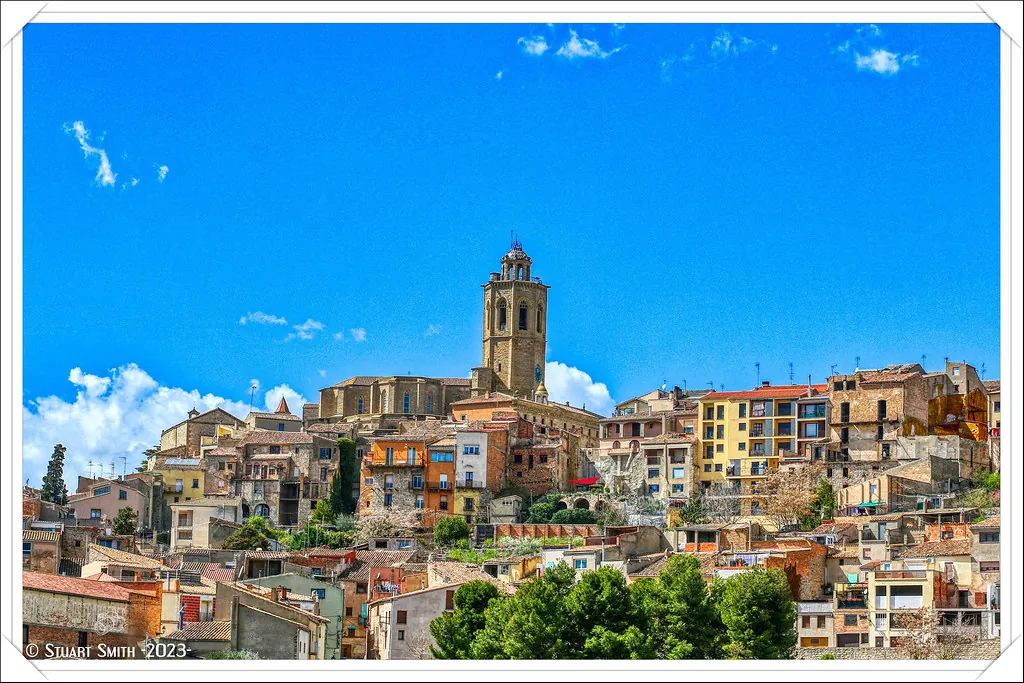
Small cluster gathered at the foot of its castle; cereal landscape
Hide article Read full article
A village shaped by silence and fields
At the edge of La Segarra, when the midday sun flattens shadows against stone walls, Granyanella comes into view. At that hour, sound is scarce. Now and then a car passes along the nearby road, insects hum over the fields, and swifts cross high overhead. With just over one hundred and fifty residents and sitting at around 500 metres above sea level, the village moves at a different pace, closely tied to the surrounding cereal fields.
There are no large monuments or streets designed for quick snapshots. The size of the village encourages a slower walk. Rounded archways mark entrances to houses, stone façades hold onto cool air even in August, and the church bell tower rises above the rooftops. It does not take long to walk through the entire settlement, yet it rewards unhurried attention. A darkened wooden door, a vine climbing a wall, the dry sound of footsteps on uneven ground all stand out more clearly when time is taken.
Beyond the built-up area, the landscape of La Segarra opens immediately. Broad fields stretch out in all directions, mostly given over to cereal crops. Their appearance shifts with the seasons: soft green in spring, turning golden as summer arrives, then more muted after the harvest. Rural tracks leave the village in several directions and fade into a patchwork of dry-stone walls and small cultivated plots.
Sant Jaume and the older fabric of the village
The church of Sant Jaume is the main visual reference point in Granyanella. Its origins are usually placed in the medieval period, although the current building clearly shows later alterations. The bell tower can be seen from the surrounding paths and acts as a guide when walking back towards the village across the fields.
Within the streets, several houses feature well-crafted arched doorways made from carefully shaped stone blocks. Windows tend to be small, designed to keep interiors cool during the warmer months. Some properties still have underground cellars dug beneath the house. These were common in this part of La Segarra when wine was produced for household consumption. They are not generally open to visit, but their presence can sometimes be guessed from small օդ-sized ventilation openings at ground level.
In the area around the village there are also a few rural hermitages, similar to those found across many agricultural parts of the comarca. These are simple buildings that traditionally served as meeting points on specific dates in the religious calendar. Their role is modest, yet they remain part of the wider landscape that connects settlement, farming and tradition.
Walking the paths of La Segarra
The surroundings of Granyanella are well suited to walking or cycling along agricultural tracks. The terrain is mostly gentle, with few steep changes in elevation. The challenge here is not the slope but the sun. In summer, shade is limited and the heat falls directly across the open fields. During the warmer months, it makes sense to head out early in the morning or later in the day, when the light softens and the air begins to move again.
These fields are also a good place to notice birdlife linked to agricultural environments. Kestrels hover in place above the ground, hoopoes search for insects along the edges of fields, and goldfinches move through taller grasses. With a small pair of binoculars and a bit of patience, a simple walk becomes more engaging, drawing attention to movement and sound that might otherwise go unnoticed.
The paths themselves are not formal trails but working routes used for access to fields and plots. They connect different parts of the landscape in a practical way, rather than being laid out for visitors. This adds to the sense that the area is still shaped primarily by farming activity rather than tourism.
A calendar tied to land and community
The main annual celebration is the festa major, usually held around Sant Jaume at the end of July. These are quiet days, closely linked to those who live in the village or maintain a family home there. Activities tend to be few and concentrated in specific parts of the village, reflecting its small size and close-knit nature.
Outside those dates, the rhythm of the year remains strongly connected to the land. The cereal harvest in summer marks one of the key moments, when the surrounding fields change both in colour and activity. Later in the year, with the first autumn rains, there is the search for rovellons, a type of wild mushroom common in Catalonia. Small family vegetable gardens in the area also continue to be worked, maintaining a link between daily life and seasonal change.
These everyday practices help explain how life still functions in this part of La Segarra. The pace is steady, shaped less by external schedules and more by cycles that repeat year after year. Visitors passing through may notice how little needs to be added for the place to feel complete: a few streets, open land in every direction, and a way of life that continues without drawing attention to itself.