Full Article
about Granyena de Segarra
Fortified hilltop village; retains medieval layout and castle remains
Ocultar artículo Leer artículo completo
The tractor arrives at 7:30 sharp. Not that anyone's watching the clock—time moves differently at 636 metres above sea level, where Granyena de Segarra's 152 residents still organise their days around cereal harvests and the formidable weather that sweeps across Catalonia's interior. One moment you're admiring spring wheat rippling like water; the next, a cloud bank has rolled in from the Pyrenees and the temperature's dropped ten degrees.
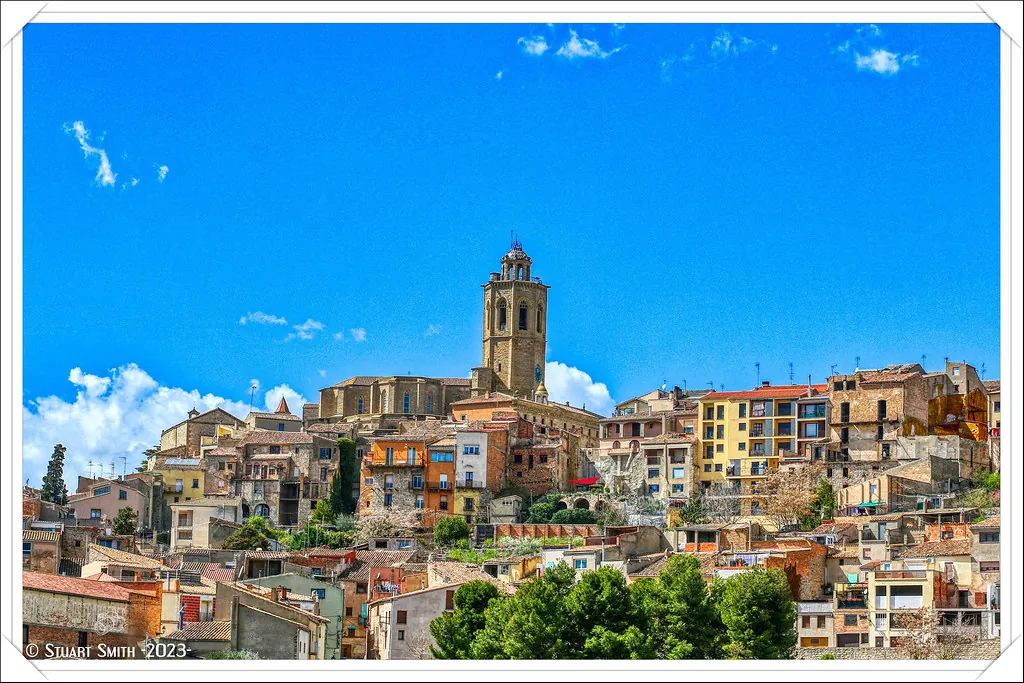
This is the Segarra comarca, a high plateau northwest of Barcelona that most British visitors bypass for the Costa Brava. They miss something. The landscape reads like a topographical map made real: gentle swells of ochre soil, stone margins cranked into position centuries ago, and everywhere the smell of dry earth after rain. Granyena sits dead centre, a single church spire and a cluster of stone houses that look as though they've grown out of the ground rather than been built on it.
Stone, Sky and the Smell of Rain on Earth
Park by the municipal sports ground—essentially a concrete pad with one hoop—and the village reveals itself in a five-minute stroll. Carrer Major narrows to the width of a hay bale; walls are the colour of winter barley. There's no souvenir shop, no interpretive centre, not even a bar. What you get instead is acoustic space: your footsteps echoing off stone, the wind whistling through telephone wires, and every so often the metallic clank of a stable door. It feels like trespassing on ordinary life, because you are.
The parish church of Sant Pere won't make the cover of Catalonia's Greatest Churches. What it does is anchor the place. Built from the same honey-coloured limestone as the houses, it reminds you that rural faith here was practical—thick walls to keep out January cold, a bell to call workers in from the fields, a porch deep enough to shelter a tractor starter motor when frost bit. Step inside during mass (Sundays at 11, attendance variable) and you'll hear Catalan spoken at full volume, the way it was before tourism made everyone bilingual.
Outside, the temperature can swing 20 °C between dawn and midday. Summer sends the mercury past 35 °C by noon; winter brings snow that lingers just long enough to inconvenience the farmers and delight the handful of photographers who've discovered the plateau. Spring and autumn are the sweet spots, when you can walk before breakfast without sunscreen and eat lunch outdoors without shivering.
Walking Lines Older Than Ordnance Survey
There are no way-marked trails, which is precisely the point. Farm tracks radiate from Granyena like spokes, linking hamlets whose names—Els Garrics, El Pujol—appear only on local maps. A decent 8 km loop heads south-east towards the ghost hamlet of Castell de Granyena, where a ruined 11th-century watchtower keeps vigil over wheat fields. The going is flat, but at altitude the air thins faster than you'd expect if you've just flown in from sea-level Gatwick. Take water; the only fountain is back in the village and the pubs are kilometres away.
Cyclists use the same lattice of camins. Tarmac is scarce, traffic rarer still. What you will share the track with is wildlife: red-legged partridge scuttling into ditches, the occasional hoopoe drilling a telegraph pole, and red kites circling overhead like scraps of burnt paper. Binoculars help—this is one of the few places in Europe where you can spot both little and great bustard within a morning's ride, assuming you recognise either.
If you prefer someone else to do the navigating, the tourist office in Cervera (25 minutes by car) hires out GPS units pre-loaded with local routes. They also sell a €3 map printed on waterproof paper, worth every cent when the plateau's infamous summer storms turn dust to glue in minutes.
Calories and Carbohydrates
Granyena itself has no restaurant. Lunch options are:
- Bring a picnic and use the stone tables under the plane trees by the cemetery
- Drive 12 minutes to Guissona, home of Cal Fuster, a no-frills café that does a three-course menú del dia for €14, wine included
- Time your visit for the first weekend in October when the village hosts a communal paella in the schoolyard—turn up, donate €10, eat from a pan the diameter of a satellite dish
The regional speciality is pa de pagès, a round sourdough loaf weighing up to two kilos. Buy one at Forn Alícia in Torrefeta (closed Tuesdays) and it will still be edible four days later, perfect if you're self-catering in one of the converted barns that locals rent out through Airbnb. Expect to pay £65–£90 a night for a two-bedroom house with beams, wood-burner and a roof terrace that faces west into sunsets the colour of Cheddar.
Getting Here Without Losing the Will
Public transport is for optimists. The last bus from Lleida to Cervera leaves at 19:10; after that you're in taxi territory (£35 fixed fare). Car hire from Reus or Barcelona airports takes 90 minutes via the A-2 motorway, but beware weekend tractors that treat the slip road as their personal driveway. Winter drivers should carry snow chains—grit spreads slowly this far from the coast, and the final climb into Granyena faces north, so ice lingers.
Accommodation is thin on the ground. Besides the Airbnb lets, there's one official rural guesthouse: Cal Titus, three rooms above the old village bakery. Rates include breakfast—strong coffee, that indestructible bread, and homemade apricot jam from trees you can see through the window. Book ahead; half of Barcelona seems to have discovered the place.
When to Bail Out
Come July and August the plateau becomes a kiln. By 14:00 the thermometer hits 38 °C, shade is theoretical, and even the lizards look irritable. August also brings the Segarra harvest: combine harvesters the size of semi-detached houses clog the lanes, moving at the speed of a reluctant toddler. Fine if you like agricultural theatre, less so if you hoped for silent contemplation.
January and February flip the problem: daylight is scarce, the mistral-style wind known as the cierzo knives through three layers of Rohan, and many guesthouses simply close. Check before travelling; "closed for reforms" often means "can't afford to heat the place".
Leaving Without the T-Shirt
Granyena won't sell you a fridge magnet. What it offers instead is a calibration check for anyone who thinks Spain begins and ends with tapas trails and flamenco timetable apps. Stand at the edge of the plateau at dusk, wheat stubble glowing like brass under a bruised sky, and you understand why people choose to live at altitude where the air hurts and the nearest espresso requires a 20-minute drive. Then the church bell tolls, a dog barks, and ordinary life reasserts itself. Drive away, and the silence fills in your tyre tracks within minutes.