Full Article
about Guissona
Major food-processing hub; former Roman town of Iesso with archaeological park
Ocultar artículo Leer artículo completo
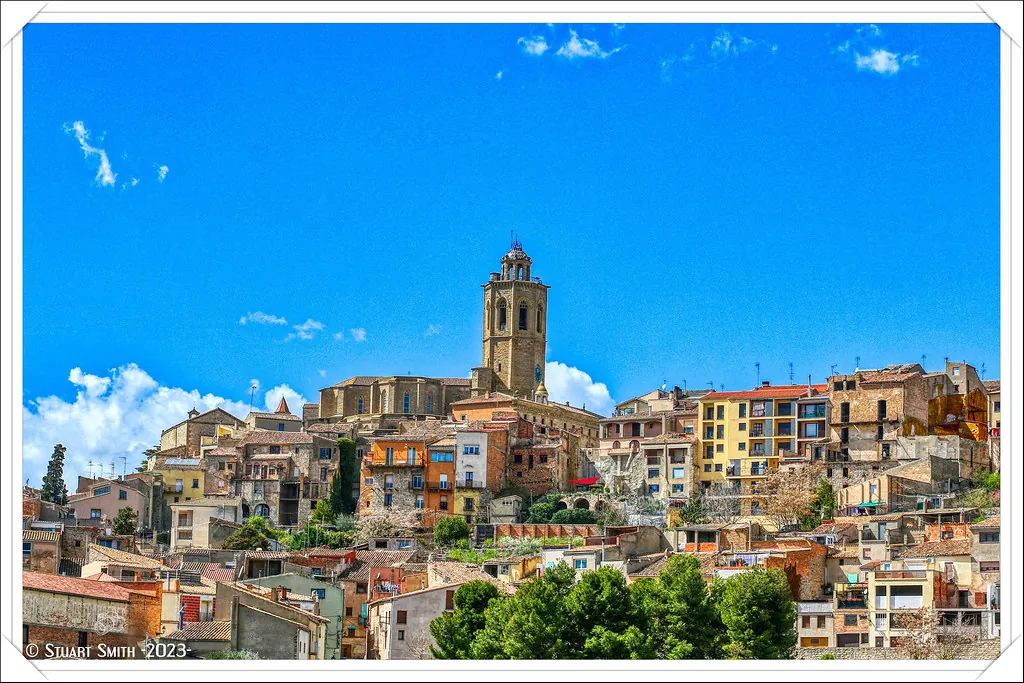
The first thing that strikes you about Guissona is the altitude. At 484 metres, the air carries a dryness that makes summer heat bearable and winter mornings sharp enough to slice bread. Standing at the edge of town, the wheat fields roll away like a golden ocean, broken only by the occasional stone farmhouse and the distant silhouette of Montserrat. This isn't the Catalonia of package holidays – it's the interior, where farmers still set their watches by the church bell and the Roman ghosts outnumber the living.
Roman Footprints in Dry Earth
Two thousand years ago, Iesso stood here – a Roman municipium that minted its own coins and controlled the route between Tarragona and the Pyrenees. Today, you can walk the same forum where toga-clad merchants once haggled over grain prices. The archaeological park isn't Pompeii – portions of wall poke through the grass like broken teeth, and the forum is more foundation than fantasy – but the stones are real and the setting intimate. The small museum on Carrer Major houses a collection that punches above its weight: bronze surgical tools that wouldn't look out of place in a modern clinic, mosaic fragments where you can still trace the artist's thumbprints, and coins worn smooth by countless transactions.
The admission price won't break anyone's holiday budget – five euros covers both site and museum, with audio guides available in English if you remember to ask. British visitors consistently note the place feels "half-empty," but that's part of the appeal. You won't queue for selfies or dodge tour groups here. The custodian might unlock the gate personally if you arrive at odd hours, and she's happy to point out details that larger sites bury under crowds.
Beyond the Historic Quarter
Let's be honest – Guissona's medieval core is tiny. You can circumnavigate it in twenty minutes, counting the time it takes to photograph the twelfth-century Portal de Sant Antoni. The Romanesque church of Santa María has been rebuilt so many times it resembles a architectural palimpsest, with Gothic arches springing from Roman foundations and Baroque touches grafted onto medieval bones. Yet the surrounding streets reward wandering. Narrow lanes twist between stone houses where elderly residents still hang washing from iron balconies, and the occasional Renaissance doorway reminds you that this was once frontier territory between Christian Spain and Moorish holdings.
The real town sprawls outward in utilitarian fashion. Modern apartment blocks and the distinctive orange-and-white bonÀrea complex dominate the approach roads – Spain's agricultural cooperative system made concrete. Some visitors find this jarring, expecting a chocolate-box village frozen in time. Guissona makes no apologies for being a working town where tractors share roads with hatchbacks, and where the supermarket sells everything from tractor parts to local cheese.
Walking Through Wheat and Time
The Segarra region offers walking opportunities that suit British ramblers seeking something different from Peak District mud. A network of rural tracks connects Guissona to neighbouring villages – try the nine-kilometre loop to neighbouring Els Plans, where the only sounds are wheat rustling and the occasional buzzard. Summer walking demands early starts; by eleven the sun has baked the landscape to biscuit hardness, and shade exists only where poplars line dried stream beds. Spring brings green wheat and wild poppies, while autumn paints the stubble fields bronze.
The tourist office lends mountain bikes free against a passport deposit, though they don't supply helmets – bring your own if safety standards matter. The Roman Route MTB trail makes a pleasant half-day circuit, mixing farm tracks with short road sections. Road cyclists find the rolling terrain perfect for building winter base miles, with gradients that never punish but always reward.
What to Eat When You're Not in Barcelona
Food here speaks of poverty turned into virtue. The local longaniza – a cured sausage spiced with pepper and garlic – evolved to preserve meat in the days before refrigeration. Today's version bears little resemblance to British bangers; it's dense, chewy, and flavoursome enough to make tapas with nothing more than bread and tomatoes. The Cooperativa shop on Plaça Major sells vacuum-packed versions that pass UK customs, making practical souvenirs for carnivorous friends.
Sunday lunch remains the week's social event. Cal Ganxet serves proper three-course menus for sixteen euros, featuring escudella (a hearty stew that could teach Scotch broth new tricks) followed by grilled lamb. During the week, options shrink dramatically. The bonÀrea cafeteria becomes the de facto canteen – roast chicken, chips and salad bar won't win Michelin stars, but it feeds families without complaint or delay. Vegetarians should try the bakery's Coca de Recapte, a flatbread topped with roasted vegetables that's essentially pizza's Catalan cousin.
When Romans March Again
The third weekend of July sees Guissona's population triple as Roman re-enactors occupy the archaeological site. It's gloriously amateur – local teenagers in plastic helmets rub shoulders with history enthusiasts who've spent thousands on authentic kit. Children can try writing on wax tablets, while their parents sample honey cakes that taste surprisingly modern. The event won't rival English Heritage spectacles for polish, but the enthusiasm proves infectious. Accommodation books out months ahead; most British visitors day-trip from Lleida or Cervera.
Winter brings different rhythms. January's Sant Antoni festival features bonfires and barbecued botifarra sausages, with locals wearing traditional Catalan caps that make them look like French berets gone wrong. The archaeological park closes early, but the museum stays heated and welcoming. January mornings often start with frost silvering the wheat stubble – bring layers, because the dry cold penetrates despite blue skies.
Getting There, Staying Sane
Guissona sits ninety minutes west of Barcelona, but psychologically it's further. No train reaches here; buses from Lleida run four times daily, dropping you at the edge of town by the wheat silos. Hire cars make more sense – the drive up the A-2 then C-1412 offers classic Spanish interior scenery: olive groves giving way to cereal plains, with medieval villages perched on every strategic hill.
Motorhome owners already know the bonÀrea car park, marked on every continental camping app as a free overnight stop with services. The trick is arriving after the afternoon truck rush and leaving before the delivery lorries start at dawn. Hotel options are limited – the Hostal Sant Antoni provides clean, basic rooms above a bar, but don't expect luxury. Book ahead during festivals or accept a thirty-minute drive to alternatives in Cervera.
The altitude moderates summer heat compared to coastal Spain, but July and August still hit thirty-five degrees. Spring and autumn offer the sweet spot – warm days, cool nights, and wheat fields that change colour like slow-motion fireworks. Winter brings crisp mornings and empty sites, but also the chance that nothing opens without prior arrangement.
Guissona won't suit everyone. If your Catalan dream involves Gaudí and beach bars, stay on the coast. But for travellers who measure value in empty roads, authentic sausage, and the chance to stand where Roman soldiers once complained about the posting, this wheat-town delivers. Come for the archaeology, stay for the realisation that two thousand years of history can feel remarkably like yesterday – especially when the church bell still marks time across fields that fed empires.