Full Article
about Massoteres
Small municipality with rural charm and stone architecture
Ocultar artículo Leer artículo completo
The grain elevator still works. It shouldn’t be remarkable, yet in Massoteres the metallic rattle of augers moving barley from trailer to storage is the loudest sound most visitors will hear all afternoon. At 502 metres above sea-level, the village sits high enough for the air to carry only three things: the scent of dry straw, church bells on the hour, and, if the wind swings north, the faint clank of a tractor repairing a terrace wall somewhere out of sight.
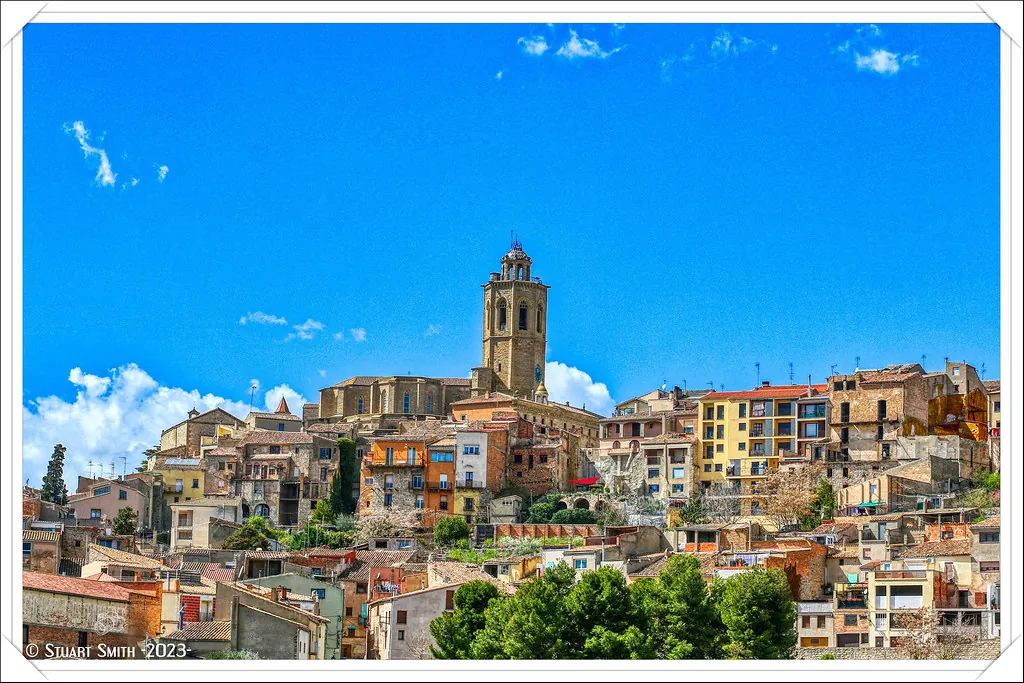
This is the Segarra, Catalonia’s least-visited comarca, a plateau of rolling cereal fields that feels closer to Castile than to Barcelona. Massoteres itself numbers barely 220 souls, their stone houses clamped tight around the parish church of Sant Miquel. The building is no older than it needs to be—Romanesque bones dressed in later brickwork—yet its sandstone glows the colour of toasted bread at sunset, a useful landmark when the narrow lanes all bend back on themselves like folded paper.
The Arithmetic of Silence
Visitors arrive expecting emptiness and are surprised by maths. From the small mirador south of the village you can count eight hamlets, each a dozen roofs maximum, scattered across thirty square kilometres. The distances look walkable until you set out; the plateau’s gentle swells hide dips and drainage gullies that add half an hour to every map measurement. In April the fields are an almost aggressive green, the wheat still low enough to reveal the curves of abandoned threshing floors, circular stone platforms now used only by booted hikers as lunch tables. By July the same land has turned blonde and brittle; the wind combs it like hair and the whole landscape seems to whisper.
Walking is still the best way to understand the place. A signed loop heads north-east for 7 km to Sant Ramon castle, a roofless 12th-century watchtower that once commanded the road between Lleida and Cervera. The path follows the GR-175, a long-distance footpath that nobody quite manages to finish; most day-trippers turn back after the almond orchards, satisfied once the village has shrunk to a smudge of terracotta between two hills. Carry water—there is no bar on the route, and the only spring marked on older maps dried up during the 2012 drought.
Bread, Oil and the Missing Menu
Massoteres has no restaurant. It barely has a shop: the grocery opens three mornings a week and stocks tinned tuna, tisanes and locally milled flour that still contains flecks of bran. If you want a proper meal you drive 12 minutes to Sant Guim de Freixenet, where Cal Tito grills Segarra lamb over vine cuttings and charges €18 for half a kilo. The village instead offers something harder to export: the smell of new bread drifting from the cooperative bakery at 6 a.m., followed by the sight of two elderly men carrying identical paper bags up Carrer Major, their daily conversation already concluded before the first coffee.
Oil is another matter. Many garages here contain an ancient stone press, relics from when every farm produced its own arbequina olive oil. Some families still harvest; if you ask politely they may sell you a 500 ml bottle with no label, the contents so green they look radioactive and peppery enough to make you cough. Bring cash—€7 is the usual rate—and your own container; environmental virtue arrived early in the Segarra if only because plastic jerrycans are expensive.
When the Fiesta Fits
The annual fiesta happens around 29 September, timed to the feast of Sant Miquel and the completion of the barley sowing. For three days the population quadruples; second cousins appear with folding chairs, a marquee goes up in the plaça and someone’s nephew DJs from a hay trailer. The programme is reassuringly fixed: Saturday evening sardana danced to a scratchy recording, Sunday morning mass followed by calçotada-style barbecue using beef from neighbouring farms, Monday afternoon communal paella cooked on orange-tree wood. Visitors are welcome but not announced; buy a raffle ticket (€2) for the ham hanging by the bar and you are, for that afternoon, considered local.
Outside fiesta week the social calendar thins to village council meetings and the occasional mobile cinema that projects Catalan-dubbed films onto a bedsheet strung between two poplars. Winter can feel long. Fog pools in the low fields, the thermometer hovers just above freezing and the GR-175 turns to clay that sticks to boots like wet cement. Anyone planning a Christmas visit should rent a house with proper heating; stone walls 80 cm thick keep out July heat but also trap December cold.
Getting There, Getting Out
No train reaches Massoteres. The nearest station is Cervera, 22 km away, served by a Renfe service from Lleida that runs four times a day and takes 35 minutes. From Cervera a twice-daily bus inches through the hills, departing at 7:15 a.m. and 2 p.m., returning immediately after the driver has bought a sandwich. Miss it and a taxi costs €35. Driving is simpler: leave the AP-2 at Lleida, follow the A-2 towards Barcelona, then swing north on the C-1412; the turn-off is signposted but easy to overshoot at 90 km/h.
Accommodation is limited. There are four rural houses within village limits, sleeping six to ten, prices from €90 a night for the whole property. Booking ahead is essential in April–May and September–October when cyclists use the Segarra as a training ground. The local tourist office—open Tuesday and Thursday 10–1—will hand you a ring-bound folder of photographs and a photocopied map, then apologise because the website hasn’t been updated since 2018.
The Honest Season
Come for the wheat cycle, not for monuments. April brings storks and wild asparagus along the track edges; late July offers threshing demonstrations using a 1950s red Massey Ferguson; October smells of damp earth and diesel as the first barley shoots break through. August is the dud month: sun-bleached, listless, the metallic rasp of cicadas replacing the grain elevator. Hotels in the region drop prices then, but the landscape offers little consolation unless you enjoy looking at straw that has already surrendered.
Leave before dusk if you are driving; wild boar own the roads after dark and the village has no petrol station. The last proper services are in Cervera, where you can fill up, buy a decent baguette and still be on the A-2 before nightfall. Behind you Massoteres will return to its arithmetic—two hundred people, five hundred metres, centuries of barley—while the wheat keeps whispering things that almost make sense until the wind changes.