Full Article
about Sant Guim de la Plana
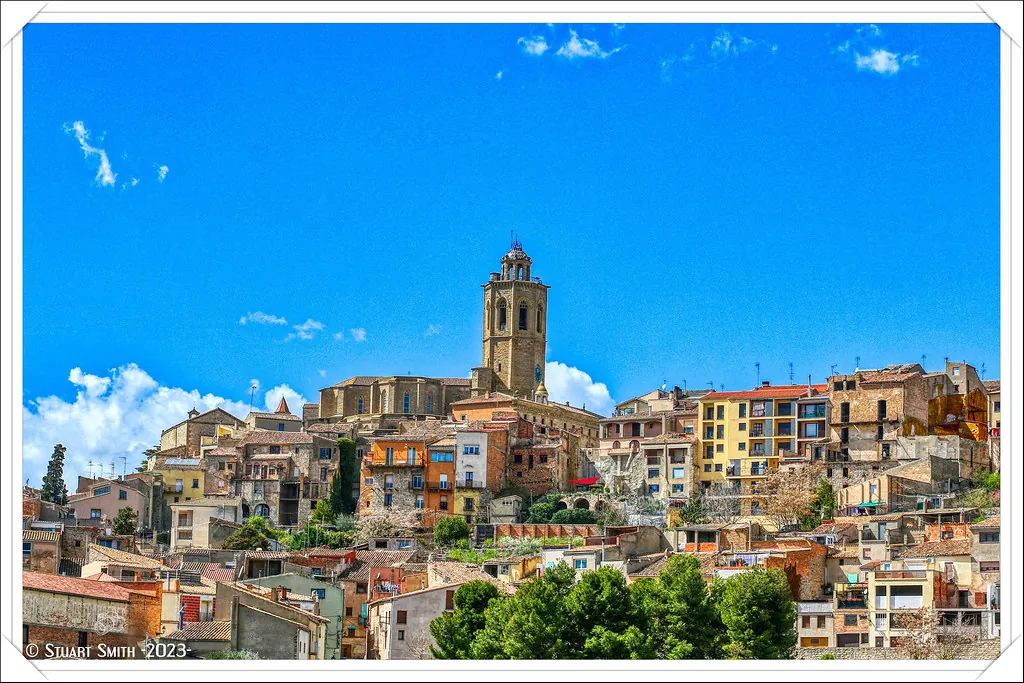
Small, well-preserved medieval settlement; inhabited castle
Hide article Read full article
Sant Guim de la Plana sits on the eastern limit of La Segarra, a region of inland Catalonia defined by its wide plateaus. The village, just over 500 metres high, is home to about 190 people. Here, the agricultural calendar still dictates the rhythm: the fields turn from the fresh green of spring cereals to the dry gold of early summer, a transformation that marks the year.
The horizon is open, and the landscape feels both vast and intimate. The architecture and the layout of the village are direct responses to this terrain and to a life built around the harvest.
A Village Formed by its Land
The settlement is compact, its short streets running between stone houses. The construction is functional: rubble masonry walls for solidity, with doors and windows framed by carefully cut stone voussoirs. This is not decorative architecture; it is building for purpose, designed to last through the seasons on the plateau.
At the centre is the parish church of Sant Guim. Its origins are medieval, though the building shows layers of modification. The sober exterior hints at late Romanesque foundations, later altered in the Gothic period and reformed in subsequent centuries. It sits where it always has, a physical anchor for the community.
The Logic of the Masía
Beyond the village nucleus, isolated masías dot the farmland. These traditional Catalan farmhouses are built to the same practical logic as the village homes, with thick walls against the plateau winds. Their placement is strategic, sitting within the fields they work. Some remain active farms; others stand quiet. Together with the village houses, they illustrate a settlement pattern entirely shaped by cereal cultivation and livestock.
Walking the Plains
The landscape opens as soon as you leave the last house. La Segarra is a comarca of gently rolling plains, where cereal fields stretch to the horizon. The terrain is not dramatic, but its scale is palpable. Dry stone walls, built without mortar and recognised by UNESCO as intangible heritage, trace property lines and old paths. They are a practical feature first, but over generations they have become part of the region's visual grammar.
The view changes decisively with the seasons. Winter is freshly ploughed earth, dark brown. Spring brings precise, parallel lines of green shoots. By June, the plateau turns the straw colour that defines this part of Catalonia until the harvest.
Paths and Context
Gravel tracks and quiet secondary roads connect Sant Guim de la Plana to neighbouring villages like Sant Ramon and Guissona. These routes are mostly flat, suited for walking or cycling without hurry. The value of this village is best understood within that wider context of La Segarra. It is one piece of a broader pattern of compact settlements, Romanesque churches, and hilltop castles that explain how this territory was organised.
A Note on Visiting
Sant Guim is small, with limited services. Most visitors come as part of a wider exploration of the region. The main festival is in summer, when former residents often return and the streets fill for a few days. A winter celebration for Sant Antoni, with traditional blessings linked to livestock, reflects the village's agricultural roots.
This is not a place for monumental sights. It is a clear example of how life on the Catalan plains has been lived: shaped by stone, grain, and a wide sky.