1886, España, sus monumentos y sus artes, su naturaleza e historia, Castilla La Nueva, vol 3, Colegiata y puente, Talavera, Pascó.jpg
Josep Pascó i Mensa · Public domain
Cataluña · Sea, Mountains & Culture

Talavera

The church bell strikes noon, and every shutter in Talavera snaps shut. Not from rudeness, but because the sun at 791 metres punishes stone walls t...

280 inhabitants · INE 2025
791m Altitude

Why Visit

Talavera Castle Castle routes

Best Time to Visit

summer

Main Festival (August) agosto

Things to See & Do
in Talavera

Heritage

  • Talavera Castle
  • Church of San Salvador

Activities

  • Castle routes
  • Hiking

Festivals
& & Traditions

Fecha agosto

Fiesta Mayor (agosto)

Las fiestas locales son el momento perfecto para vivir la autenticidad de Talavera.

Full Article
about Talavera

Rural municipality in the upper part of the region; castles and views

Ocultar artículo Leer artículo completo

The church bell strikes noon, and every shutter in Talavera snaps shut. Not from rudeness, but because the sun at 791 metres punishes stone walls that have sheltered farmers since the 12th century. This is the Segarra's daily siesta, observed with the same precision that locals once used to judge when wheat was ready for the scythe.

Seventy-five kilometres north-east of Lleida, Talavera sits high enough for the air to carry a bite even in May. The village proper houses 277 souls, though that number doubles when the cereal barons return for August festivals. They come back to houses built from their own fields: honey-coloured limestone that turns amber at dusk, roofs of faded terracotta baked in nearby Cervera. Few visitors make the detour; those who do arrive with empty rucksacks and leave with lungs full of thyme-scented wind.

Stone, Sky and Silence

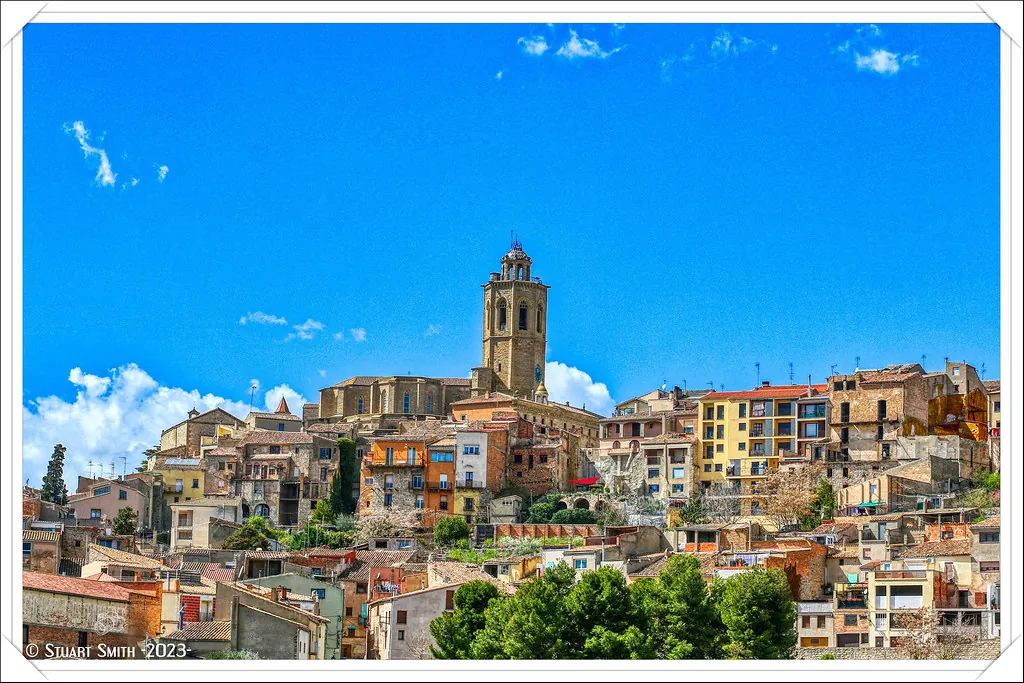
There is no grand plaza, no castle keep. Instead, narrow lanes climb gently towards the parish church, its bell-tower repaired so often that Romanesque blends seamlessly with 19th-century brick. The building is open only for Saturday-evening mass; the key hangs on a nail inside the bakery, and the baker will hand it over if you buy a loaf. Inside, the air smells of beeswax and mouse droppings. Eighteenth-century frescoes flake above the altar, their blues long since dulled to grey.

Below the church, the streets follow medieval animal tracks. Doorways are just five foot six—Catalans were shorter when these houses went up—and windows the size of postcards keep out January frosts that can linger until Holy Week. Look up and you'll spot carved dates: 1764, 1832, 1901, each marking a rebuild after a roof collapsed under snow or a son returned from Cuba with enough pesetas to add a second storey. Iron balconies, painted ox-blood red, hold geraniums in tomato tins. Nothing is curated for tourists; laundry flaps beside 500-year-old lintels.

Walk fifteen minutes in any direction and stone gives way to a rippling ocean of cereals. The Segarra calls itself Catalonia's breadbasket, though the phrase feels modest when you stand at the village edge and see nothing but wheat and almond groves to every horizon. Footpaths are signed with faded yellow paint, but the real markers are dry-stone walls built without mortar, their gaps wide enough for a stoat. In June the fields glow so brightly you need sunglasses; by September the stubble scratches like wire wool and dust coats every roadside fig.

What Passes for Action

Talavera's only bar opens at six for the tractor shift and closes when the last customer leaves—sometimes eleven, sometimes two. Coffee costs €1.20, served in glasses thick enough to survive the dishwasher. They keep a bottle of Moritz beer chilled for the vet who comes on Thursdays, but otherwise it's wine from a co-op in neighbouring Sanaüja. Food is whatever the owner's wife feels like cooking: salt-cod croquettes, rabbit with tomatoes, flan burnt on purpose. If you want lunch before two, she'll tell you to try the next village.

That village is 6 km away. Guissona has supermarkets, cash machines, even a petrol station that accepts contactless payments. Between the two settlements the road dips through a corridor of poplars where red kites nest. Cyclists love the gradient—steady enough for granny gears, open enough for panoramic selfies. Bring two water bottles; the only fountain is in Talavera's square and tastes faintly of iron.

Hiking options are limited but satisfying. A circular route south-east passes the abandoned mill of Clarena, its millstones split by frost and ivy. The round trip takes two hours, longer if you stop to photograph scarecrows dressed in Real Madrid shirts. For a full day, follow the GR-175 long-distance path westwards to Sant Guimerà, a fortified hill town with a hostel that charges €15 for a mattress. The trail crosses three dry river beds; after heavy rain they become torrents, so check the forecast. Mobile coverage vanishes after the first kilometre—download offline maps before you set off.

Calendar of Small Bangs

Festivity here is family business. The main fiesta begins on the last weekend of August, when second-home owners inflate population figures to 600. A marquee rises beside the football pitch, plastic chairs arranged around a dance floor that tilts slightly after years of rain. Friday night is botifarra sausage grilled over vine cuttings; Saturday brings a foam party for teenagers fuelled by €1 shots of rum. At eleven the brass band strikes up sardanas, the circular Catalan dance that looks sedate until you try to keep pace. Foreigners are welcome in the outer ring—follow the grandmother wearing espadrilles, she'll kick your ankle if you go the wrong way.

Easter is quieter. On Good Friday the village walks 3 km to a calvary overlooking the plain, each person carrying a sprig of rosemary that later doubles as barbecue flavouring. The priest, imported from Cervera, recites the Passion in Catalan so archaic even locals struggle. After the service, everyone shares cocas de recapte—flatbread topped with roasted aubergine and red pepper—washed down with sweet moscatel from a plastic jug. If it rains, the event moves to the bakery; capacity forty, so arrive early.

Getting Stuck, Getting Fed

Public transport reaches the Segarra only on market days. Tuesday and Friday buses run from Lleida to Guissona at 08:00, returning at 13:30. From Guissona you could cycle the remaining kilometres, but the shoulder is narrow and grain lorries travel fast. Hiring a car in Lleida costs around €35 a day; fill the tank before you leave—the village has no petrol pump. The last 10 km twist through almond terraces so pretty you forget the asphalt is disintegrating. Meeting an oncoming lorry requires one driver to reverse 200 metres; locals know every passing place, visitors learn quickly.

Accommodation is thin. Talavera itself has one guesthouse, Ca la Tía, three rooms above the baker's cousin's garage. Expect lace bedspreads, a shower the size of a phone box, and breakfast that includes fresh ensaïmada pastry. Price: €45 double, cash only. Otherwise stay in Cervera (25 min drive) where the university converts student halls into summer rooms from €30. Book ahead if a congress of castellers—human-tower builders—coincides with your visit; they practise in the sports hall and snaffle every spare bed.

Eating options expand beyond the bar only on weekends. Saturday lunchtime sees pop-up stalls in the square selling grilled lamb and escalivada (smoky vegetables). Portions are hefty; half a kilo of meat is normal for two. Vegetarians get tortilla, eggs and potatoes bound with enough olive oil to make cardiologists wince. Wine comes in porrons, glass spouts that demand you tip the stream directly into your mouth. White shirts don't survive the learning curve.

When to Cut Your Losses

January can see snow drifting against doors; August hits 36 °C by mid-morning. Spring and autumn are kindest, especially May when almond blossom lingers and the wheat is still green enough to soften the glare. October brings mushroom forays—ask permission first, landowners carry shotguns and opinions. Avoid the last week of September: locals burn stubble, smoke hangs thick, and asthmatics will wheeze.

Rain turns clay paths to glue; wellies beat walking boots. Conversely, drought cracks the earth so deeply a dog could vanish. Either way, the village keeps going. Bread appears daily, the priest drives up for Sunday communion, and mobile banking arrives via a van that parks outside the church every other Thursday. Talavera will never tick the blockbuster box. It offers instead a calibration of scale: how small a community can be and still function, how wide a landscape can feel when your only soundtrack is a hawk's cry and the whisper of wheat remembering wind.

Key Facts

Region
Cataluña
District
Segarra
Coast
No
Mountain
No
Season
summer

Planning Your Visit?

Discover more villages in the Segarra.

View full region →

More villages in Segarra

Traveler Reviews