Full Article
about Tarroja de Segarra
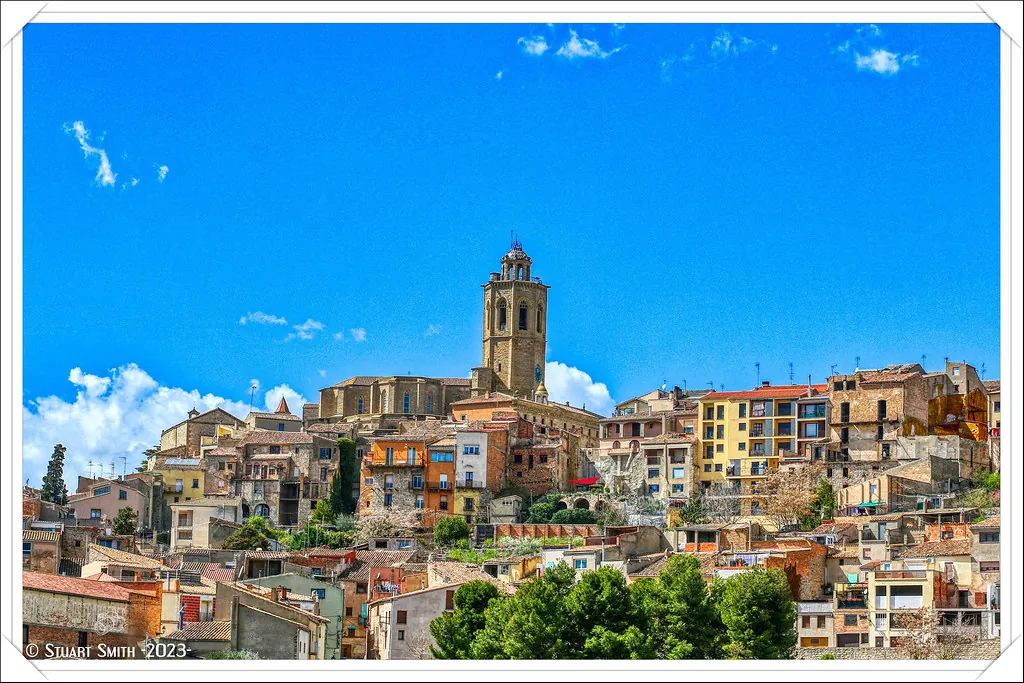
Small village in the Sió valley; Baroque church and medieval bridge
Hide article Read full article
A village that wakes slowly
At eight in the morning, the main square of Tarroja de Segarra is almost silent. Dry leaves scrape along the ground in the breeze, and blackbirds cut through the stillness with their song. A cool northern light falls across rough stone façades, picking out narrow doorways that still keep their original finishes. It is a moment before daily routines begin, when the smell of damp earth lingers in the air alongside the faint trace of an extinguished fire.
Tarroja sits in the central part of the comarca of Segarra, a small settlement overlooking a wide plain. Cultivated fields stretch out towards the horizon with little interruption. With around 180 inhabitants, the village maintains a landscape shaped by agriculture. In summer, the land turns into broad sweeps of gold with wheat and barley. In spring, those same fields shift into intense greens. At roughly 460 metres above sea level, the climate is dry and continental, with noticeable temperature differences shaping each day.
Stone streets and traces of the past
The history of Tarroja de Segarra appears in quiet details. The parish church dedicated to Sant Miquel dates back to the 15th century. It is a modest building that has undergone several restorations over time. Its façade still shows some Romanesque arches, and a small bell sits above the entrance. Inside, 18th-century frescoes remain on the walls.
A short walk away, streets such as Carrer Major and Carrer del Forn reveal rows of houses built with local stone. Many retain aged wooden doors and windows protected by wrought-iron grilles. The urban centre is compact and can be crossed in less than fifteen minutes, which makes it easy to take in its details without rushing.
The village layout reflects its agricultural roots. Low walls mark the edges of small vegetable plots. There are remains of old stables, and several fountains that are still in use. Exposed wooden beams and whitewashed façades give the buildings a practical, restrained character. A slow walk leads to the old threshing floor, once used for processing grain, now converted into a central square where traditional events take place.
Open land and shifting light
Beyond the village, the landscape opens up. Fields extend in all directions, interrupted here and there by small masías such as Can Bosc or Cal Juncà. These rural buildings sit near scattered patches of holm oak woodland, adding texture to the otherwise open terrain.
The area is well suited to walking or cycling. Paths link Tarroja with nearby villages including Sant Miquel del Disnet and Puigcerver. The routes are generally gentle, without steep climbs, and allow for an unhurried pace. Light plays an important role here. It changes quickly over the course of the day, and at sunrise or sunset the land takes on ochre and reddish tones that stand out against its harder surfaces.
Understanding this landscape means paying attention to the agricultural calendar. In summer, early outings are more comfortable while the air is still fresh over the fields. In winter, rain turns the ground to mud and morning fog softens the edges of the terrain. Birdlife is easy to spot throughout the year. Harriers and kites circle above the fields as they search for food.
Photography has a natural place in this setting. Low sunlight over cereal crops offers strong contrasts, while clear night skies reveal another side of the area. Light pollution is almost entirely absent, which allows for a clear view of the stars. With the right conditions, constellations appear strikingly close.
Food rooted in the land
The food traditions of Tarroja de Segarra follow a simple approach where quality ingredients matter more than complexity. Dried legumes such as garrofons and faves are common, alongside extra virgin olive oil produced in nearby cooperatives. Local cured meats come from pigs raised within the comarca.
Recipes are passed down through generations and are best enjoyed in small gatherings with family or friends. There are no large restaurants or set tourist menus here. It is more useful to ask about traditional dishes or where to find fresh local produce. The focus remains on what the land provides and how it has always been prepared.
Festivities and continuity
The main celebrations take place during the summer. The festa major is usually held in August and brings the community together through shared activities. Traditional dances are performed, including those accompanied by cants d’estil, a form of singing rooted in local culture. Processions lead towards the church, and the event includes religious elements connected to Sant Miquel Arcàngel.
In the months leading up to summer, Tarroja also hosts rural gatherings where younger generations sometimes wear traditional clothing. Another important moment is the celebration of Sant Crist del Mont. During this event, long-standing customs remain visible. Floral offerings are placed on old altarpieces, and solemn masses are accompanied by songs in old Catalan.
These occasions maintain a sense of continuity that goes beyond the agricultural cycle. They reinforce connections between residents and keep shared traditions active within the village.
Quiet remnants and hidden traces
Less visible aspects of Tarroja de Segarra lie scattered beyond its centre. Among abandoned fields, there are archaeological remains that are easy to overlook. In more remote areas, traces of former textile spinning workshops can still be found. These fragments of the past remain embedded in the landscape.
They are not presented as formal sites or attractions, but they add depth to the surroundings. Each corner carries hints of earlier ways of life tied closely to agriculture and small-scale industry. It does not take much effort to sense what this land once was. The signs are there for those who pay attention, in stone, in soil, and in the quiet persistence of old structures.
Tarroja de Segarra continues at its own pace. It is a place where the land shapes daily life, and where the past is not separated from the present but woven into it.