Full Article
about Torrefeta i Florejacs
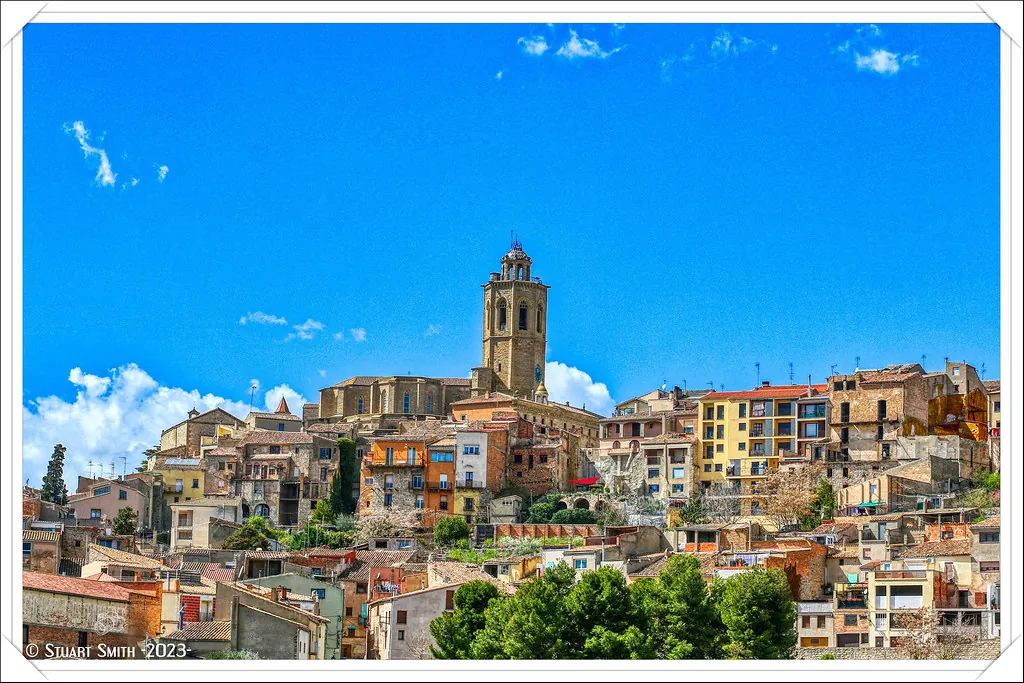
Municipality with two beautiful walled medieval villages: Florejacs and Les Pallargues.
Ocultar artículo Leer artículo completo
The bell in the tower of Sant Pere de Florejacs still rings at noon, a single bronze note that rolls across open cereal fields until it bumps against the 475-metre ridge on which the village sits. No coach parties pause for selfies; the only traffic jam is three tractors waiting outside the grain co-op. This is Segarra, the land-locked centre of Catalonia, where horizons look level until you notice the medieval watch-towers that once warned of Saracen raiding parties.
Stone, Straw and Silence
Torrefeta i Florejacs is really two hamlets bolted together by administrative convenience rather than any grand design. Florejacs clusters around its eleventh-century church; Torrefeta, two kilometres south-west, grew up under the square keep that gave it its name. Between them runs the LV-4241, a road so lightly used that storks sometimes land on the white centre line to dry their wings.
Walk the narrow lanes and the first thing you notice is the sound of your own footsteps. Stone houses are shoulder-to-shoulder, their upper windows just wide enough for a farmer to haul up a sack of feed. Portals still carry the carved coats of arms of families who planted wheat here six centuries ago; the paint has gone but the sandstone remains crisp. Modern intrusions are refreshingly few—satellite dishes have been banned from street façades, so television arrives discreetly via rooftop aerials that look like weather vanes.
The second thing you notice is the sky. Without coastal humidity the light is knife-sharp, throwing long shadows from the grain silos and turning the surrounding plains into a chessboard of green and gold squares. In late May the wheat is knee-high and whispers in the breeze; by early July it has bleached to the colour of pale ale and the air smells of dry straw and hot engine oil.
What You Can (and Can’t) See
Sant Pere de Florejacs is open most mornings until 12:30. Inside, the nave is a palimpsest: Romanesque bones, Gothic ribbing, a Baroque altarpiece shoe-horned into the apse. The font is still used; village babies are baptised here within days of birth, the same quick turnaround the parish has observed since the Reconquest. You are welcome to sit for as long as you like—no ticket desk, no audio-guide—just remember to close the door on the way out or the swallows dive-bomb the pews.
Torrefeta’s tower is less welcoming. The iron gate is kept locked because the interior steps are missing more stones than they retain, but the exterior is enough to explain the building’s purpose: arrow slits at the top, a base wider than a London bus, and views that sweep from the Pyrenees to the Montserrat massif on a clear day. Stand beneath it at dusk and you can hear jackdaws arguing over nesting rights, their calls echoing like dropped coins.
Between the two centres lie scattered farmhouses known as masías. Many still house three generations; others have been converted by Barcelona families who arrive at weekends to bottle their own olive oil and complain about the broadband speed. One, Cal Ticus, takes paying guests. The thick stone walls mean Wi-Fi reaches the bedrooms only on alternate Tuesdays, but the breakfast jam is made from apricots grown in the orchard outside your window.
Bread, Blood and Calçots
Segarra’s cuisine is built on what the land yields when irrigation is an afterthought. Expect pork—every part of it—white beans the size of squash balls, and bread that could double as building material. The local speciality is pa de pagès, a round loaf weighing two kilos, crust like concrete and crumb that stays moist for a week. Buy it at Forn de Pa Riu in Torrefeta (open 07:00–13:00, closed Tuesday). If you arrive after ten you’ll queue behind farmers ordering by the half-dozen.
Winter brings calçotada season. Calçots, long sweet onions, are charred over vine prunings, wrapped in newspaper to steam, then eaten with romesco sauce while wearing a bib. The village fire brigade hosts a public calçotada in mid-February; tickets are €25 and sell out at the bar two weeks earlier. Turn up late and you’ll be handed a plate of chops instead—no one goes hungry.
Vegetarians should manage, but vegans will need to self-cater. Stock up in Cervera, fifteen minutes away by car, where the Supermercat Esclat keeps oat milk beside the chorizo.
Moving Without Mountains
This is not hiking country in the Lake District sense. The highest bump within the municipal boundary is 550 m, and the footpaths are farm tracks that dissolve into ploughed earth each spring. What you get instead is a 12-kilometre loop that links the two villages, passes three abandoned threshing floors, and finishes at the bar-social where coffee still costs €1.20. The tourist office (open Wednesday and Friday, 10:00–13:00, inside the ajuntament) will lend you a laminated route card; leave your driving licence as deposit.
Cyclists fare better. Traffic volumes are so low that local dogs nap in the middle of the C-53. A gentle 30-kilometre circuit south to Guissona and back takes in a Roman aqueduct and a field of solar panels that looks like a lake from the ridge. Road bikes are fine; mountain bikes are overkill unless you enjoy tarmac.
Snow? Hardly ever. Frost, yes—January mornings can start at –4 °C, so bring the same jacket you wear for a British November. Summer peaks of 36 °C are common; sightseeing is best finished by 11:00, after which sensible villagers retreat indoors until the sun drops.
Getting Here, Staying Over
Barcelona El Prat is the nearest major airport. Take the AVE train to Lleida (55 minutes, advance fares €30–€45), then pick up a hire car. The drive north-east on the C-53 is 42 kilometres of dual carriageway so empty you’ll think the road is closed. Girona airport works too, but the connecting train is slower and you’ll change at Barcelona Sants.
Public transport direct to the village is non-existent. A weekday bus links Lleida with Cervera; from there a taxi costs €25 if you can persuade the driver to leave the city limits. Most British visitors end up self-driving—expect two hours from Barcelona airport door-to-door, three from Girona.
Accommodation is limited to half-a-dozen rural houses booked through Naturaki or directly with owners. Cal Ticus has three doubles, English-speaking hosts, and a pool that feels decadent in a landscape where water is measured by the litre. High-season weekends start at €140 per night for the whole house, mid-week in February drops to €80. Hotels don’t exist; the nearest are in Cervera, functional three-stars aimed at travelling salesmen and parents visiting students at the university.
An Honest Exit
Torrefeta i Florejacs will not change your life. It offers no Michelin stars, no souvenir tat, no Instagram hotspot. What it does give is a calibration point for urban clocks: bread that is mixed at 04:00, a church door that creaks exactly like it did in 1250, and a night sky still dark enough to see the Milky Way from the street. Come if you are content to trade spectacle for stillness; keep driving if you need a gift shop.