Full Article
about Aitona
Famous for its vast orchards that turn pink when the trees bloom in spring.
Hide article Read full article
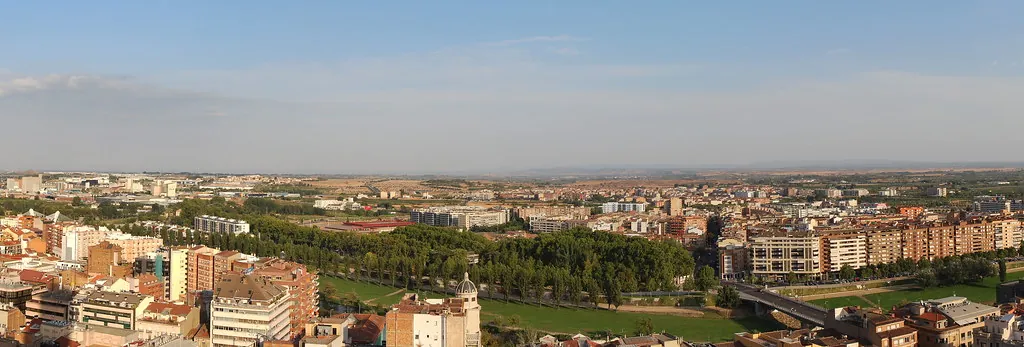
At eight o’clock on a March morning, the air in Aitona smells of honey and damp earth. From the mirador de la Font del Xoll, the Segre valley stretches out below like a white carpet that at first glance could be mistaken for low cloud. As the sun rises a little higher, the view becomes clear: these are not clouds but peach trees in blossom.
Just over two and a half thousand people live in the municipality. For a few short weeks each year, the trees multiply that number in petals.
That contrast, a small village set against an agricultural landscape that overwhelms it, explains much of what tourism in Aitona is about.
When the village fills with flowers
The flowering does not arrive all at once. First there is a white dot against a grey bud, then a whole branch, and within days the fields hum with bees. The sweet scent of blossom mixes with the smell of soil recently turned by tractors.
Several signposted routes run along the agricultural tracks around the village, crossing working farms. They usually cover between five and eight kilometres and begin where the tarmac ends and the dirt tracks take over. There are no major facilities along the way, just the occasional information panel, wooden arrows and clear reminders that these fields are still places of work.
If it rains, the earth turns sticky and walking requires a little more patience. Blossoms weigh down wet branches and the valley smells of moisture and sap. Curiously, this is when everything feels calmer: fewer cameras, more quiet, and only the wind shifting petals in the trees.
One practical point: during peak blossom it is wise to arrive early and, if possible, on a weekday. At weekends the road down from Lleida quickly fills with cars.
The Morería of Aitona
From the plaça Major, Calle Mayor climbs gently towards the old quarter. The houses grow narrower, stone becomes more visible, and before long you enter the area known locally as the morería.
These are short alleyways with archways overhead and thick walls that keep interiors cool even in August. The layout recalls the centuries when a Muslim population remained here after the medieval Christian conquest. Later came expulsions and departures, and for a long time this corner of the village was left half empty.
Today many of the houses have been restored, with dark wooden doors and pots set on window ledges. Even so, the neighbourhood retains a quieter feel than the rest of Aitona. Footsteps echo as you walk, and in one of the small squares a modest fountain continues to run.
It was in this part of the village that Santa Teresa Jornet was born in the nineteenth century. She went on to found a religious congregation dedicated to caring for older people, and her memory is still very present in local life.
Sant Antolí, the village church
At the top of the slope stands the church of Sant Antolí. From below, its size comes as a surprise: a reddish brick façade, a tall bell tower and a spacious interior that many residents compare to a small cathedral of the Baix Segre, the surrounding area along the river.
Inside, there is the scent of old wood, candle wax and, if mass has recently taken place, incense. Light filters through high windows and settles across the stone floor. The main altarpiece is Baroque, filled with carved and gilded scenes depicting episodes from the life of San Antonio Abad.
In one of the side chapels, small metal ex-votos can often be seen: hands, legs, hearts. Some visitors have also left miniature agricultural objects or even peach branches. In a village like Aitona, daily life and farming inevitably find their way into the church.
When harvest time arrives
If March is all white and pale pink, the end of summer brings a different palette. Peach trees heavy with fruit deepen the green of the fields, and tractors move frequently along the secondary roads.
During these weeks the air smells of ripe peaches and dry dust. Early in the morning there is already activity at the agricultural warehouses, and lorries head out towards the national road.
The summer festivities coincide with this stage of the agricultural campaign. At night bonfires are lit in the square, embutidos are grilled, and people sit out in the street talking at length as the heat of the day slowly recedes. Farmers discuss the harvest, the rain that never came or the downpour that arrived too late.
How to get there and when to go
Aitona lies around twenty minutes by car from Lleida, following the motorway east and then local roads that descend towards the Segre valley.
The best-known period is the peach blossom, usually between the end of winter and the start of spring, though it varies each year depending on cold spells and rainfall. Anyone keen to see it at its most peaceful should set off early. By mid-morning, numbers begin to build.
Summer heat arrives quickly. For walks towards the castle or along the agricultural tracks, it is sensible to carry water and wear a hat. Some stretches offer little shade and the tarmac reflects the sun.
In winter, fog often settles in the bottom of the valley. The trees stand bare, and the white seen from the mirador is no longer blossom but mist lying low over the Segre. Even then, the relationship between village and landscape remains the same: a small community, surrounded and defined by its fields.