Full Article
about Alcarràs
Major agricultural and livestock hub; internationally known for the同名 film about rural life
Hide article Read full article
Dawn over the orchards
Before the sun is fully up, a low mist hangs over the fruit trees. At that hour Alcarràs smells of damp earth and green almonds. Reddish clay tracks cut across the peach orchards, marking out the agricultural plots that shape daily life here. In spring the trees burst into white and pale pink blossom, briefly changing the colour of the entire plain.
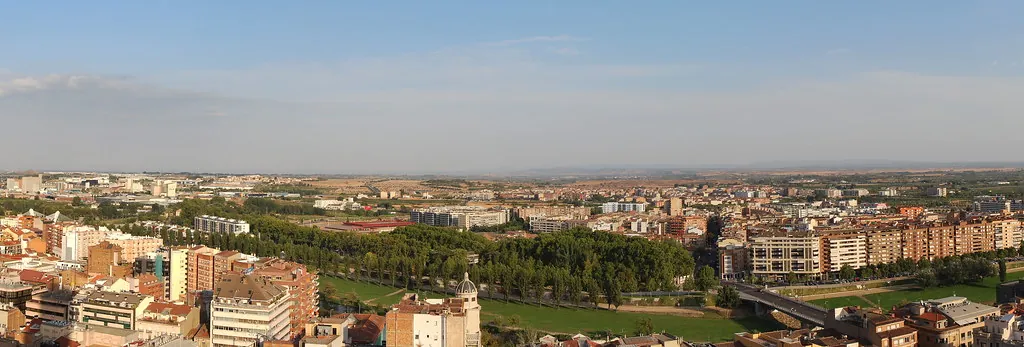
From El Coscollar the Segre plain opens wide. Patches of different greens stretch towards the horizon, divided by straight irrigation channels and farm roads. Early in the morning, dew clings to the leaves and the light remains cool, almost metallic. The river Segre traces a bright line in the distance, separating fields and guiding the eye across the landscape of El Segrià.
Alcarràs sits within this working countryside. The motorway A‑2 passes further away with its steady hum, yet what dominates is the rhythm of the fields.
The smell of working land
The day begins early. Before six in the morning engines can already be heard along the dirt tracks. Tractors head out towards the orchards while some local cyclists take advantage of the cooler air. Activity builds gradually, in step with the light.
When the harvesting machines arrive, the air changes. It carries the scent of ripe fruit and fine dust. In summer that sweet smell lingers between the rows of trees, suspended in the heat. Peach, cereal crops and scattered olive groves define the agricultural mosaic around the town, along with many hours of manual labour.
In the neighbourhood known as the barrio de la Font, several masías de volta still stand. These are simple stone constructions with vaulted roofs, originally built to store tools or to sleep in during long harvest periods. Many have low doorways and thick walls. By late afternoon the interiors remain cool, holding on to a dry scent of straw and earth that barely shifts over the years. They are practical buildings, shaped by necessity rather than display.
This close relationship with the land sets the tone for any visit. Alcarràs is not arranged around monuments or grand avenues. It is organised around seasons, crops and the steady maintenance of irrigation channels that run straight through the plain.
When water was medicine
Opposite the parish church stands a red-brick building with iron details. It was once the town’s spa, active between the late 19th century and the early decades of the 20th. The building took advantage of a mineral spring that, for a time, drew doctors and visitors from the Lleida area. Like many such spas in Spain during that period, it combined local resources with the belief that certain waters could improve health.
Today it no longer functions as a balneario. Through the gate the original fountain can still be seen, moss gathered in the joints between the stones. It takes some imagination to picture the place filled with people waiting their turn to drink or bathe in the mineral water.
A few steps away stands the Sindicato Agrícola, built in the early 20th century by Cèsar Martinell, an architect associated with Catalan agricultural modernism. The exterior is of exposed brick, and tall windows allow in soft light. Inside, farmers once gathered to organise harvests and sales, structuring the economic life of the area. Depending on the season, the building is sometimes used for cultural events or exhibitions.
These two structures, the former spa and the Sindicato Agrícola, reflect a period when rural communities invested in collective spaces, whether for health or for cooperation in farming. They remain quiet reference points in the centre of Alcarràs.
The taste of the harvest
In the centre of town it is still possible to find coca de recapte prepared in the traditional way. This Catalan savoury flatbread has a thin base topped with escalivada, roasted red peppers and aubergine dressed with olive oil, sometimes with a little cured sausage. It is made with whatever the vegetable garden provides. When it comes out of the oven the base is crisp and the smell of roasted pepper drifts into the street.
That combination of roasted vegetables and arbequina olive oil sums up the surrounding landscape. The arbequina is a local variety of olive, widely grown in this part of Catalonia. The flavours on the plate mirror what grows in the fields: peaches, cereals, olives.
A few kilometres away, in Vallmanya, a fair linked to hunting and rural life is usually held in autumn. The atmosphere is straightforward, with stalls, pointing dogs and long conversations between hunters. The road leading there is gravel. After rain, the clay sticks to the soles of shoes.
Back in Alcarràs, Saturdays often bring a market to the plaça de la Vila. Stalls sell fruit, plants and agricultural tools from the surrounding comarca. The pace during the week is generally calm, and the centre can be covered on foot without difficulty.
Choosing the right moment
At the end of April the fruit trees are in blossom and the fields change colour for a few days. The intense heat has not yet arrived. Later in the year, the air of El Segrià turns dry and heavy, pressing down on the plain.
On 15 August the Fiesta Mayor takes place. As in many Spanish towns, this annual festival fills the streets with noise and activity well into the early hours. Those seeking quiet may prefer another date.
Visitors arriving by car can leave it in the more open areas near the industrial estate and walk into the centre. From there it is easy to move between the parish church, the former spa and the Sindicato Agrícola, before heading out again towards the orchards.
As evening falls and tractors return from the fields, the irrigation channels begin to smell of cold water. Up at El Coscollar there is an old holm oak known to many locals. There is no signpost and no railing. Just earth, open countryside and the sound of wind moving through the leaves. From this point the plain of El Segrià lies fully in view, with the Segre marking a bright line between the crops.
Alcarràs reveals itself in these small shifts of light and scent rather than in headline sights. The mist over the orchards at dawn, the dust of harvest in summer, the brief spectacle of blossom in spring. It is a town defined by work on the land and by the quiet structures that support it, from vaulted farm shelters to brick cooperative halls.