Full Article
about Alcoletge
Municipality near the confluence of the Segre; it has a Civil War interpretation center.
Ocultar artículo Leer artículo completo
The tractors start at dawn. Not the polite hum of a country cottage lawn-mower, but the proper diesel growl of machines that cost more than most British houses. By seven they're already moving between the fruit trees, and if you've chosen to stay in one of the converted farm buildings, you'll wake to the sound of commerce rather than cockerels. This is Alcoletge: 213 metres above sea level, barely ten kilometres from Lleida, and absolutely not pretending to be anything other than what it is—a working agricultural town that happens to have a church and a couple of places to eat.
The Horizontal Landscape
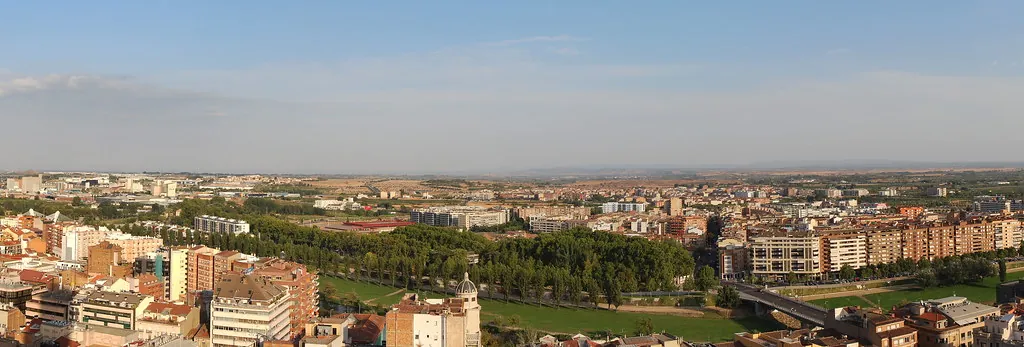
Flat doesn't begin to cover it. The Segrià region stretches out like a well-ironed tablecloth, interrupted only by the vertical lines of poplars marking irrigation ditches and the occasional aluminium greenhouse glinting in the sun. Cycling here requires a different sort of fitness—legs that can maintain a steady rhythm for hours rather than thighs built for Dartmoor gradients. The roads are arrow-straight, the verges sprout almonds and olives rather than hedgerows, and every junction presents another rectangle of cultivation: peaches, nectarines, pears, or the regimented ranks of artichokes that appear in winter.
The canal system changes everything. Built in the nineteenth century, the Canal d'Aragó i Catalunya transformed these dry plains into one of Spain's most productive agricultural zones. A path runs along its bank—shade provided by plane trees, surface firm enough for hybrid tyres. Walk forty minutes south and you'll reach the next village, Montoliu de Lleida; head north and you'll hit Sudanell. Neither offers much more than Alcoletge itself, but that's rather the point. This is territory for pootering, for stopping to watch a heron stalking frogs in the drainage channels, for realising that the irrigation gates still operate with the same mechanical simplicity they used a century ago.
What Passes for Sights
Sant Miquel's church tower serves as the local landmark—visible from anywhere on the surrounding plains, useful for orientating yourself when you've wandered down another unnamed farm track. The building itself has been patched and repaired so many times that architectural purists might wince, but the interior retains a certain barn-like simplicity. Mass times are posted on the door; turn up at eleven on Sunday morning and you'll witness the entire population attempting to fit into a space designed for perhaps two hundred. The overflow stands outside, gossiping in Catalan and casting occasional glances at the sky in case the weather's turning.
Traditional houses survive in pockets—stone facades the colour of digestive biscuits, wooden balconies that wouldn't look out of place in provincial France, and the occasional flourish of nineteenth-century ironwork. There's no historic quarter to speak of, just streets that gradually peter out into fields. The town plan follows irrigation logic rather than medieval defensive needs: straight roads leading from the centre towards the orchards, each one named after the crop that once dominated its destination route.
Eating and Drinking Reality
Casa Teo operates from what looks like someone's extended living room on the main road. The menu arrives on a chalkboard, the wine list consists of "red or white," and the seafood—properly surprising this far inland—arrives on ice that was probably fetched from Lleida that morning. TripAdvisor reviewers get excited about the gambas, but the real revelation is the artichoke salad when they're in season (January through March). Expect to pay €18-25 for a main, and don't even think about asking for vegetarian options outside Barcelona. The place fills up with local families at weekends; book ahead or arrive before two o'clock.
For everything else, there's the bakery opposite the petrol station. They open at six, sell out of ensaïmadas by nine, and will make you a sandwich with sobrassada that stains the paper bag orange. Coffee costs €1.20 if you stand at the bar, €1.50 if you sit down—this is still Spain, despite the Catalan flags.
Practicalities Without the Brochure Speak
Getting here requires accepting that British public transport expectations don't apply. Lleida's high-speed rail station connects to Barcelona in 57 minutes and Madrid in two hours twenty. From there, you're looking at a taxi (€25-30) or hiring a car. Buses do run from Lleida's Estació d'Autobusos—line 37 departs hourly, takes twenty minutes, and drops you at the edge of town by the agricultural cooperative. The service stops entirely between two and four in the afternoon because even buses observe siesta.
Accommodation options within Alcoletge itself are essentially non-existent for visitors. The converted tower houses with pools and tennis courts advertised online are actually in Lleida's suburbs—close enough for convenience, far enough to lose the agricultural soundtrack. Spring and autumn provide the best balance: temperatures hover around 20°C, the peaches blossom or are harvested depending on the month, and you won't melt into the asphalt attempting that forty-kilometre cycle loop.
Winter brings dense valley fogs that can last for days—atmospheric for photographers, lethal for drivers unused to suddenly encountering tractors emerging from the murk at twenty kilometres per hour. Summer means 35°C by eleven in the morning and mosquitoes breeding in the irrigation channels. The locals deal with this by simply not going outside between noon and five, a strategy that works better when your office is air-conditioned rather than a bicycle saddle.
The Honest Verdict
Alcoletge won't change your life. It offers no epiphanies, no Instagram moments that'll make your followers weep with envy, and precisely zero souvenir shops selling fridge magnets shaped like Spain. What it does provide is a glimpse into how most Catalans actually live—growing food, fixing tractors, arguing about water rights, and occasionally gathering in Casa Teo to eat seafood that travelled further than most of the customers.
Come here if you need reminding that travel doesn't always require bucket lists. Bring decent walking shoes, a tolerance for agricultural machinery, and enough Spanish to order coffee the way you like it. Leave the expectations at home with the phrasebook—this place is too busy getting on with living to worry about being discovered.