Full Article
about Alfarràs
Town known for its trout farms and peach orchards; it has an old flour mill.
Hide article Read full article
A detour that leads somewhere else
Alfarràs is not the kind of place people plan for. It tends to appear by accident, often after a wrong turn on the way to somewhere else. The approach does not help much either: a stretch of road that feels closer to an agricultural estate than a day out. Then the old bridge over the Noguera Ribagorzana comes into view, partly missing, and the tone shifts.
That broken outline, with one section no longer there, gives the first clue about the place. Alfarràs does not try to impress. It simply carries on, leaving visitors to make sense of it on their own.
The bridge that stayed standing
The bridge in Alfarràs has an odd presence. One of its arches was lost during the Spanish Civil War, or so people here say, and no one seems in a hurry to rebuild it. What remains stands just outside the village, worn and steady, as if it has seen enough already.
There are no information panels, no explanation boards, no attempt to frame it as a highlight. Just the river below and the stonework above, visibly aged rather than restored. It is the kind of place where time feels layered rather than curated.
Standing there for a while, it is easy to imagine what has passed over it. Carts, soldiers, and now the occasional car that ends up here by mistake. The setting does not try to turn itself into a spectacle. If anything, its interest lies in the lack of presentation, in the sense that nothing has been tidied up for visitors.
Where water runs the show
In Alfarràs, everything circles back to water. The Canal de Pinyana runs through the area and acts as the main supply line for irrigation across much of the Segrià region. Built centuries ago, it still distributes water to fields and nearby settlements.
Walking alongside the canal feels different from a typical riverside stroll. It is less about scenery and more about function, like following the wiring of a city. There are sluice gates, channels, pipes, tractors passing nearby, and people keeping an eye on the flow. Some stretches run clear, others carry sediment. That contrast makes sense. This is not decorative water, it is working infrastructure.
Pause for a moment and the sounds are telling. Conversations drift by about harvests, water levels, or the weather. The canal is not treated as a backdrop. It is part of daily life, tied directly to crops and livelihoods.
A tower you could miss
The tower of Alfarràs stands on Carrer Trinitat, quite close to the old church of Sant Pere. It is easy to overlook at first glance. Narrow, taller than it appears, and marked by a sense that it once played a more prominent role, it blends into the surroundings without drawing attention.
The church of Sant Nicolau is easier to spot. Built in stone and notably plain, it has the kind of interior that quiets things down as soon as you step inside. There is a faint smell of wax, the atmosphere familiar to many small village churches.
There are no guided routes or audio explanations. Visitors step in, take a look, and move on. The experience is straightforward, almost understated, and that seems to suit the place.
Longaniza without the extra fuss
Alfarràs has its own take on longaniza, a traditional Spanish sausage, and it is taken seriously. There are no elaborate labels or branding exercises behind it. It is simply sold in the village butcher’s shops.
The simplest way to appreciate it fits the tone of the place. Bread, a piece of longaniza, and somewhere quiet to sit, perhaps near the canal or in a patch of shade. The background might include farmers talking about irrigation or the state of the crops. There is no terrace service, no one checking if anything else is needed. The moment is left to unfold as it is.
Deciding whether to stop
Alfarràs does not try to be everything. For those searching for carefully presented villages, the kind that appear in calendars, this may not be the right stop.
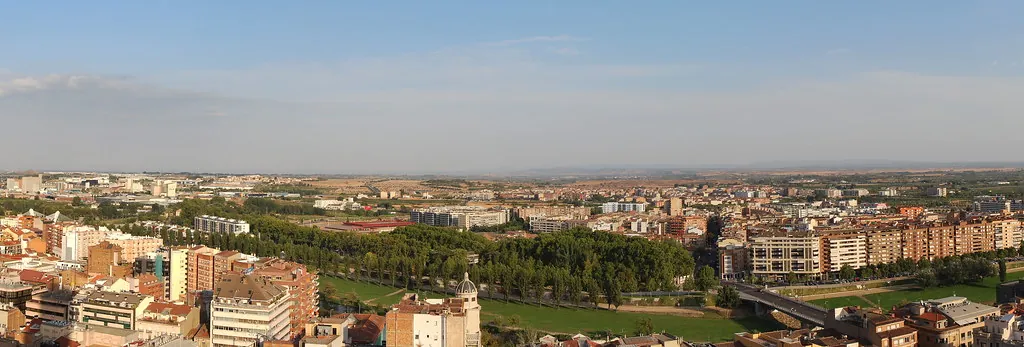
What it offers instead is a working agricultural town. Cooperatives, tractors moving in and out, and lorries loaded with fruit when the season arrives all form part of the rhythm. Life here follows the needs of the land and the flow of water from the canal.
The surroundings shift with the time of year. In spring, fruit trees across the area tend to bloom, altering the look of the landscape. During harvest season, activity increases and the roads fill with trailers carrying produce.
A short visit is enough to get a sense of it. The bridge, a walk through the streets, perhaps a brief exchange with someone tending their fields. The impression that lingers is simple: Alfarràs is like a place without a menu or distractions. Either the idea appeals, or it does not. Both reactions make sense.