Full Article
about Almacelles
A town with an Enlightenment-era grid plan; a key service hub known for its neoclassical architecture.
Ocultar artículo Leer artículo completo
The 07:14 freight to Zaragoza thunders past the sealed-up station at Almacelles without stopping, just as it has since 1992. The rails still gleam, but the platform is fenced off and the waiting room windows are boarded with plywood daubed in fading graffiti. For visitors, this is the first lesson in how the village works: nothing arrives on a timetable except the seasons, and even those prefer to negotiate.
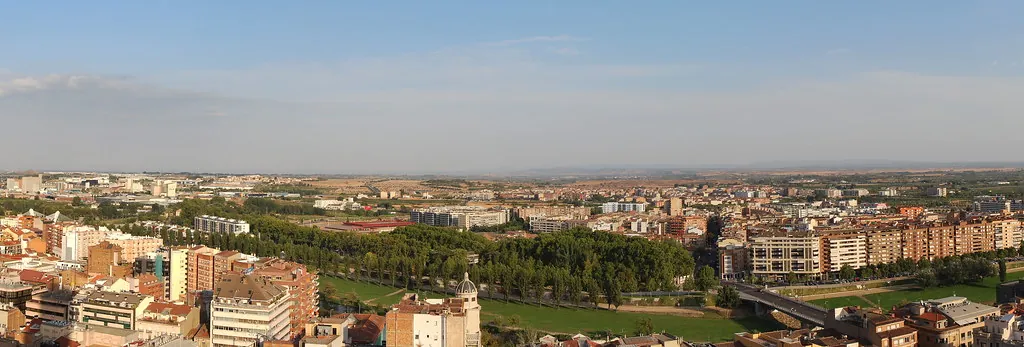
Almacelles sits 247 m above sea-level on the flat apron of the Segre valley, fifteen kilometres north-east of Lleida. The Pyrenees hover on the horizon like a distant wall, but here the land has already surrendered to the Ebro basin: mile after mile of peach orchards, cereal stubble and the straight, ruler-drawn lines of the Canal d’Aragó i Catalunya. It is countryside engineered for grain trucks and irrigation pipes, not for coach tours, which is precisely why it still feels alive.
A Town That Forgot to Modernise (and Got Away With It)
The centre is a rectangle of low stone houses interrupted by the parish church of Sant Martí, a building that has absorbed every architectural fad since the thirteenth century without ever quite finishing any of them. Romanesque footings, a Gothic bell-tower, Baroque plaster, twentieth-century brickwork: the stones read like a core sample of rural Catalonia. Inside, the air smells of candle wax and damp sandstone; the caretaker unlocks the door on request, provided the request is made in Catalan and after ten o’clock.
Around the plaça Major the ground floors have been converted into the usual ensemble of pharmacy, bakery and bar, but the upper storeys still wear their original iron balconies, painted the colour of dried blood. Washing hangs from them, and at midday the shadows retreat so completely that even the pigeons look for shade under parked cars. There is no interpretation centre, no gift shop, no multilingual audio guide—just a single ceramic street map bolted to a wall, faded to the point of abstraction.
That absence of infrastructure can feel either refreshing or baffling, depending on expectations. Coach parties from Barcelona do not stop here; they roll on to medieval Montfalcó or to the wineries of Costers del Segre. Almacelles, population 5,000, is left with the hum of fridge units in the fruit cooperative and the occasional clank of irrigation tubes being loaded onto flat-bed tractors.
Flat Roads, Big Sky
The best way to understand the place is to borrow a bike. The tourist office—one desk inside the ajuntament—will lend you a clapped-out hybrid for nothing, provided you leave a driving licence and promise to return before siesta. From the door you can be pedalling between peach plantations in ninety seconds. The land is table-top flat, the tarmac is smooth, and every junction has a hand-painted sign giving distances in minutes rather than kilometres: Golmés 20 min, Bell-lloc 12 min, el canal 5 min.
Follow the canal path east and you reach the lock-keeper’s hut at Poalella, where herons stand in the overflow like grey umbrellas. The water smells faintly of silt and melons; dragonflies stitch the surface. There is no shade—only three poplars tilting at the edge of a barley field—so by early July the ride becomes an exercise in timing. Farmers start work at five, rest between one and four, and return when the sun drops behind the telecom mast. Copy their timetable and you will avoid both heatstroke and the spray from crop-dusters.
Road cyclists use the same grid for winter training. Come February the Segrià turns silver with frost and the distant Pyrenees shine white; locals in full Lycra hammer out 80 km before lunch, then disappear into the bar for carajillos—coffee laced with rum—served in glasses thick enough to survive the dishwasher. Strava segments have been carved across the plain, but phone signal is patchy, so uploads wait until the rider is back within range of the Lleida mast.
What Arrives on Trucks and Leaves in Jars
Agriculture is not scenery here; it is the weekly rhythm. On Tuesdays the cooperative auctions peaches, nectarines and the flat white doughnut-shaped Saturn peaches the British market labels “donut fruit”. Buyers walk the grading hall with clipboards, sampling slices handed out on plastic toothpicks. Prices are fixed by 11 a.m.; by noon the lorries are already heading for Mercabarna, 150 km away, where the fruit will be re-packed and flown to Tesco within 36 hours.
If you prefer your produce less travelled, arrive in late August when the roadside stalls appear: trestle tables under parasols, honesty box fashioned from an old chemical container. A kilo of oversize tomatoes costs one euro; the peaches are so ripe they start fermenting in the boot before you reach the A-2. The stallholder will be back milking at five the next morning—this is casual retail, not a lifestyle brand.
Inside the village, Ca la Rosita opens only for breakfast and lunch. The menu is printed on a dot-matrix printer and changes with the harvest: artichoke omelette in April, snail stew at Corpus Christi, roast kid at Christmas. Expect to share a table with the vet and the seed salesman; conversation defaults to Catalan, but they will slow down if you ask. A three-course lunch with wine and the television muttering in the corner costs €13.50—cash only, no receipt unless you beg.
Festivals Measured by Gunpowder and Grape Juice
The Festa Major, 10–15 August, is the only time Almacelles feels obliged to explain itself. A fairground rides operator drives in from Valencia and assembles dodgems on the football pitch; the local tractor dealership sponsors a foam party for teenagers. At eleven each night the brass band marches through the streets followed by dimonis carrying fireworks in wheelbarrows. The explosions rebound off the stone houses, setting off every car alarm in the lower town. By 1 a.m. the plaça smells of sulphur and spilled lager; children still in football kit chase each other between folding tables while their grandparents play botifarra with cards soft as fabric.
January brings Sant Antoni, a more sedate affair. Bonfires are lit outside the church and a priest blesses mules, dogs and the occasional pet python. Riders from the nearby riding school parade through town in medieval costume, throwing shortbread to the crowd. The baker stays open late so teenagers can buy coques de Sant Antoni, sweet brioche topped with candied fruit and crackling with sugar. Eat one while it is still warm and you will understand why the queue stretches out of the door even when the thermometer reads 3 °C.
Getting There, Staying There, Leaving
Almacelles lost its railway service when Spain discovered the motorway, and the regional government shows no sign of reopening the line. The nearest working station is Lleida-Pirineus, 25 minutes away by car, where high-speed trains connect with Barcelona (55 min) and Madrid (2 h 10 min). From Lleida, Grup Montmantell bus 302 runs five times a day; the timetable is aimed at students and hospital workers, so mid-morning and mid-afternoon services disappear. Check online the night before—strikes are announced with Catalan brevity: “Vaga general. Serveis mínims.”
Accommodation within the village is limited to two Airbnb flats above the pharmacy and a pair of rural cottages two kilometres out, converted from grain stores. They have ceiling fans, swimming pools the size of a postage stamp, and views across sunflower fields. Prices hover around €90 a night in May, dropping to €55 once the schools go back. Book directly if you can; platforms add 15 % and the owners prefer cash in an envelope on the kitchen table.
Leave early on Sunday and you will share the C-13 with tractors heading to the weekly machinery market in Lleida. Their indicator lights wink like amber beads against the dawn; the road smells of diesel and cold peaches. Behind you, Almacelles resets to its default tempo: bakery opens at six, church bell at seven, irrigation pumps at eight. The station will still be closed when you pass it, but the freight timetable never stops. Somewhere between the rows of trees, the village is already preparing tomorrow’s breakfast, entirely indifferent to whether you stayed long enough to taste it.