Full Article
about Alpicat
Residential municipality near Lleida capital; known for its parks and quality of life.
Hide article Read full article
Right Next to Lleida
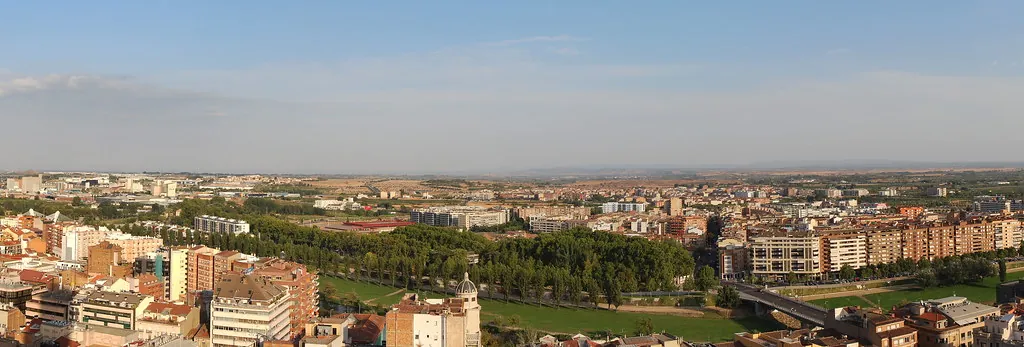
Alpicat sits right up against Lleida. Leave the city, pass an industrial estate, and you are there almost immediately. There is no grand entrance or viewpoint announcing its arrival. The transition feels practical and direct, much like the place itself.
Parking is usually straightforward if you stay on the wider streets around the outskirts. The centre tells a different story. Streets narrow and cars end up very close to the façades. Arrive around lunchtime and the pace drops sharply. Meals happen early here, and afterwards shutters come down and activity fades.
From Early Settlement to a Working Town
Alpicat existed before Lleida expanded far enough to reach it. The name is often linked to Arabic origins and to the irrigation systems that shaped this area. Not far away lie Les Basses, a group of lagoons that today function as a natural space, although they often hold little water.
After the Christian conquest in the 12th century, land was distributed to encourage repopulation. This pattern was common across the plains of Lleida. The earliest settlement stood slightly south of the current village, in an area now covered by fruit orchards.
Agriculture defined Alpicat for centuries, along with its role as a place people passed through. Various conflicts left their mark. The war against the French and the uprisings of the 17th century caused significant disruption, and the village had to be repopulated more than once. Over time it stabilised. Today it has around 6,500 residents and has expanded into newer residential areas and developments.
Walking the Canals and Orchards
The Camí Natural follows the irrigation channels of Alpicat and Robinals. It is a long, mostly flat route used by cyclists and walkers. There are no major landmarks along the way, but it passes through fruit farms and cultivated land. The scenery shifts with the seasons. In March, trees are in blossom and the landscape feels soft and bright. By summer, it turns dry and dusty.
Two features stand out. Traffic is almost absent, and some sections offer shade. It is still wise to carry water. Signage can be unclear in places, and mobile coverage drops at certain points.
The route of the Rec Nou is shorter. It traces an old irrigation line once used to bring water to the vegetable plots. Very little of that system remains beyond the channel itself and some old stones at the drainage points. The path is simple and often used by locals for an evening walk.
Sant Bartomeu and a Passing Square
The parish church of Sant Bartomeu is not especially old. Like many buildings in the area, it was rebuilt after the war. One element stands out from a distance: the bell tower. It is octagonal and topped with bluish glazed tiles that catch the sunlight.
The interior is usually closed outside of religious services. The square in front does not function as a place to linger. People pass through rather than settle there.
Food and Local Traditions
The cooking here reflects the market gardens of Lleida. In winter, dishes become heavier. Caracoles a la llauna, snails cooked on a metal tray, appear frequently, along with substantial stews.
During festivals, catxipanda is sometimes prepared. This is a generous mix of meats and snails cooked collectively, often as part of group gatherings. Local celebrations tend to revolve around these shared meals, agricultural fairs, and activities tied to the countryside.
A Place to Pass Through, Not Tick Off
Alpicat is not somewhere to arrive with a checklist of sights. It works better as a quiet extension of Lleida. Time here is best spent walking along the orchard paths and seeing how an agricultural town on the plains functions day to day.
Spring shows the landscape at its most appealing. Blossom changes the tone of the fields and softens the view. Summer brings intense heat, and the streets fall silent at midday. Parking in the newer areas and continuing on foot makes sense. The centre can be covered quickly, and the surrounding paths offer the more telling experience.