Full Article
about Gimenells i el Pla de la Font
20th-century agricultural colonization villages; planned, modern architecture
Hide article Read full article
A morning shaped by water
At half past six in the morning, the irrigation canal that runs through Gimenells i el Pla de la Font sounds like a small river. The water moves quickly, cutting the plain into two green halves. A man in rubber boots opens a sluice gate and the current shifts direction, flooding a field of alfalfa that smells of fresh grass and damp earth. This is when the village properly wakes, before the sun settles over the orchards and cereal fields.
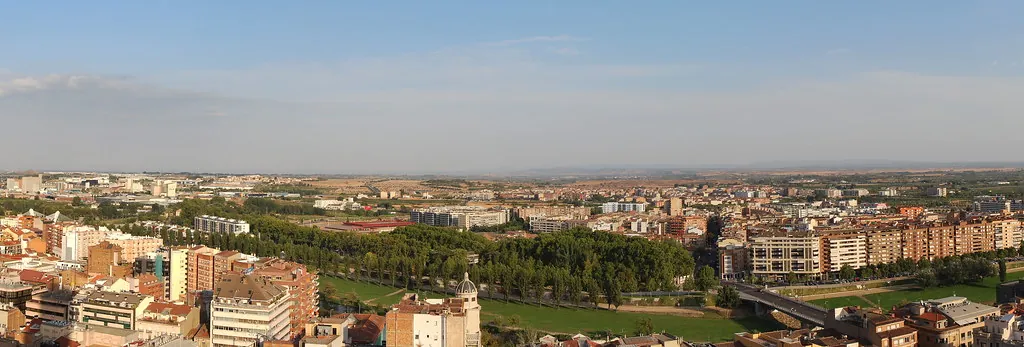
Life here follows the pace of water and soil. The flat landscape of the Segrià region stretches out in a grid of cultivated land, shaped less by roads than by irrigation and seasons. Early light arrives softly, but it does not take long before the heat becomes part of the day’s rhythm.
The castle that was never for princesses
From the road coming from Lleida, the castle of Gimenells looks more like a large house with a tiled roof than a storybook fortress. There are no tall towers or decorative battlements. Its appearance is restrained, tied to the defensive needs that once defined this part of Segrià, when the plain marked a frontier.
The stonework is rough and grey, blocks the size of wine crates fitted together with the practical logic of military construction. It is a building designed to last, not to impress.
Inside, the courtyard often carries the scent of dried rosemary and sun-warmed walls when the heat intensifies. In one corner, an old olive tree presses slowly against the structure with its roots. From the upper part of the building, the surrounding territory becomes clear: the flatlands laid out in cultivated squares, a scattered farmhouse or two, and on clear days, the outline of the Montsec mountains in the distance.
Access is not always regular. In a place like this, it is best to ask at the town hall when it is open. In small villages, the key is often closer than expected.
When the air smelled of peaches
In May, the presseguers, or peach trees, come into blossom and Gimenells takes on a gentle sweetness for a couple of weeks. The scent drifts in with the morning air. Farmers glance at the sky more often than usual, aware that a late frost can undo an entire season overnight.
The unpaved farm tracks fill with tractors moving steadily between plots. In summer they travel more slowly, loaded with crates of peaches that weigh just as heavily on the backs of those who pick them.
There are no marked walking routes or information boards. Exploring the area is as simple as choosing one of these agricultural paths and following it between the fields. The land is entirely flat, open in every direction. Every so often, a small irrigation hut appears, its metal door and the faint smell of damp pipes marking its presence.
Farmers greet passers-by with a quick raise of the hand, a brief gesture that does not interrupt their stride. It is enough.
The xop negre and other witnesses
In the small square by the fountain stands a xop negre, a black poplar, whose age no one seems able to pin down. Its trunk is hollow and dark inside, large enough for a child to hide in. Several branches have broken during storms over the years, yet the tree remains, leaning and stubborn.
On Sunday mornings, card games often take place in its shade on a worn marble table. Voices overlap with the sound of wind moving through the leaves, creating a steady background murmur.
Nearby, the Church of the Rosary reflects the same simplicity found throughout the village. Inside, the air carries the scent of wax and old wood. The walls are largely bare, and the silence feels heavier than any decoration. At the far end of the nave stands a Baroque altarpiece, somewhat oversized for such a modest space. Light enters from above, forming a bright rectangle on the stone floor that shifts slowly across the morning.
What you will not find here
There are no shop windows designed for weekend visitors from the city. Daily life revolves around the fields and working hours. There is a small shop where bread and basic goods can be bought, though opening times may change depending on the time of year.
If you are looking for a conventional restaurant, it is more usual to travel to nearby towns or to Lleida. Within the village itself, there are places where people eat daily, mainly intended for those working in agriculture, serving simple food and traditional dishes.
August brings a slight change in atmosphere, though not because of tourism. Children and grandchildren return from Lleida, Barcelona and other cities. Long evening meals take place in courtyards and squares, informal football matches are played on a dirt pitch, and open-air dances continue until the night heat begins to fade. The following morning, many still rise early.
Getting there and choosing your moment
From Lleida, the journey is short by road, crossing an agricultural plain that changes noticeably with the seasons. In summer, the air carries the scent of dry earth and heated asphalt. In winter, the colours dull, with mud at the edges of the fields and fog that can take hours to lift.
Public transport is limited, which is common in this part of Segrià, so travelling by car is the most practical option.
May and September are often good months to walk the surrounding paths. In spring, fruit trees are in bloom and the fields are vividly green. By September, the harvest arrives and the land turns golden for a few weeks.
July and August bring intense heat, shaping the pace of everything. Even then, mornings begin early, just as they do when the canal first sounds like a river and the day quietly sets itself in motion.