Full Article
about La Portella
Agricultural town with a large Baroque church
Hide article Read full article
A Village You Often Pass By
La Portella is the kind of place you spot again and again on a map and never quite stop at. It sits just a few kilometres from Lleida, in the comarca of Segrià, with a population of around seven hundred and surrounded by market gardens and open fields that shape daily life.
This is not a destination built around a checklist of monuments. La Portella feels more like a place to understand than to “see”. What matters here is how the land is worked, how the seasons shift, and how close the countryside sits to the town.
For travellers exploring inland Cataluna, particularly around Lleida, La Portella can easily be overlooked. Yet its setting in the agricultural plain of Segrià offers a clear sense of how this part of the region functions beyond the better-known historic centres.
In the Agricultural Plain of Segrià
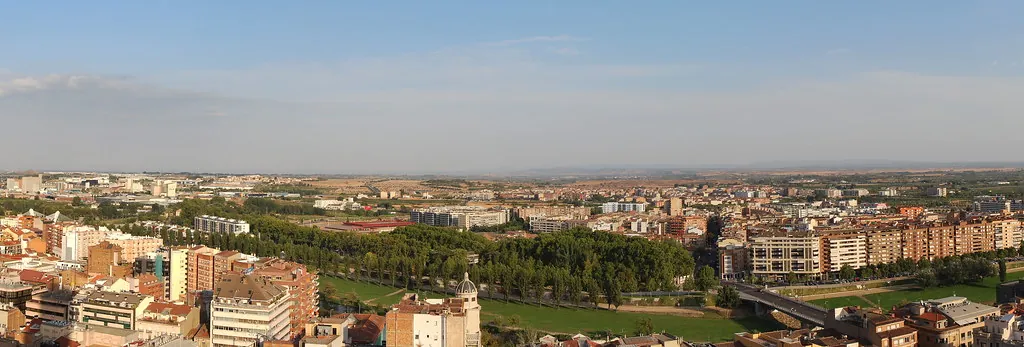
La Portella forms part of the wide agricultural landscape that surrounds Lleida. Many people drive through this area without paying much attention. Irrigation canals run alongside the roads. Narrow farm tracks cut between fields. Fruit trees stretch across flat terrain, and tractors move at an unhurried pace.
Arriving by car, the openness stands out immediately. The land is level and expansive, very different from the mountain villages that often dominate travel guides to Cataluna. There are no dramatic slopes or stone houses clinging to hillsides. Instead, the horizon is defined by cultivated plots and, here and there, lines of trees tracing the path of an acequia, an irrigation channel that carries water through the fields.
The village itself is compact and calm. Streets are short, houses typically rise two or three storeys, and the overall atmosphere is quiet. On weekdays, much of daily life unfolds in the surrounding fields or in the nearby city of Lleida, so the centre can feel subdued for much of the day.
La Portella does not attempt to reinvent this rural setting for visitors. It remains firmly tied to its agricultural surroundings, both visually and socially.
Life Shaped by the Fields
A short walk around La Portella quickly makes one thing clear: agriculture plays a central role in everyday life. The rhythm of the village changes with the seasons. At certain times of year there is noticeably more movement, with tractors entering and leaving, trailers piled high and people working along the edges of fields.
Spring and summer bring a visible transformation to the landscape. The fruit trees typical of Segrià, including melocotoneros, nectarines and paraguayos, define much of the surrounding countryside. During the harvest campaign, activity increases along rural tracks and on the farms themselves. Even without detailed knowledge of local agriculture, it is easy to sense when the work is at its peak.
This is not the sort of place that offers a string of attractions to tick off. Instead, it provides a glimpse into how farming operates in this part of Cataluna. The irrigation canals, the orderly rows of trees and the steady flow of machinery tell their own story about the local economy and way of life.
For visitors more familiar with coastal resorts or historic city centres, the appeal lies in this direct contact with a working landscape. The focus is not on spectacle but on observing how the territory is used and organised.
A Short Walk Through the Centre
The urban centre of La Portella can be covered quickly. Within half an hour, it is possible to walk the main streets and gain a clear impression of the municipality’s scale.
At its heart stands the parish church, which acts as a reference point for the village. The square around it functions as a meeting place. The ensemble is not monumental, nor does it claim to be. Its proportions reflect the size of the community: everything feels close at hand and grounded in daily routine.
Cars are parked outside houses. Neighbours know one another. The overall pace is measured, particularly outside the busiest periods of agricultural work. There are no streets designed with tourism in mind, no historic quarter polished for visitors. That absence is part of the character.
Those with a little extra time can walk towards the edges of the built-up area. Within minutes, rural paths appear, leading out into the patchwork of fields that encircle La Portella. From there, the mosaic of cultivated land becomes even clearer. The flatness of Segrià, the irrigation channels and the geometry of planted rows define the view in every direction.
A longer pause along these tracks helps put the village into context. La Portella is not separate from its fields; it sits within them.
Close to Lleida, Yet Distinct
One of the striking aspects of La Portella is its proximity to Lleida. The city can be reached in a short drive, and many residents live in the village while working or studying in the comarca’s capital.
This closeness creates an interesting balance. On the one hand, La Portella retains a strongly rural identity shaped by agriculture. On the other, it remains connected to urban life through daily commuting and shared services. The result is neither an isolated farming hamlet nor a suburb detached from its surroundings, but something in between.
For travellers exploring Segrià or the market gardens around Lleida, La Portella can serve as a brief stop within a wider route. It offers contrast to the city without requiring a major detour.
What You Will Find, and What You Will Not
La Portella does not present itself as a tourist destination. There are no curated photo spots, no grand historic ensembles awaiting discovery. Expectations need to be adjusted accordingly.
What exists instead is a real village: fields on all sides, residents who recognise one another, a steady calm that settles in once the day’s work in the countryside eases. The appeal lies in its ordinariness and in the clarity with which it reflects the agricultural character of Segrià.
For anyone passing through, a short stop is enough. Park, take a relaxed walk through the centre, then head out along one of the agricultural tracks that frame the village. In a little over an hour, it is possible to form a fairly complete impression of what La Portella is about.
Sometimes that is sufficient to understand a place. In Segrià, where the landscape speaks more loudly than monuments, it makes perfect sense.