Full Article
about Rosselló
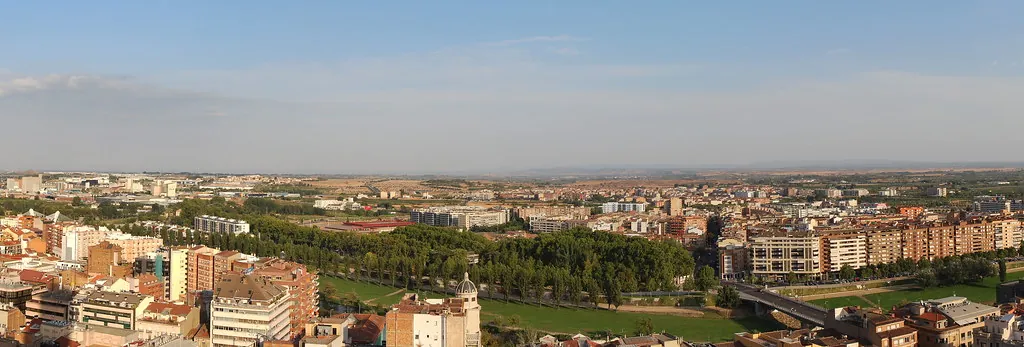
Industrial and farming town north of Lleida; church with distinctive bell tower
Hide article Read full article
Where the Road Turns Pink
There is a moment, usually towards the end of May, when driving along the N‑IIa feels like passing through a fruit-themed version of Welcome to the Jungle. Tourism in Rosselló begins to make sense right there, between fields that suddenly fill with blushing peaches, as if someone has turned up the saturation on the landscape.
The trees stand in neat lines, each one carrying its load of fruit. It quickly becomes clear why everything here revolves around this crop. From a distance, it might look like quiet countryside. Up close, the orchards seem to be working shifts of their own.
By July you understand it in a more direct way. Bite into a peach and the juice runs down your chin like melting ice cream. It is messy, sweet and unapologetic. In Rosselló, the fruit is not decorative. It sets the pace.
A Village That Doesn’t Pretend
Rosselló does not try to look like a postcard. There are no dramatic cliff-hanging houses, no medieval lanes carefully arranged for photographs. The land is flat and open. The streets are broad, as if designed with tractors in mind before visitors with cameras.
The town hall is a functional building. In the main square, there are usually more local residents sitting on benches than people passing through. The atmosphere is unhurried and practical.
There is, however, something that catches you off guard: the smell. When June arrives, the air blends the scent of swimming pool chlorine with the sugary note of ripening fruit. It is the kind of smell that tells you water and trees are in charge here.
Visitors are not treated as though they have just discovered the place. Life continues at its usual rhythm. Ask about the “old town” and you may well be met with a puzzled look. Rosselló has been Rosselló for a long time. Its history is not written in façades but in water.
The Canal d’Urgell runs straight through the area, serious and practical. It was built to irrigate fields, not to decorate photographs. Even so, in spots such as the pont de l’Ase, you might see teenagers jumping into the water during the height of summer. When the heat presses down, it is a familiar scene.
For readers unfamiliar with the area, the Canal d’Urgell is one of the key irrigation canals of inland Catalonia, responsible for transforming dry land into productive farmland. In Rosselló, its presence is constant.
The Peach Sets the Calendar
There is little need to check a phone to know what time of year it is.
In spring, the blossom arrives and the fields turn white and pink for a few brief days. Soon after, the fruit begins to swell and conversations shift towards how the season is shaping up. By summer, the rhythm of the village changes. Lorries move in and out, crates stack up, and people come and go from the orchards.
Then calm returns. A few late peaches remain. At the weekly market, boxes sometimes appear filled with fruit that did not make the grade for the main distribution centres. They may not look perfect, but they can be the most flavourful. As one local once put it, these peaches might not look good in a photo, but they taste better.
That practical approach sums up Rosselló. Appearance matters less than what is inside. The agricultural cycle dictates daily life far more than any festival calendar.
Getting There and Keeping It Simple
Reaching Rosselló is straightforward by car. From the city of Lleida, it is only a short drive along the road. From Barcelona, the journey is longer but fairly direct via the A‑2 motorway.
Once in the village, parking is rarely complicated. The streets are wide, and around the sports centre there is usually space.
As for staying overnight, Rosselló does not have a large range of accommodation. There are simple places to stay in the village itself, with more options in nearby Lleida. Many visitors choose to base themselves in the city and make a short trip out to Rosselló.
Food follows the same logic as everything else here: keep it simple. If your visit coincides with the weekly market, buy a few peaches and eat them on the spot. It may sound obvious, but sitting in the shade along a farm track with fruit you have just bought is one of those uncomplicated pleasures that works.
There is no elaborate ritual required. Just a piece of fruit, the warmth of the day and the low hum of agricultural life nearby.
Walking by the Canal
One of the calmest ways to spend time in Rosselló is to walk or cycle alongside the Canal d’Urgell. Service tracks run next to it for kilometres, almost entirely flat, with the water flowing steadily beside you.
Do not expect a signposted hiking trail in the mountain sense. These are practical paths, used by farmers, Sunday cyclists and anyone stretching their legs towards sunset.
If you plan to cycle, bring your own bike. There are workshops in the village, but bicycle hire is not usually available. In summer, sunscreen is essential. The reflection from the water can be deceptive, and it is easy to end up red without realising.
The experience is simple: straight horizons, the quiet rush of water, the occasional figure working in the fields. It is not about dramatic views. It is about space and rhythm.
What Stays With You
Rosselló is not a destination for ticking off monuments. There is no list of must-see landmarks to rush between. It works better as a short stop in the agricultural heart of the Lleida region.
You arrive, take a walk, look at the fields, buy some fruit and move on. A couple of hours can be enough. A quiet night might be plenty.
And then something unexpected happens later. Weeks after leaving, you buy peaches from a supermarket near home. You take a bite and notice that they do not taste quite the same as the one eaten beside a canal in Rosselló. That memory returns without much effort.
That is part of the appeal. Rosselló does not overwhelm. It lingers quietly, somewhere between the scent of ripening fruit and the steady line of water running through the fields.