Full Article
about Sarroca de Lleida
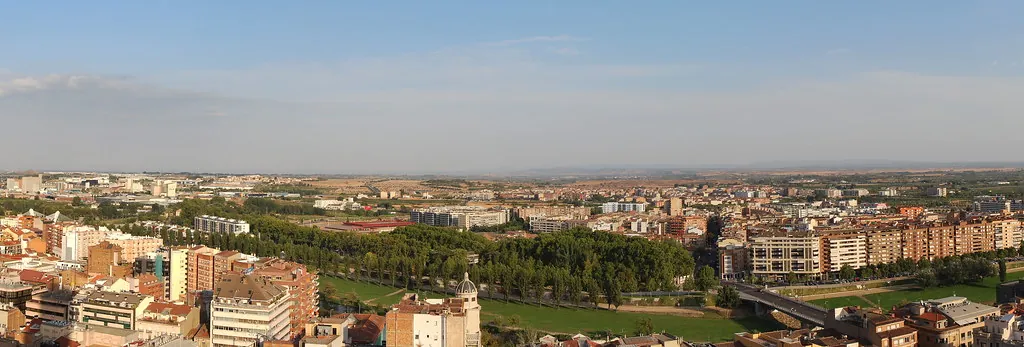
A farming village with castle ruins and views over the Segre valley
Ocultar artículo Leer artículo completo
The morning train from Barcelona pulls into Lleida at 9:47, and by half past ten you're already twenty kilometres east, watching the Pyrenees shrink in the rear-view mirror as the road flattens into the Segrià. Sarroca de Lleida appears suddenly: a compact grid of stone houses, church tower poking above almond branches, surrounded by cereal fields that shimmer silver-green in spring and bake to biscuit-brown by July. At barely 200 metres above sea level, it feels higher than it is—the plain stretches so wide that the horizon seems to lift the village into the sky.
This is not hill-country hiking territory. The drama here is horizontal. Cyclists love it: the old farm tracks linking Sarroca with neighbouring villages are pancake-flat, graded gravel that a hybrid bike handles happily. A lazy 25-kilometre loop north to Torregrossa and back takes under two hours, passing irrigation ditches lined with reeds and the occasional threshing floor turned into a cricket pitch for locusts. Summer starts early; by 11 a.m. the thermometer nudges 34 °C and shade becomes currency. Early starts are less a romantic notion than basic survival—carry two litres of water and still expect to finish the last lukewarm.
Walkers trade altitude for distance. There are no summits to bag, but the CAMÍ DELS AIGUAMOLINS footpath heads south-east for 8 km, shadowing a medieval watercourse still fed by winter rains. In March the banks erupt with white poplar and wild fennel; turtle-doves purr overhead and, if you move quietly, a hare will hold your gaze longer than seems polite. The return leg cuts through peach orchards—Lleida province grows a third of Spain's fruit, and the blossom timed for mid-April turns entire fields into pink popcorn. Bring a long lens, not crampons.
Bread, oil and the occasional snail
Sarroca itself houses 350 souls, one grocery, and a bakery that sells out of cocas—Catalan flat-breads topped with escalivada—by 11 a.m. There is no daily market; instead, a white van honks its way through the narrow lanes on Tuesdays and Fridays announcing "Pa, llet, i formatge!" over a crackling loudspeaker. Locals step into the street in slippers, clutching cloth bags and gossip. The nearest restaurant is in Vilanova de Segrià, four kilometres away. CAN XIC specialises in calçots (giant spring onions) from January to March, grilled over vine stumps and served with romesco thick enough to mortar bricks. Expect to pay €22 for the menu del dia: grilled lamb, wine from Costers del Segre, and crema catalana that arrives still trembling.
If you prefer to self-cater, Lleida's central market is a fifteen-minute drive. Stall 14-17, FRUITS SECS I MEL, sells honey made within sight of the city ring road and almonds that taste of marzipan before they've even been shelled. Pair either with the local Arbequina olive oil—look for the DOP Les Garrigues label—and you've supper for two for under a tenner.
When the village throws a party
August turns the volume up. The FESTA MAJOR (this year 12-15 August) blocks the only through-road for a weekend of tractor-parades, sardana dancing in the plaça, and communal paella cooked in a pan wide enough to satellite-dish BBC Four. Visitors are welcome but not fussed over; turn up with your own plate and someone will ladle you a portion. Fireworks are modest—think three rockets and a lot of echo across the plain—yet the atmosphere feels timeless. Book accommodation early: there are exactly three rental cottages inside the village boundaries, and two are booked by returning families year-round.
Winter shrinks Sarroca further. The baker shifts to Saturday-only openings, mist pools between the furrows, and the church bells sound damp. Daytime highs still reach 12 °C in January, so cycling remains feasible, though you'll share the lanes with juddering tractors hauling grain to the co-operative silo on the outskirts. Bring lights—the village has no street-lighting beyond the main crossroads, and night falls with Spanish suddenness at six.
Getting here, staying here
No train reaches Sarroca. From Lleida's Renfe station, buses depart hourly to nearby Alcarràs, but the final 7 km requires a taxi (€18) or a pre-booked rental car. Car hire desks hide in the underground car park beneath Lleida's AVE terminal; a compact for 24 h starts around €35 including the young-driver surcharge. Driving from the UK? Allow six hours from Bilbao on toll-free AP-2, then peel onto the C-230—single-lane, perfectly smooth, frequented by combine harvesters wider than your lane position.
Accommodation is scattered. Inside the village, CASA RURAL CAL XIRRIQUITES sleeps four in thick-walled rooms that smell of woodsmoke and rosemary; €90 a night, two-night minimum. Five kilometres west, the clutch of farmhouses collectively labelled SARRÓ DE LES FORQUILLES offers a pool and mountain bikes, though "mountain" flatters the terrain. Breakfast brings home-made fig jam and coffee strong enough to float a spoon. Neither option has a 24-hour reception—message your ETA via WhatsApp and someone will cycle over with the keys.
The catch? It's quiet. Deliberately so.
Sarroca's charm is precisely the absence of headline attractions. There is no interpretive centre, no gift shop, no vintage railway lovingly restored by enthusiasts. The church key hangs in the bakery; ask and they'll point you toward a door that sticks unless you shoulder it just so. Inside, the nave is plain, the frescoes 19th-century, the silence immediate. If you need constant stimulation, come for an hour and leave. If you're content watching swallows stitch the sky between telephone wires, stay for dusk when the western light turns the stone walls the colour of pale sherry and the scent of irrigated earth drifts in from the fields.
Leave time for one last detour on the way out. Three kilometres north, a dirt track signed "Mas de Ciment" ends at a 13th-century lime kiln sunk into the ground like a stone whirlpool. Climb the crumbling rim and the entire Segrià spreads before you: wheat, almonds, villages no bigger than postage stamps, and the Pyrenees floating on the horizon like a snow-dusted mirage. No ticket office, no audio guide, probably no one else. Just the plain, the sky, and the realisation that "nothing to do" can be the whole point.