Full Article
about Seròs
Historic town with a Trinitarian monastery and fertile market gardens
Hide article Read full article
A landscape shaped by water
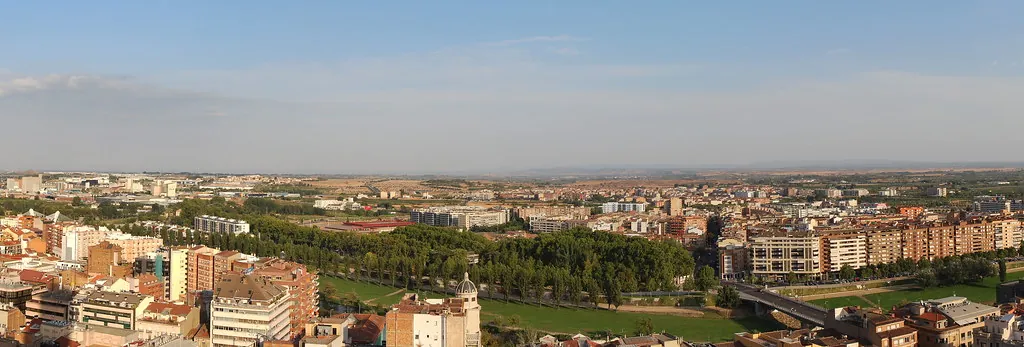
In the Segrià region, to the south-west of the city of Lleida, Seròs sits within a stretch of land where irrigation reshaped the countryside during the 20th century. Any visit to Seròs revolves around that transformation. This is a flat territory, divided into agricultural plots, where the River Segre and a network of irrigation channels still set the pace of rural life.
The village stands at low altitude in the Segre valley. Around it, fruit farms spread across much of the municipality. Agriculture, especially the cultivation of sweet fruit, remains the backbone of the local economy and explains the appearance of the place. Storage buildings, tracks running between fields and a web of channels carrying water to crops form part of the everyday scene.
The Segre and an irrigated countryside
The River Segre flows close to the urban centre and has long been the natural reference point for the area. Its importance goes beyond water alone. The river made possible the fertile conditions that allowed modern irrigation to take hold in the Segrià.
Today, the landscape blends orchards of peach trees, pear trees and other fruit crops with stretches of riverside vegetation that have managed to survive along the banks. It is not a designed park or protected space in the conventional sense. Instead, it is a working agricultural environment crossed by rural tracks used by farmers and residents.
In quieter sections near the river, birdlife linked to these habitats is often visible. These areas tend to be less busy, offering a different rhythm compared to the more intensively worked fields. Even so, everything remains tied to the agricultural use of the land, with nature and farming existing side by side rather than separately.
San Esteban, a local landmark
The main historic building in Seròs is the parish church of San Esteban. Its origins date back to the 16th century, although later alterations have shaped its present appearance.
It is not a monumental structure, yet it occupies a central position within the village and has long served as a key point of reference. For centuries, it functioned both as a religious space and as a gathering place for the community. This dual role is typical of many agricultural villages in the Segre valley, where social life has traditionally revolved around shared spaces as much as private ones.
The church reflects the scale and character of Seròs itself. It is modest, practical and closely tied to the rhythms of local life rather than to grand architectural statements.
Streets shaped by farming life
Seròs does not preserve a monumental old quarter, but it does retain the structure of a traditional agricultural village. The streets are narrow and functional, lined with buildings that reveal different stages of growth over time.
Houses combine stone and brick with later alterations, giving a sense of gradual change rather than a single historical period. In some façades, elements of vernacular architecture can still be seen. Wide doorways once used for carts, interior courtyards and storage spaces integrated into the home offer clues about how daily life was organised.
These details point to a community built around farming rather than commerce or administration. The layout of the streets and the design of the buildings respond to practical needs, with little emphasis on ornament. Even so, there is a clear coherence in how the village has developed, shaped by the same economic activity over generations.
Walking among orchards
Much of what defines Seròs lies beyond the built-up area. Agricultural tracks leading out of the village open onto a mosaic of cultivated land that characterises this part of the Segrià.
In spring, when the fruit trees are in blossom, the landscape shifts noticeably. At other times of the year, the structure of irrigation becomes more apparent. Rectangular plots, water channels and tracks linking one field to another reveal the logic behind the system.
Some rural routes connect Seròs with nearby municipalities in the Segre valley, including Aitona, which is known for its extensive fruit-growing areas. These connections reinforce the sense that Seròs is part of a broader agricultural network rather than an isolated settlement.
Moving through these paths offers a clearer understanding of how the territory functions. The organisation of the land, the distribution of water and the relationship between village and fields all become visible when stepping outside the centre.
Practical notes for a visit
Seròs lies around thirty kilometres from Lleida and is easily reached by road. The village itself can be explored in a short time. Much of the interest, however, is found along the agricultural tracks and near the river.
To understand the landscape of the Segrià, it helps to take things slowly and move beyond the centre. Exploring the surrounding area by car or bicycle allows for stops along rural paths that cross the cultivated land. It is in these spaces that the workings of the territory become most apparent.
Seròs does not present itself through major monuments or curated attractions. Instead, it offers a direct view of a landscape shaped by irrigation and sustained by agriculture, where everyday activity continues to define both its appearance and its character.