Full Article
about Sudanell
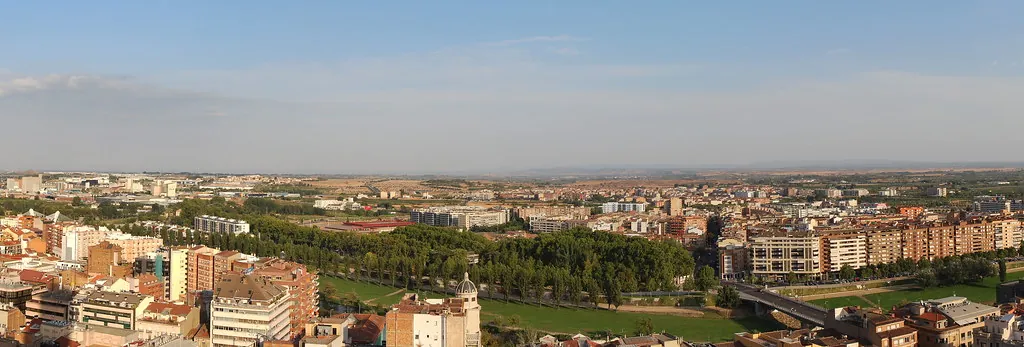
A village on the Segre River, surrounded by orchards and quiet.
Ocultar artículo Leer artículo completo
The morning light hits the peach orchards first, turning them copper before anyone in Lleida has finished their coffee. At 152 metres above sea-level, Sudanell’s fields sit just high enough to catch the dawn, and just low enough for the Canal d’Aragó i Catalunya to feed them by gravity alone. No pumps, no fanfare—just water running silently along concrete walls built a century ago, dictating when farmers wake, when tractors cough into life, and when the village bar opens for its first cortado.
This is not one of those hill-top towns that trade on drama. The streets are flat, the horizon wide, and the only thing towering is the bell tower of the parish church of Sant Pere, visible from every approach road. Inside the nave the air smells faintly of wax and dust; outside, the square is quiet enough to hear bread delivery vans idling. By nine the temperature is already 24 °C in late May; by August it will push 38 °C and the asphalt softens under bicycle tyres. Winters are milder than inland Aragón, but the tramuntana wind can still slice through a fleece at 10 °C, and when it rains the lanes turn to slick red clay that sticks to shoes like melted chocolate.
British visitors tend to arrive by accident—usually on a cycling holiday that started in Lleida and drifted south along the flat service road that shadows the canal. The first sight is utilitarian: aluminium irrigation pipes stacked beside peach-packing warehouses, lorries reversing with monotonous beeps. Keep pedalling for another kilometre and the village proper appears: a grid of low stone houses, window gratings painted the same green as the canal’s mileposts, and a single bar whose terrace faces the morning sun. Order a café amb llet and you will be charged €1.40; ask for a “café con leche” and the price doesn’t change, but the barman will reply in Catalan softened by decades of Spanish soap operas.
There is no tourist office, no multilingual plaques, and—crucially—no coach park. What Sudanell offers instead is a lesson in how irrigation shapes a landscape. Walk south along Carrer Major for ten minutes and the tarmac gives way to a gravel lane between orchards. Drip-feed hoses hiss faintly; white netting stretched over nectarine trees flaps like loose sails. Every hundred metres a concrete hut houses a sluice gate marked with a brass plate: “Compartiment 12, Sector 4.” Open the hatch and you can see the water slide past, olive-green, carrying the occasional dragonfly. It is strangely mesmeric, and you will probably be the only person staring into it.
Bird-watchers bring binoculars rather than field guides. Grey herons stalk the canal banks in spring, and if you sit quietly on the low wall beside the old mill race at dusk you can watch cattle egrets commuting back to roost in the poplars. There are no hides, no boardwalks—just a farm track and the understanding that the tractor coming towards you has right of way. Pack water; the nearest kiosk is back in the village and it shuts for siesta at 14:00 sharp.
Sudanell makes no attempt to stage its gastronomy, which is why it tastes fresher than the menu turístico offerings up the road in Lleida. Bar Restaurant Sudanell serves a three-course menú del dia for €12 mid-week; the options run from grilled rabbit with garlic to a bowl of cargols a la llauna—snails roasted with salt and chilli, best tackled with toothpicks and a cold Estrella. Fussier palates can default to grilled chicken and chips, but the real draw is the salad: lettuce cut that morning, tomatoes still holding the field’s warmth, and a glug of arbequina olive oil pressed ten kilometres away. Pudding is usually crema catalana, burnt on top with a steel iron that looks like a miniature branding tool. Wine is house red, served in a glass that could double as a tooth-mug; ask for water and you get a bottle refilled from the village spring.
If you need somewhere to sleep, the village itself has zero hotels. The nearest bed is ten kilometres north at Hotel Zenit Lleida, where British guest “james p” praised the “wonderful, polite, smiling, friendly staff” on Expedia—high praise from a nation not given to effusion. Expect to pay around €65 for a double, breakfast another €9. Taxis back from Lleida cost €25 after midnight; the local bus (L-303) runs roughly hourly until 21:30 and costs €1.95, but the timetable is posted only in Catalan and the driver may forget to stop unless you ring the bell in good time.
Come late June the pace quickens. The Festa Major in honour of Sant Pedro turns the sports pavilion into a dance floor, and a temporary bar appears under plane trees strung with bulbs. Fireworks are modest—more spark than boom—but at midnight the square smells of gunpowder and beer, and teenagers weave home on bicycles without lights. August brings a smaller revetlla: a communal barbecue beside the canal, where tickets are sold from the bakery two days in advance. Brits used to orderly queues may be alarmed by the Catalan system: pay, receive no token, then simply turn up and trust that your name is on a handwritten list clipped to a clipboard. Miraculously, it works.
The practical stuff matters. Monday is the quiet day: both bars close by 16:00, the bakery shuts entirely, and the cash machine—located outside the agricultural co-op—runs out of €20 notes. Bring cash for anything under €10; cards are tolerated in Lleida, but here they slow the queue and everyone behind you knows it. If you are driving, fill up before you arrive; the nearest petrol station is back on the C-45 and it is not 24-hour. In October the peach leaves yellow overnight and farmers burn pruning’s in small pyres; smoke drifts across the road like early fog, and the smell lingers on clothes long after you have left.
Sudanell will never tick the “must-see” box, and that is precisely its virtue. It is a place to stretch your legs between trains, to practise rusty Spanish on waiters who will answer in Catalan, and to realise that Spain’s agricultural engine is not the photogenic orange grove of Andalucían brochures but a grid of irrigation ditches monitored by men with Nokia phones clamped to sun-wrinkled ears. Stay an hour or stay an afternoon; just do not expect a souvenir shop. The only thing on sale at the weekend market is what grew within a five-mile radius—peaches so ripe they bruise when you glance at them, and bunches of herbs that still hold the morning dew. Wrap them in yesterday’s Segre newspaper, pedal back to the canal, and eat them on the wall while the water keeps flowing south, indifferent to whether you are there to watch it or not.