Full Article
about Torres de Segre
Town on the Segre and Seròs Canal; Utxesa nature reserve
Hide article Read full article
Looking for tourism in Torres de Segre starts with understanding where you are. This is pure Segrià, a county in the province of Lleida in Catalonia: fruit fields stretching outwards, intense summer heat and a village that can be covered quickly on foot. You arrive via the C‑230, park without much fuss and within ten minutes you already have a clear sense of the place.
There are no grand monuments or an endless old quarter to explore. Torres de Segre is an agricultural town that lives off the land. If that is the expectation you arrive with, it makes more sense.
A linear village shaped by the fields
The layout is fairly linear. You drive in, reach the main avenue and usually find somewhere to leave the car right there. There is little need to search beyond that.
Parallel streets branch off from this central road and soon taper out towards orchards or agricultural warehouses. A five-minute walk brings you to the Plaça de la Verge, the main square. This is where the parish church stands and where you are most likely to notice a bit of movement. The rest of the village feels quiet, even in mid-morning.
Everything sits close together. It is easy to walk from one end to the other without planning, doubling back along the same streets and getting a feel for daily life in a working farming community.
Santa María and the traces of the past
The most prominent building in the centre is the church of Santa María. It dates from the 18th century and is whitewashed, sizeable for a village of this scale and visible from several points around town. Inside, it is simple. There is a single nave, one altarpiece and little more in terms of decoration.
If you look carefully at some façades around the centre, you will notice carved stone coats of arms. They recall the historical presence of military orders in the area. It is not something spectacular, but these details break up the uniformity of more modern houses and hint at an older layer beneath the present-day village.
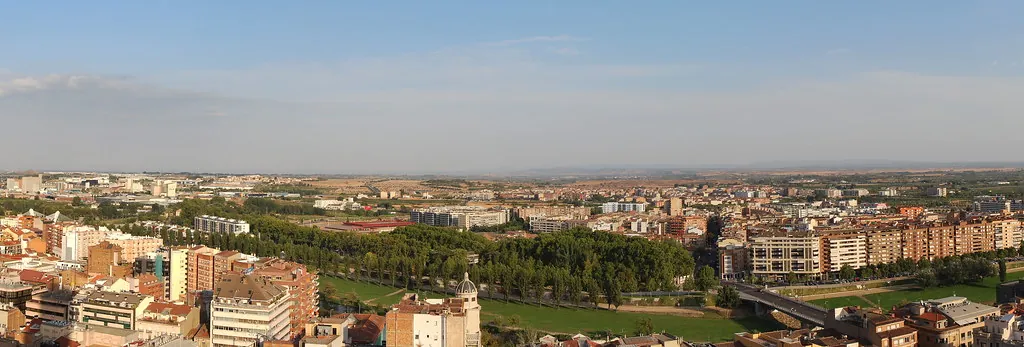
Very little remains of the old castle. A single cylindrical section of wall and scattered fragments are what survive. A short dirt path leads up to the site. From the top there are open views across the surrounding landscape of the Segre river plain and towards the Utxesa reservoir. The setting explains why a defensive structure once stood here, even if the structure itself has almost disappeared.
For a brief walk with a purpose, the climb up to the former castle does the job. Allow a little over half an hour to go up and back down at an unhurried pace.
Eating as the comarca eats
Food in Torres de Segre follows the pattern of the wider Segrià comarca. Dishes are hearty and straightforward, with little interest in modern reinvention.
Coca de recapte appears frequently. It is a thin flatbread topped with roasted vegetables and often some cured sausage. In colder months, escudella is common. This traditional Catalan stew is filling and robust, made with a mixture of ingredients that vary but always aim to satisfy.
Roast or grilled lamb is another classic in the area. It reflects the rural setting and livestock traditions of the county. Wine is typically from within the province. Expect direct, full-bodied reds that pair well with substantial dishes.
There is no expectation of contemporary cuisine or elaborate presentation. Meals here resemble those in many villages across the Segrià, rooted in local produce and longstanding habits.
Along the Segre and towards Utxesa
Close to the village runs the Camino Natural del Segre, a signposted route that follows the course of the Segre river. It begins near the bridge area and continues alongside the water, passing between poplars and cultivated fields. The terrain is flat, making it suitable for walking or cycling without difficulty.
Following the route eventually leads towards the area around the Utxesa reservoir. This zone is known for birdlife. Herons and other species are often seen, particularly early in the morning. The landscape here opens out, combining river, irrigation infrastructure and farmland.
For something shorter, the aforementioned walk to the old castle offers a compact alternative. It provides elevation and views without requiring a long excursion.
The presence of the river and reservoir adds a different dimension to an otherwise agricultural setting. Water shapes both the scenery and the economy, even if it is not the first thing noticed on arrival.
Festivities and when to come
The main festival, or festa major, usually takes place in August. At that time the village becomes busier than usual. There are open-air dances and activities in the square, bringing residents and visitors together during the height of summer.
Towards the end of November, a fair linked to livestock is organised. It is a well-established tradition in the area and reflects the agricultural character that still defines Torres de Segre.
In spring it is common for a romería, a traditional pilgrimage, to be held to the hermitage of Carrassumada. Such events blend religious practice with social gathering and are part of the annual rhythm of many Catalan villages.
A simple piece of advice stands out. If possible, come in spring. Fruit trees in blossom change the look of the landscape considerably and the heat has not yet become oppressive. In July and August, the sun beats down hard across the entire plain.
Torres de Segre works best as a short stop. A circuit of the village, a walk by the river and then continuing onwards through the comarca is enough to understand it. Seen in that light, it fulfils its role: a small agricultural town on the Segre, straightforward and unembellished.