Full Article
about Anglès
Former industrial center with a well-preserved Gothic quarter; set beside the Ter river
Hide article Read full article
Where the valley widens
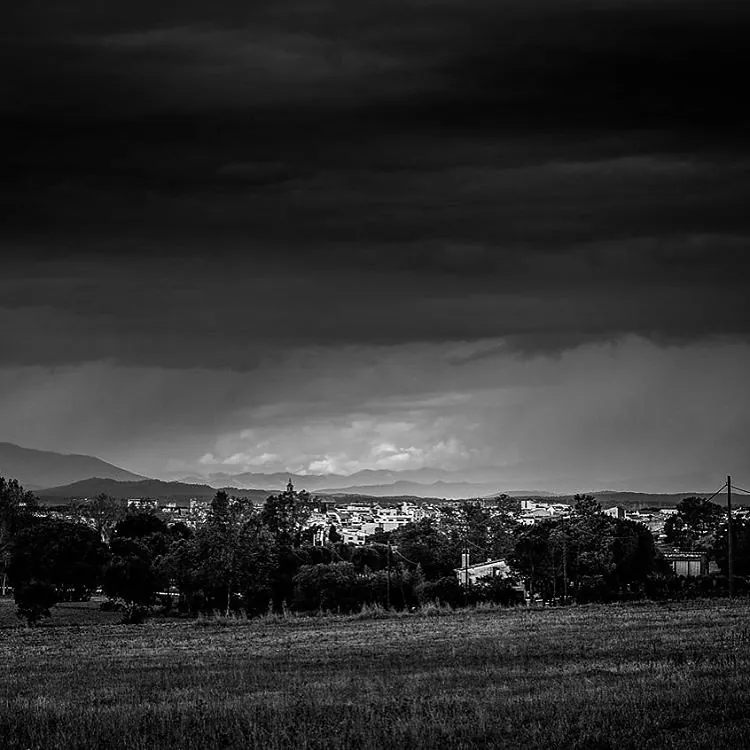
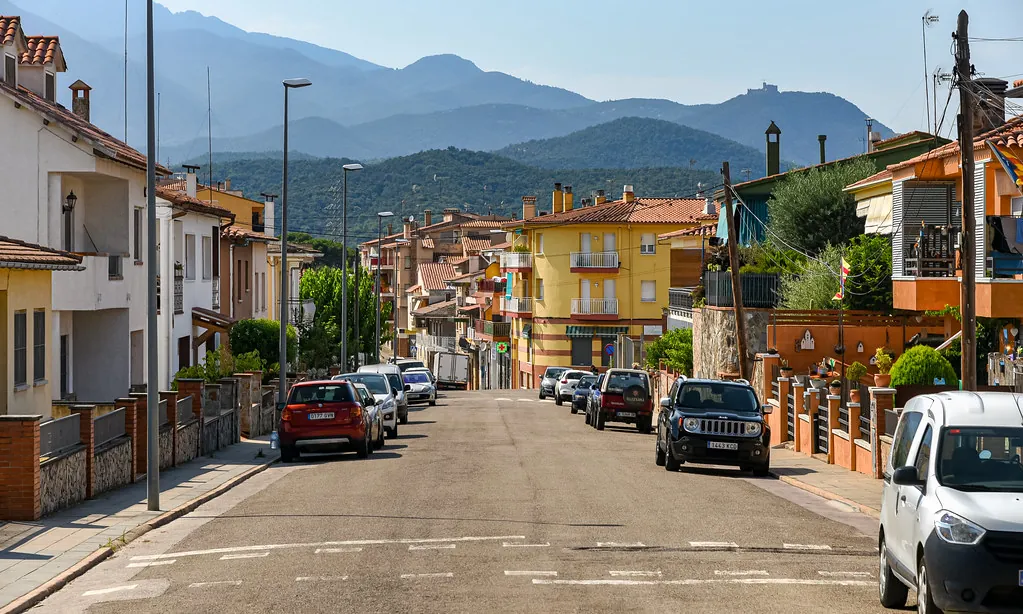
Tourism in Anglès often begins with its setting. The town sits where the Ter valley opens out before reaching the first slopes of les Guilleries, roughly between the flatter lands of La Selva and the more enclosed terrain inland. That position goes a long way to explaining how Anglès looks today: a settlement that grew alongside the river and along the routes linking Girona with Olot and the villages scattered through the hills.
With around six thousand inhabitants, Anglès still acts as a small local hub for the surrounding municipalities in the valley. It is a place shaped less by grand landmarks than by its role as a meeting point between landscapes, routes and communities.
A crossroads shaped by rivers
Anglès exists because two rivers and two distinct landscapes meet here. The Ter arrives from La Garrotxa, while the Osor flows down from les Guilleries. Between them lies a relatively narrow strip of fertile valley where human activity has been documented since medieval times.
Written references date back to the 9th century, when this territory formed part of the county of Girona. These early records do not yet describe a clearly defined town, but rather a cultivated and inhabited valley. The settlement took shape later, linked to the domains of the viscounty of Cabrera, which controlled much of the area between La Selva and the mountain zones.
The layout of the old quarter still reflects that gradual medieval growth. Streets are short and irregular, intersecting at unexpected angles and following the contours of the land rather than any formal plan.
The 19th century brought noticeable change to the valley. Industrialisation along the Ter, particularly tied to textile production and the use of water power, introduced factories, workers’ colonies and new housing. Towards the end of that century, a narrow-gauge railway connected Girona with Olot. For decades, Anglès became an important stop along this route. Although the trains no longer run, the former line continues to shape the landscape.
A quiet historic centre
The old town does not present itself as a neatly organised monumental area. It blends almost seamlessly into the more frequented streets, so it is easy to enter without realising.
Some houses retain elements from medieval times or later periods: stone doorways, carefully worked lintels and old wrought-iron grilles. Not everything has been restored, and many façades have simply been repaired over time. That gradual upkeep is typical of places that have remained continuously inhabited rather than preserved as showpieces.
The parish church stands on the site of earlier buildings and was remodelled in the modern era. Its volume dominates the main square. Rather than being defined by major works of art, it is notable for what it reveals about the town’s growth and its role as a focal point of local life.
Fairs and everyday gatherings
Agricultural fairs have long been part of life in Anglès and across the valley. The fair of Sant Antoni, usually held around mid-January, still reflects that rural character. Tools, local produce and social exchange between residents of nearby villages all play a part.
Throughout the year, sardana gatherings and local festivities also take place. The sardana is a traditional Catalan circle dance, often performed in public squares. In Anglès, these events use familiar spaces: the main square, central streets and, when needed, municipal facilities. They tend to be quite local in nature, shaped more for people from the area than for visitors.
Fields between two rivers
Between the Ter and the Osor stretches a strip of market garden land that has historically supplied the town. The fertile soil allows for seasonal crops that change throughout the year: summer vegetables, winter calçots, and small family plots close to the riverbanks.
This small-scale agriculture remains part of everyday life in Anglès. It is especially visible on the edges of the built-up area and along the paths leading out into the valley. The cultivated land is not separate from the town but interwoven with it, forming a continuous landscape between settlement and field.
Paths that follow older routes
One of the most widely used routes today is the Vía Verde del Carrilet, which follows the course of the former railway between Girona and Olot. The path passes through Anglès and retains the gentle gradient typical of railway lines, making it suitable for walking or cycling.
From here, it is possible to head towards La Selva in the direction of Girona or climb towards La Garrotxa. Along the way, the route crosses cultivated areas, wooded stretches and small settlements scattered across the valley.
For those who prefer to move into the hills, tracks and footpaths lead up into les Guilleries. Historically, these routes connected Anglès with places such as Osor and Sant Hilari Sacalm, maintaining links between the valley floor and the upland communities.
Getting around Anglès
Anglès lies about twenty minutes by car from Girona via the C-63 road, which follows the Ter valley towards La Garrotxa.
The centre of the town is easy to explore on foot. Within about an hour, it is possible to walk through the old quarter, the main square and the streets that expanded during the industrial growth of the 19th century.
To explore the surrounding area more fully, whether along the greenway, towards les Guilleries or to nearby villages, travelling by car or bicycle is the most practical option. The river and the historic routes of communication still define how people move through this landscape today.