Full Article
about Breda
Pottery town par excellence; famous for its ceramics and the Benedictine monastery.
Hide article Read full article
A village shaped by its setting
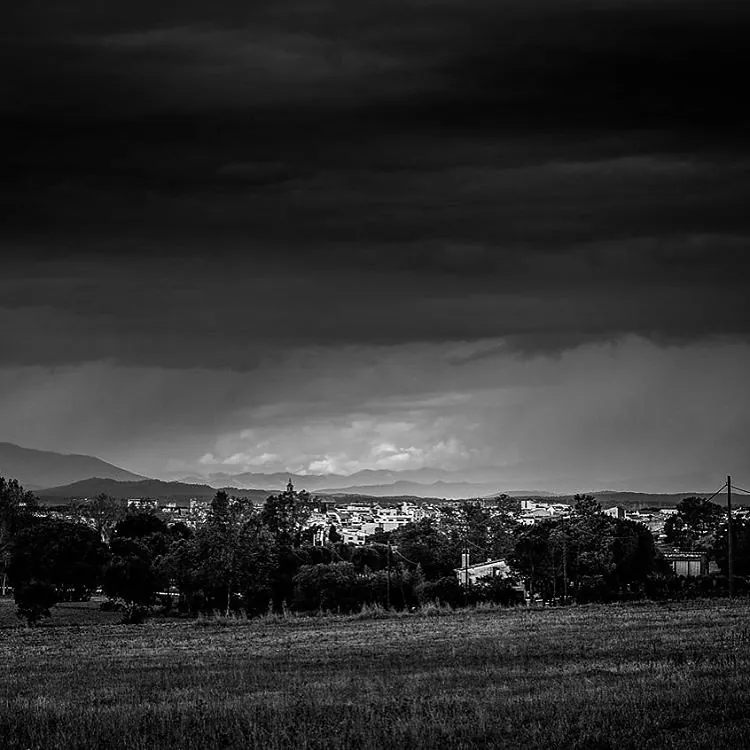
Tourism in Breda starts with understanding where it sits. The village lies in the comarca of La Selva, right on the edge of the Montseny massif. For centuries it functioned as a point of passage between the lowlands and the mountains, and that position helps explain much of its development. Old routes crossed here, agriculture spread across the surrounding land, and a small settlement grew under the influence of a monastery.
The bell tower of the former monastery of Sant Salvador defines the skyline of the old town. Medieval in origin, it still acts as a visual anchor. From most streets, the view eventually draws back to this tower, which quietly organises the layout of the village.
A square with medieval roots
The historic centre of Breda retains a layout that clearly reflects its medieval beginnings. Streets cluster around the plaça Major, a rectangular square lined in places with arcades. For generations, this was where markets took place and where the local council met, a common feature in towns connected to inland trade routes.
A closer look at the ground floors of some houses reveals older stone reused in their foundations and lower walls. This detail reflects a broader pattern seen in many towns that once had defensive walls. When those fortifications lost their purpose, their materials often found a second life in domestic buildings.
The monastery of Sant Salvador explains much of Breda’s origin. Founded in the Early Middle Ages, it held economic and territorial influence in the area for centuries. What remains today is the result of different construction phases over time. Even so, Romanesque elements are still visible in the church and in parts of the cloister, offering a link to its earliest period.
Sweet traditions and inland cooking
Breda has a reputation within the comarca for its baking traditions. One of the most typical treats is coca, a sweet dough enriched with sugar and pine nuts, still prepared in local bakeries as it has been for generations. Another familiar presence is the mona de Pascua, a cake traditionally shared during Easter celebrations, which continues to play a role in family gatherings each spring.
Everyday cooking here reflects the inland character of La Selva and its proximity to Montseny rather than the nearby coast. Dishes often feature cured meats, pulses and seasonal mushrooms, especially in colder months. There is no single fixed way to prepare them. Each household tends to follow its own version, and that variation is part of the appeal.
Walking between monastery and hills
The old town of Breda is compact and easy to explore on foot. The parish church of Santa Maria stands close to the monastery and belongs to the same historic core. Although it has undergone significant alterations over time, its origins are medieval.
Paths leave the village and connect with the forests that rise towards Montseny and the Guilleries. Many of these routes are now used for walking or cycling, and they offer a clear sense of the surrounding landscape. Kitchen gardens appear near the village, scattered farmhouses sit further out, and pine woods gradually take over as the ground begins to climb.
Several higher points in the area act as natural viewpoints. From these spots, the plain of La Selva opens out below. They are not high peaks, but they help place Breda within its wider setting and give a clearer picture of how the village relates to the surrounding terrain.
Festive dates in the local calendar
As in many Catalan villages, traditional celebrations still shape the rhythm of the year. Corpus often brings the decoration of certain streets with flower carpets, a custom seen in various towns across the comarca.
The night of Sant Joan is marked with bonfires and a verbena in the square, while the festa major gathers together popular events, music and traditional dancing. These are not large-scale spectacles. They are occasions when the village fills with returning residents and families spending time together.
Breda is also linked to the painter and ceramicist Josep Aragay, who was born here at the end of the nineteenth century. Part of his work is preserved in a small municipal museum space dedicated to his career.
Getting there and moving around
Breda is connected by road to other inland towns in La Selva and to the Montseny area. Travelling by car makes it easier to explore the surroundings, although the centre itself is best covered on foot.
There is a train station within the municipal area, Breda-Riells, on the line that links Barcelona with the northern part of the province. From the station, the walk to the village centre takes several minutes.
The village can be visited at any time of year. Spring and autumn tend to be particularly pleasant for walking along the surrounding paths or heading towards Montseny. A single afternoon is enough to explore the historic centre at a relaxed pace. Extending the walk into the nearby countryside easily fills a full day.