Full Article
about Fogars de la Selva
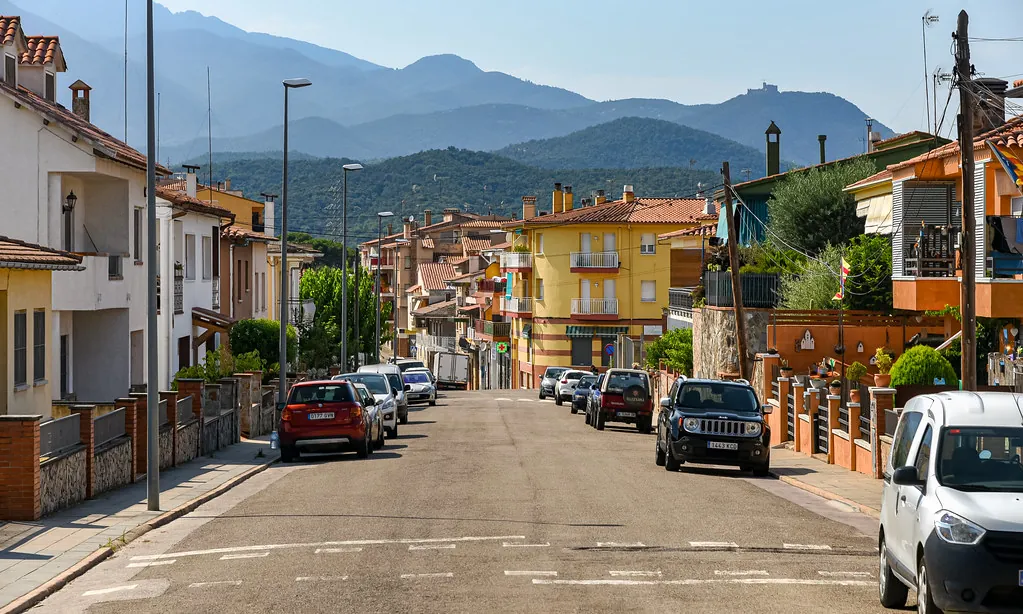
Municipality bordering Girona with agricultural and forested landscape
Hide article Read full article
A quiet corner of La Selva
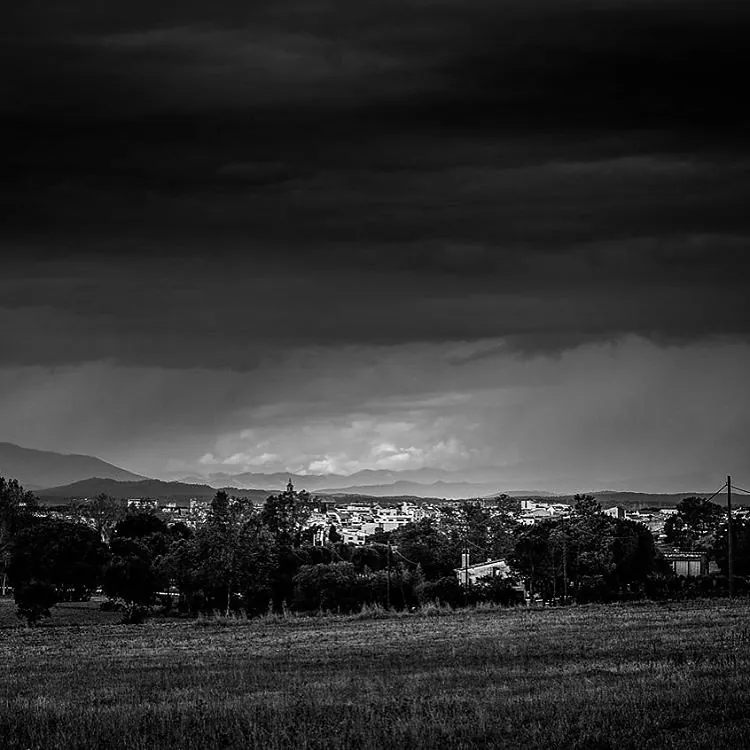
Early in the morning, while a trace of moisture still hangs in the air, the dirt tracks around Fogars de la Selva carry the smell of crushed grass and worked land. A car passes now and then along the local road. If everything goes still for a moment, the distant sound of a tractor signals the start of the day. The village itself is small and low-key, with little in the way of distractions.
Tourism in Fogars de la Selva does not revolve around landmarks or busy streets. It sits instead as a calm point inland in the comarca of La Selva, surrounded by farmland and patches of Mediterranean woodland. From the road, scattered masías come into view, traditional rural houses with thick stone walls and low roofs, often set among vegetable plots or small agricultural fields.
The landscape shifts gently between open crops and clusters of pines and holm oaks along the edges of paths. Spring brings a deeper green and wildflowers along the margins of the fields. By late summer, the ground dries out and the scent of warm earth becomes more noticeable.
Fogars is not a place built around a checklist of sights. Time here is better spent walking slowly along agricultural tracks or quiet roads, watching how the scenery changes from one field to the next.
Sant Martí and the scattered masías
At the centre of the small settlement stands the parish church of Sant Martí. Its origins are usually placed in the medieval period, although the building seen today reflects later alterations. The structure is simple in appearance, and the surroundings remain calm even at weekends.
Beyond the main cluster of houses, traditional Catalan masías appear across the municipality. Some are still lived in, while others continue to serve agricultural purposes. Many sit away from main roads, linked by rural tracks. Most of these are private properties, so they are best viewed from a distance rather than visited inside.
From slightly higher ground, especially towards the north of the municipal area, the outline of Montseny can be seen on clear days. The view is not set up as a formal viewpoint and does not announce itself. It appears suddenly when the horizon opens between fields and trees.
Walking the rural network
One of the simplest ways to get to know Fogars de la Selva is to follow the network of agricultural paths that cross the area. Many are not signposted, yet they are generally easy to follow and tend to link fields, small wooded areas and the occasional seasonal stream, known locally as a riera.
The most comfortable times of day are usually early morning or late afternoon. Summer brings strong sun across the open land, and there are few stretches with continuous shade. Carrying water and some protection from the sun is a sensible choice for anyone planning to walk for a while.
The area can also be explored by bicycle along local roads with light traffic. Even so, agricultural vehicles regularly move in and out of fields, so a bit of attention is needed along the way.
Between inland landscapes and the coast
Fogars de la Selva occupies a position that balances inland calm with relative proximity to the coast. The sea can be reached by car without much difficulty, yet the atmosphere here remains firmly rural. Many residents move between the interior and coastal towns for work or everyday errands.
In the opposite direction, Montseny lies within reasonable distance for a day trip. The change in landscape is noticeable. Open farmland gives way to denser woodland within the natural park, offering a different sense of scale and environment compared to the flatter surroundings of La Selva.
Local celebrations without spectacle
The rhythm of celebrations in Fogars follows the pattern seen in many small towns in the area. The main festival, linked to Sant Martí, usually takes place in November and is organised by local residents.
Summer sometimes brings cultural activities or outdoor music, taking advantage of the longer evenings. These are not large-scale events designed to draw crowds. They tend to be small gatherings where people from the village come together in a square or shared space.
Anyone passing through at that time is likely to encounter an atmosphere that feels close and informal, more like a neighbourhood gathering than a planned festival. That sense of everyday life, carried on without much alteration for visitors, is part of how Fogars de la Selva functions.