Full Article
about Osor
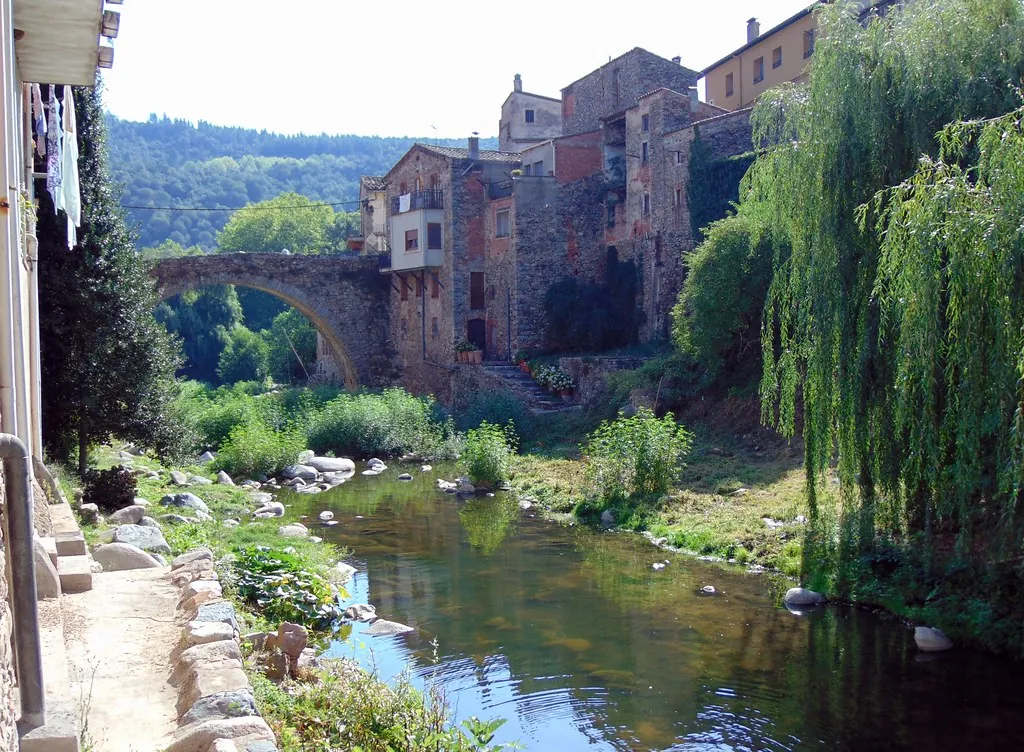
Tucked into the Guilleries valley; noted for its old bridge and houses above the river.
Ocultar artículo Leer artículo completo
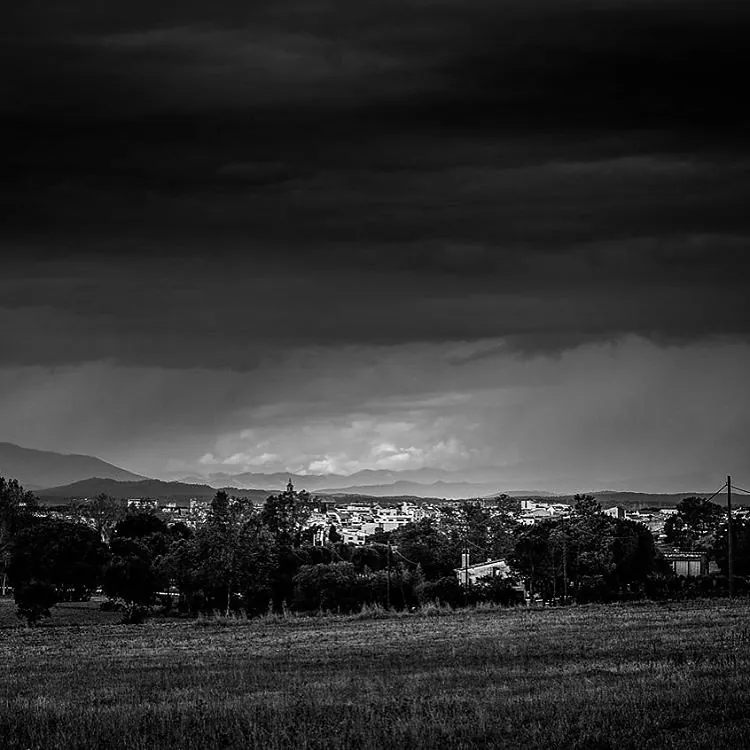
The church bell strikes eleven, yet only three cars pass through Osor's centre. One carries firewood, another a crate of persimmons, the third a pair of boots dangling from the passenger window, still caked with trail dust. This is morning traffic at 340 metres above sea level, where the river Osor has carved a narrow valley between the Montseny massif and the Guilleries range, forty minutes inland from Girona's airport shuttle queues and Costa Brava towel wars.
Stone houses the colour of burnt honey lean together as if sharing gossip. Their ground floors once sheltered mules that hauled iron ore from nearby veins; now they harbour bicycles, beehives, and the occasional upright piano waiting for the summer music festival to reclaim it. The architecture speaks of practicality rather than grandeur: deep-set windows to blunt winter winds, portals wide enough for a hay bale, slate roofs angled to shrug off summer thunderstorms that arrive like clockwork at four in the afternoon.
The Quiet Arithmetic of a Working Village
Osor's year-round population hovers around 420, swollen to perhaps 600 when weekenders from Barcelona unlock their grandparents' houses. Unlike coastal hamlets that shutter in November, the bakery here stays open, the chemist still dispenses ibuprofen on Saturdays, and the bar serves coffee that costs €1.20 if you stand, €1.50 if you sit. Children walk themselves to the primary school beside the twelfth-century bridge; their voices echo off the river walls loud enough to startle the resident kingfishers.
Walk uphill past the church and the settlement dissolves into chestnut and oak within three minutes. No gift shops, no olive-wood chopping boards stamped with "Catalunya". Instead you'll find a signpost offering distances measured in walking time rather than kilometres: Font de la Teula, 25 minutes; Sant Feliuet chapel, 45; Coll de Pinyana, two hours and a willingness to muddy your trousers. The GR-178 long-distance footpath skirts the village, stitching Osor to a network of medieval pack-animal routes that once carried salt, saffron and charcoal towards the markets of Girona.
Forests That Remember
The Guilleries hills served as a hideout for seventeenth-century outlaws; later they harboured anti-Franco guerrillas. Today they harbour wild boar, goshawks and the occasional German backpacker who has misread the contour lines. Way-marking is sporadic: yellow dashes on stone, cairns the size of a fist, sometimes nothing at all for half a kilometre. Mobile signal dies the moment you cross the river, so print the Catalan government's topo map beforehand or learn the old-fashioned art of noticing which side of a tree trunk the moss favours.
October delivers the visual payoff. Sweet-chestnut leaves turn the colour of tarnished copper and carpet the single-track road that climbs towards the Santuario de Santa María de Osor, a former monastery now converted into a simple refuge open at weekends. From its terrace you can trace the river's silver thread southwards until the land folds into haze and the Pyrenees float like a mirage on the horizon. Bring a packed lunch; the nearest shop selling more than tinned tuna and stale bread is back in the village, four kilometres and 250 metres of descent away.
When Silence Gets Interrupted
August flips the script. For three weeks the Música a Osor festival drags string quartets up the mountain and fills the church with Bach at candle-lighting time. Tickets run €15–€25, cheaper than Barcelona's Palau de la Música, and you can wander out afterwards into night air thick with pine resin and the last swifts of summer. The downside: every rental house is booked, the bakery queue stretches to the corner, and finding a parking spot requires the patience of a medieval saint. If you value solitude, aim for late May instead, when the chestnuts are in flower and the temperature sits in the low seventies Fahrenheit (that's low twenties Celsius, for those still resisting metric).
Winter bites. The road from Susqueda reservoir rises through beech woods where shade never lifts; ice lingers here until lunchtime. Nights drop below freezing, pipes burst, and the council sometimes closes the upper forest tracks if the north wind brings snow down to 600 metres. Yet bright days are crystalline: you can hear the clang of a woodpecker from half a valley away, and wood-smoke drifts sideways because the air is too cold to let it rise. Hotels? None. There are three self-catering flats above the bakery, another two in the old schoolhouse, all booked by cousins of cousins for the New Year. Reserve in September or accept a 25-minute drive from the nearest reliable accommodation in Anglès.
Eating Without Showmanship
Osor will not satisfy questers for Michelin foam. What it offers is a single restaurant, Can Xarina, open Thursday to Sunday, where the set lunch (€14 mid-week, €18 weekends) might bring rabbit stew with plums, or broad-bean soup thickened with butifarra sausage, followed by crema catalana burnt to order with a 1950s blow-torch. Vegetarians get escalivada (smoky aubergine and peppers) and the honest admission that yes, the stock contains ham bone. The owner, Mercè, also sells local honey labelled only in Catalan; spread it on the village bakery's rye loaves and you will understand why medieval monks kept apiaries in these hills.
Between meals, stock up in Girona on the way in. Osor's only grocer shuts for lunch between 13:00 and 17:00, closes Sundays, and stocks precisely one type of cheese. Bring sturdy shoes, a water bottle, and a phrasebook if your Catalan stops at "gràcies". English is understood faintly, politely, and usually only after the speaker has finished apologising for not speaking it better.
Departure Tax
Leave on a Monday morning and you'll meet the refuse lorry squeezing past the church, its driver whistling while he heaves black bags into the crusher. The bell will toll once for Mass, twice for a funeral, zero times for tourists. Osor does not perform; it simply continues. Take that memory back to the coast, where seafront bars charge €4 for the same coffee you drank here for a euro, and notice how the noise level rises the moment the mountains shrink in the rear-view mirror. Some places mark you with postcard perfection. Osor offers something quieter: proof that living villages still exist, provided you're willing to climb 340 metres to find them.