Full Article
about Riudarenes
Transitional municipality with historic towers; known for its festivals and rural setting.
Ocultar artículo Leer artículo completo
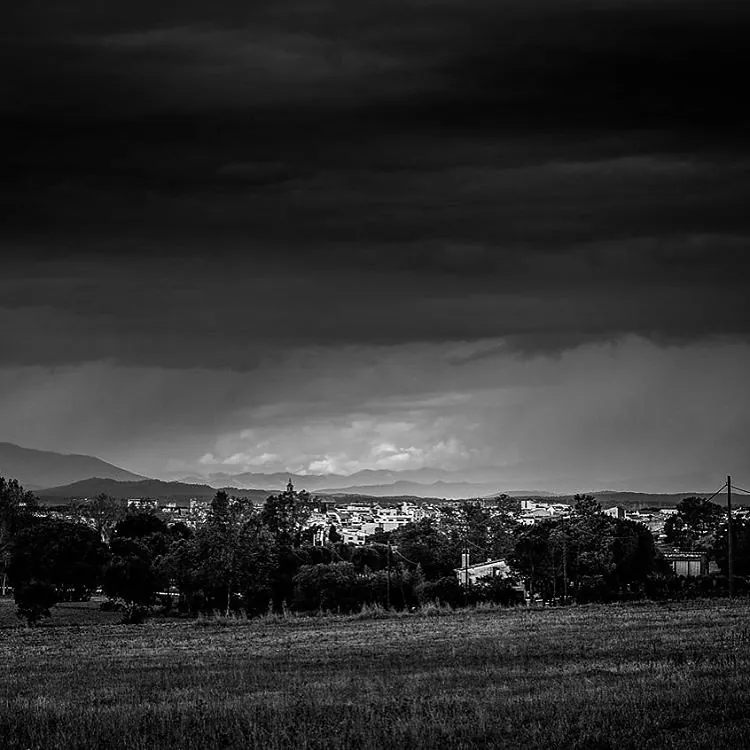
The church bell strikes eleven and the only other sound is a tractor reversing behind Can Masferrer. Riudarenes doesn’t do fanfare; it does lunch at the right time and bread that still costs under a euro. At 84 metres above sea level, the village sits low enough to feel the coastal breeze yet high enough to miss the August stampede for the Costa Brava beaches twenty-five minutes away. The name itself—"stream of sands"—is a reminder that every cobble has once been riverbed, and every house has a back gate that opens onto pine and oak.
A Parish That Outlived Its Bishops
Sant Martí’s bell tower leans slightly, not enough for postcards but enough for locals to claim it watches the fields better than any scarecrow. The church has been patched, enlarged and re-roofed since the twelfth century, yet the doorway is still the original rose-grey granite cooled in the nearby riera. Step inside and the temperature drops five degrees; the stone floor dips where centuries of work boots have ground grit into prayer. Sunday mass is at noon, but the side door stays unlocked for the simply curious. If the sacristan is around he’ll point out the Romanesque font now used for holy water—he’ll also tell you, sotto voce, that the wooden pulpit was paid for with cork money when the industry here out-earned the vineyards.
Outside, the plaça is barely the size of a London roundabout. Elderly men play cards under a dying plane tree; the bar owner brings them tiny glasses of sweet moscatel without being asked. There are no souvenir stalls, only a single vending machine that dispenses chilled gazpacho for €1.50, a bargain even by inland Catalonia standards.
Footpaths, Not Filtered Views
Riudarenes will disappoint anyone hunting dramatic summits. What it offers instead is a lattice of farm tracks that join hamlets whose names—Sant Cristòfol, la Creu de Ferro, els Muntans—rarely appear on maps outside the town hall. The tourist office (open 10–13:00, closed Monday) lends out free photocopied route slips annotated by someone who actually walks them. Distances are given in time, not kilometres: “Allow forty minutes to the oak with the tyre swing, another twenty if the river is high.”
Spring brings a brief, almost English green to the fields; by late May the grass has burnt to pale gold and the cicadas start their shift. Autumn is mushroom season—rovello and fredolic appear on every menu—and the air smells of damp bark and wood smoke. Winter is quiet, occasionally frosty, but the GR-83 long-distance path still passes through and the bakery keeps the same hours. Summer is when the village doubles in size: grandchildren arrive from Girona and Barcelona, football matches spill onto the road, and the outdoor pool (€3 day ticket) becomes the social hub. Arrive after 15:00 and you’ll queue behind teenagers who’ve cycled in from neighbouring towns.
Cork, Cows and a Menu That Knows the Day of the Week
The road south towards Santa Coloma de Farners is still lined with cork-oak plantations whose trunks look sunburnt after harvest. Trucks carry the bark to factories in Cassà de la Selva where it’s boiled, sliced and shipped to wine estates across Spain. Stop at the lay-by signed “Venda de Cork” and a retired forester will sell you placemats and noticeboards for cash only; he keeps the notes clipped to a piece of—what else—cork.
Back in the village, Can Masferrer opens at 13:00 sharp. There is no printed menu. The owner recites three starters, three mains, and one pudding; if you hesitate he chooses for you. Thursday is cargols a la brasa (grilled snails), Friday is bacallà amb samfaina, Saturday a thick pork chop calibrated to keep the local cycling club upright. Wine arrives in a porró the size of a baby’s bottle; etiquette demands you tip it without touching the spout, a skill best practised after the second glass. Three courses cost €16, bread and olives included, but bring cash because the card machine “is having a siesta”.
Vegetarians survive on escalivada and the apology of an extra tomato. Puddings are either crema catalana or seasonal fruit, which in August means chilled watermelon wedges served on the house because “it’s too hot for custard”.
Getting Here, Staying Put, Leaving Again
Girona airport is 25 minutes away by hire car; the last stretch is farm road where tractors have right of way. There is no train station—track ended in 1965—but Sarrià de Ter, eight kilometres distant, sits on the Barcelona–Portbou line. From there a local bus timed for school runs reaches Riudarenes at 07:55 and 14:10; the Saturday service is folklore rather than transport.
Accommodation is limited. Can Micos offers six rustic rooms in a seventeenth-century farmhouse two kilometres from the plaça; doubles start at €80 with breakfast that includes fresh cheese from the owners’ goats. The village campsite, Camping Riudarenes, has shaded pitches for €18 including hot showers; the reception fridge stocks Estrella and British milk for tea, an oddity explained by the Dutch owner’s years in Manchester. Both places close January–mid-February because, as the proprietor says, “even the ghosts need a holiday”.
When the Festival Lights Flicker
The Festa Major in November feels like a family reunion to which strangers are welcome. Correfires run through the streets with dimmed fireworks—narrow mediaeval lanes and pyrotechnics are uneasy companions—followed by a brass band that knows three songs and plays them with increasing conviction. Sunday midday brings the sardana in the plaça; join the outer circle or risk being herded in by an octogenarian whose ankles are still limber. At 14:00 precisely the dancing stops and everyone files into the school dining hall for an escudella stew that requires two plates (one for broth, one for meat) and costs €6 if you remembered to buy tickets earlier from the baker.
By 17:00 the village is asleep, shutters closed against a light drizzle that smells of woodsmoke and wet pine. The church bell counts the hour, the tractor is finally silent, and Riudarenes returns to being what it has always been: a place that measures time in seasons, cork harvests and the slow erosion of granite steps. Turn up without expecting to tick off sights and you might leave with dirt on your boots, sausage in your pocket and the realisation that "authentic" is simply what happens when nobody bothers to rewrite the script for visitors.