Full Article
about Riudellots de la Selva
Industrial and logistics municipality near the airport; well-preserved old center
Hide article Read full article
The smell of freshly baked bread hits before the village sign comes into view. That is often the first contact with Riudellots de la Selva: scent first, then quiet. Not complete silence, but the kind made up of birds arguing in the trees on the square, a door closing somewhere down a side street, and the distant hum of the motorway. It is close enough to remind you where you are, not so close that it spoils the morning.
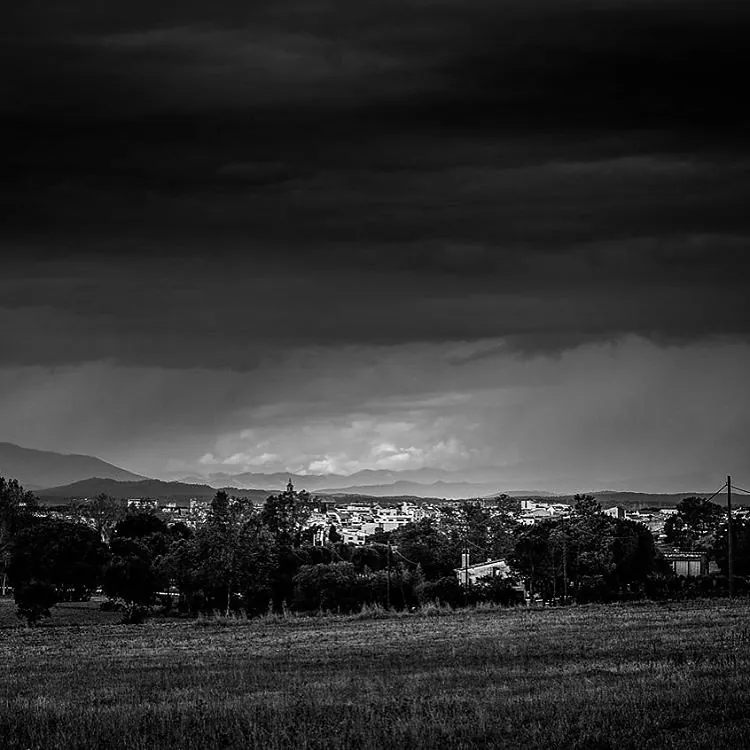
This small municipality in Catalonia has around 2,100 inhabitants. Spend a couple of days here and faces begin to look familiar. The scale is human, the pace unhurried, and most things happen within a short walk.
Everyday Time in a Small Catalan Village
Walking through Riudellots means adjusting to short streets and low houses. Many still have heavy wooden gates and old iron grilles, the sort rarely seen in newer homes. Early in the day, when the pavements are still damp, it is common to see someone watering plants that spill from balconies or stand in neat rows of pots beside a front door.
On Carrer Major, the same scene repeats most mornings. A neighbour in a floral dressing gown and slippers waters her plants with a metal watering can. Always at the same hour, always the same pots. In a small village, these routines continue without announcement. They simply form part of the background.
The town hall occupies a building that once served as the local school. On the façade, the old ceramic sign reading Escoles Nacionals can still be made out in blue tiles. Inside, traces of that past remain: long corridors, tall doors, furniture that does not look recently bought. The building carries its earlier function without trying to disguise it.
There is no need for a long itinerary here. The pleasure comes from moving slowly, noticing details such as initials carved into stone or the way shadows climb the façades later in the day. Life is visible at street level. People greet each other. After a short stay, strangers attract less curiosity.
Chimpanzees on the Outskirts
Just outside the urban centre, in a farmhouse surrounded by pine trees, a primate recovery centre has been operating for years. It works with chimpanzees rescued from circuses, advertising shoots or past cases of illegal ownership. This is not a zoo, nor a place designed for visitors to peer at animals from behind a fence.
Visits are organised as educational sessions in small groups, usually with prior booking. The aim is to explain what happens to these animals once they are no longer used by humans, and how efforts are made to provide them with a more stable environment.
During one visit, an educator described how one of the chimpanzees builds a nest every morning using blankets and pieces of fabric. He takes his time, adjusts the edges and presses down the centre with care. It is something he does each day, a private ritual marking the start of his routine.
The centre adds an unexpected dimension to Riudellots. In a place defined by modest houses and quiet streets, there is also long-term work dedicated to animals whose lives have been shaped by human decisions. The tone remains educational rather than spectacular.
Easter and the Scent of Chocolate
Around Easter, the dominant smell changes. Bread gives way to chocolate and sweet dough coming out of the ovens. In Catalonia this is the season of the mona, a cake traditionally given by a godparent to their godchild on Easter Monday.
In Riudellots, local bakeries still prepare them in a classic format. The base is sponge cake or sweet dough, topped with pine nuts and crunchy sugar, finished with a chocolate figure placed on top. Some are elaborate, others simple. A tray fresh from the oven might hold chocolate dinosaurs, a football, or more traditional shapes.
The custom centres on the godparent’s gift, though in small villages traditions often blur. People end up taking monas to relatives or neighbours as well. On Easter Monday, children in the square can often be seen breaking the chocolate figure first, leaving the cake itself for later.
It is a celebration rooted in family ties and local bakeries rather than large events. The change in aroma is noticeable as you walk through the streets, drifting from open doors and warm trays.
When to Go and How to Explore
Spring is usually a good time to visit. The surrounding fields turn a vivid green and the morning air carries the scent of damp earth. April often brings rain. Rather than a short downpour, it tends to be a fine drizzle that lasts for hours and leaves the streets shining.
Summer alters the rhythm. More cars arrive and the narrow streets in the centre fill up quickly, especially at weekends. Those seeking quieter moments may prefer weekdays and earlier hours of the day.
At times there is a small open-air market in the main square. It consists of just a few stalls, with vegetables from nearby market gardens and some local cheese or cured meats. It is not large, yet there is a sense that many residents come to buy what they need for the next few days.
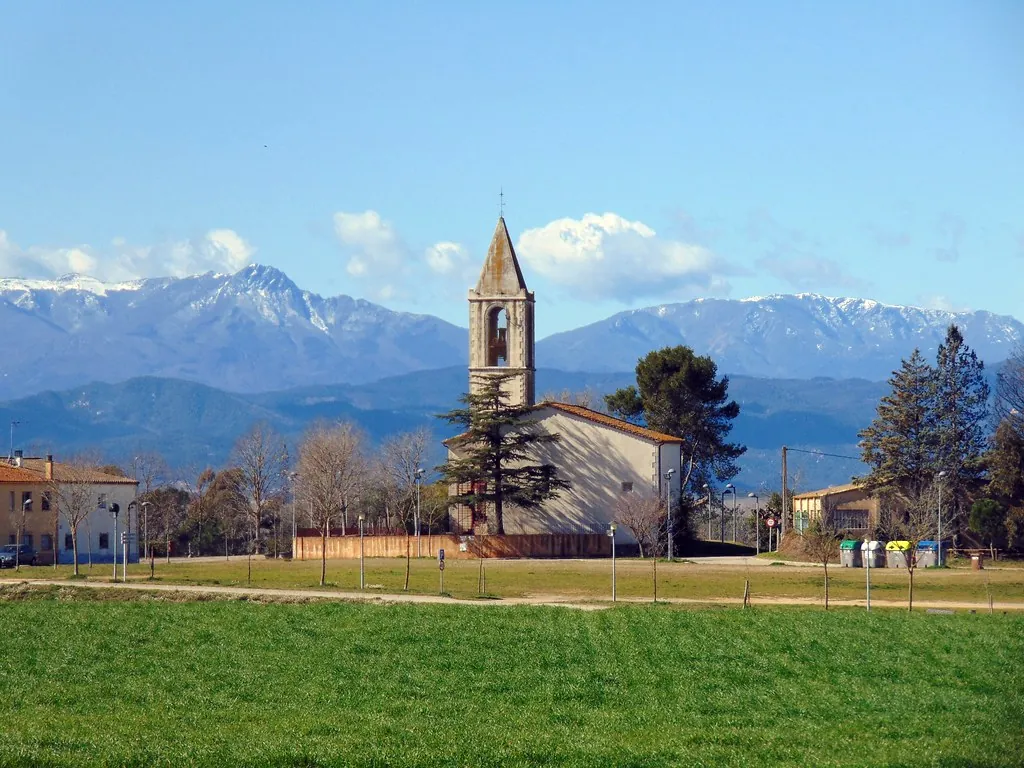
Riudellots does not require much time to walk around. When the circuit is complete, there is a stone bench opposite the town hall. It is slightly cracked and covered with initials carved using keys or penknives. By mid-afternoon, the bell tower marks the hours with a dry sound and shadows begin to climb the façades.
Sit still for a while and neighbours will pass on their way home. Some offer a greeting even if they do not recognise you. After a couple of days, an outsider no longer feels entirely so. The change is subtle, noticeable in the way glances soften and nods come more readily.
Riudellots de la Selva does not rely on major monuments or headline attractions. Its character lies in repetition, in daily gestures, in the shift from bread to chocolate as the seasons turn. For those willing to slow down, that is more than enough.