Full Article
about Sant Feliu de Buixalleu
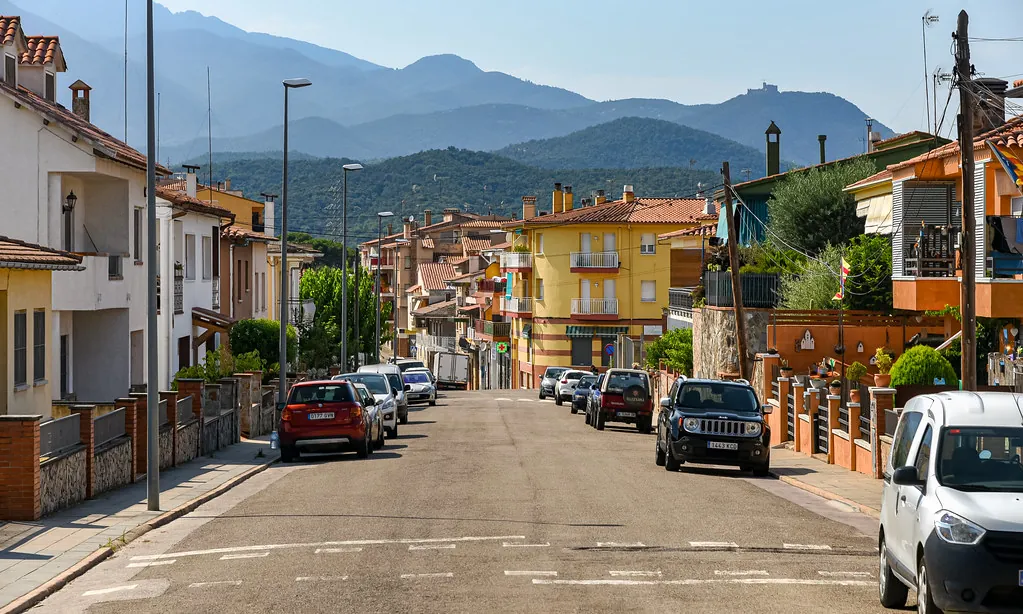
Large, wooded municipality in Montseny; includes part of Montsoriu castle.
Hide article Read full article
A municipality scattered between mountain and plain
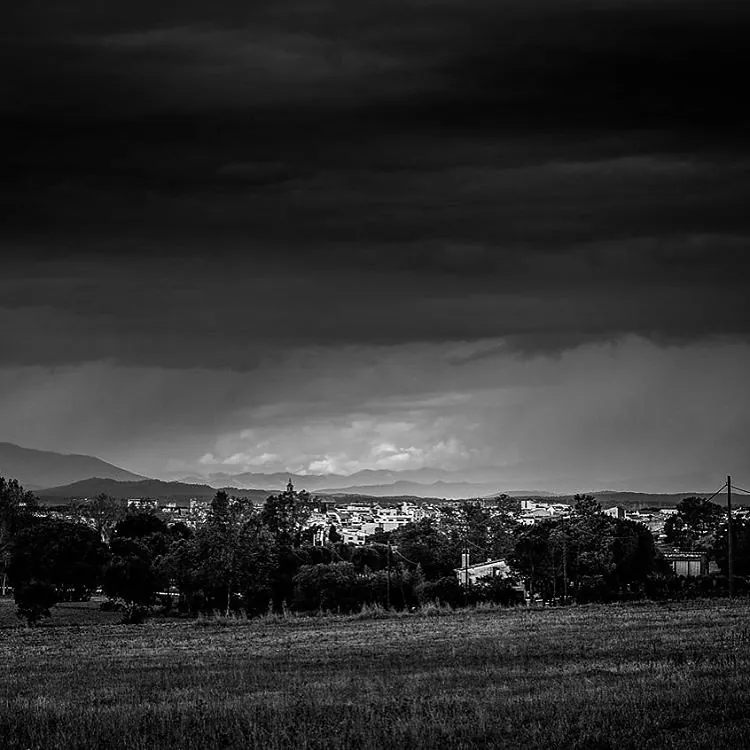
Sant Feliu de Buixalleu is defined by its geography. The municipality occupies the southern slopes of the Guilleries massif, where the terrain begins to soften before meeting the plains of La Selva. There is no single village. Life is distributed across a series of masías, the traditional Catalan farmhouses, connected by a web of rural lanes and old paths.
The population, around 882 inhabitants, explains the atmosphere. Distances between houses are measured in fields, not metres. The landscape feels shaped by forestry and agriculture, not by planning.
Holm oak and cork oak woods are interspersed with pine groves, giving way to pastures and small cultivated plots. The relief is a steady roll of hills and shallow streams. It is a gentle, but never flat, terrain.
The parish church and a landscape without a centre
The Romanesque church of Sant Feliu, heavily modified in the 18th century, serves as the visual anchor. It sits on a modest rise, as these churches often do in rural Catalonia.
From its grounds, the organisation of the territory becomes clear. You look out over a dispersion of fields and isolated buildings. Historically, this church was more than a place of worship; it was the necessary communal point for a scattered population. It remains the primary landmark in a landscape that otherwise offers few.
Reading the land through its masías
To understand Sant Feliu de Buixalleu, you look at its farmhouses. Many are still working properties, involved in forestry or agriculture. Others stand vacant, their structures intact.
The architecture is strictly functional: thick stone walls, tile roofs, arched doorways built with voussoirs. Decoration is incidental. Some, like the namesake Mas Buixalleu, point to medieval origins. As most are private homes, you observe them from the public paths. Their placement on the land—which slope they face, how they relate to water and fields—tells you how agricultural life was organised here.
You will also notice the dry stone walls and the old bridle paths, now often walking tracks. These are the quiet signatures of long-term work on the land.
Walks through oak woodland
The forest is a constant presence. Tracks and footpaths wind through holm oak and cork oak groves, linking farmsteads and springs. Waymarking can be sparse; having a map or a navigation app is prudent.
The walking is not strenuous but it is uneven, with steady inclines and descents that can turn slick after rain. The reward is a particular quiet, broken only by wind in the trees or the rustle of fauna. These paths are also used by mountain bikers and, occasionally, by tractors. The land is in use, not preserved for leisure.
Rhythm and provisions
Agricultural work continues here, though on a smaller scale than in the past. Many holdings remain within families. The local calendar still follows seasonal patterns.
In autumn, mushrooms from the surrounding woods feature prominently in the cuisine of the wider Selva region, alongside local cured meats. For meals, visitors typically drive to towns like Santa Coloma de Farners or Hostalric, which have a more concentrated offering.
The festa major for Sant Feliu takes place in late August. It is a local affair, with the kind of community events typical of Catalan village festivals. For a few days, activity gathers around the church area.
Practical considerations
This is not a destination for a brief visit. Its value lies in walking its lanes and understanding the relationship between forest, field and farmhouse.
Having a car is almost essential for moving between areas. If you plan to walk seriously, come prepared with good maps. Do not expect monumental sights. Instead, pay attention to the line of a stone wall, the orientation of a masia, or the transition from dense woodland to open pasture. The character of the place is in these details.