Full Article
about Sant Julià del Llor i Bonmatí
Municipality made up of an industrial colony and a rural center; next to the Ter river
Hide article Read full article
A small place on the Ter
Sant Julià del Llor i Bonmatí is the kind of place you can cover quickly. Most people arrive by car. The streets in the centre are narrow, though parking is usually manageable outside peak hours. If there is a choice, morning is the better time to come. By midday the light turns harsher and the walk loses much of its appeal.
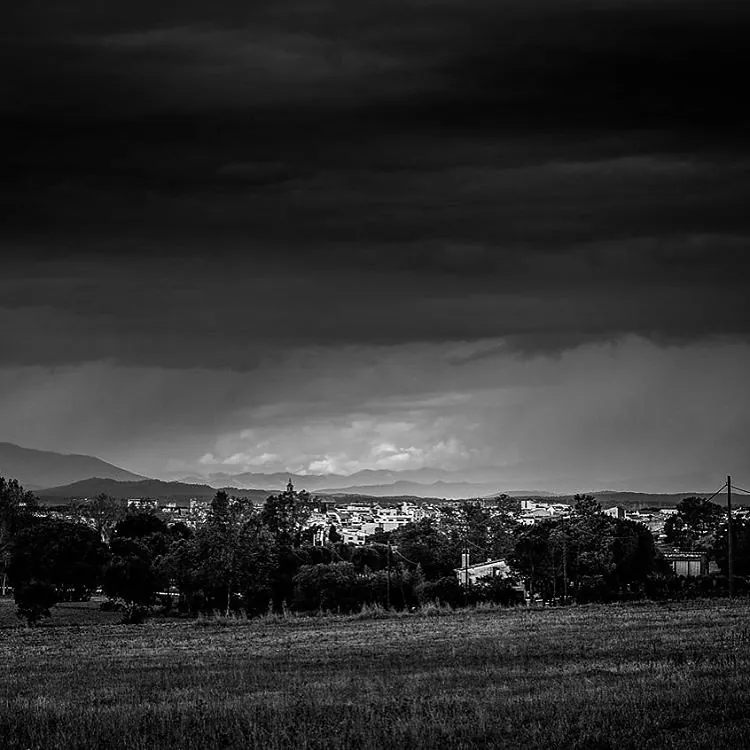
The municipality has around 1,400 residents and sits in the comarca of La Selva, at roughly 160 metres above sea level. The River Ter runs nearby and shapes much of the landscape. There is low woodland, open fields and the occasional path that slopes down towards the water. This is not a monumental destination. It feels practical, a place that moves through its daily routine without much concern for presentation.
What little there is to see
The older part of the municipality is Sant Julià del Llor. Here stands a former Benedictine monastery, founded in the 10th century according to commonly cited records. The church retains a semicircular Romanesque apse and fairly restrained capitals. The whole complex is small and austere.
The cloister has been altered several times over the centuries. What remains today preserves the basic layout, though it does not present itself as a grand or elaborate structure. Access tends to be limited, so it is worth checking in advance if you plan to go inside.
Bonmatí tells a different story. Its growth came with the textile industry, and traces of that period are still visible along the Ter. There are brick façades and large factory windows left behind. There are no information panels or marked routes to guide visitors. What you find are scattered remnants that hint at that industrial past.
The parish church of the municipality is simple. It serves its purpose without drawing much attention.
Walking the surroundings
Spending some time on foot is the most common way to experience the area. Short paths link the two centres, Sant Julià del Llor and Bonmatí, while others lead into woodland and across fields. These are easy routes, with little change in elevation and few wide views. They are suited to a brief walk rather than a long excursion.
Near the river, there are quieter stretches where shade is easy to find in summer. When the flow is strong, the sound of the water becomes a steady companion along the way.
For those travelling by bike, secondary roads connect the municipality with places like Anglès and other nearby towns. Within Sant Julià del Llor i Bonmatí itself, there is no clearly defined network of signposted mountain bike routes.
A place that runs on its own rhythm
Tourism is not what drives Sant Julià del Llor i Bonmatí, and that is noticeable. Daily life continues at its own pace, with the routines of school, agriculture and neighbours moving in and out by car.
The main local festivities are usually held at the end of August in Sant Julià del Llor. Bonmatí also organises its own celebrations throughout the year. These events are designed more for residents than for attracting visitors, which shapes their atmosphere and scale.
A straightforward tip
It is best not to arrive expecting a weekend destination packed with sights. If you are already in the Ter area, it works as a short stop. An hour is enough to walk near the river and take a look at the old monastery. For anything with more activity or larger heritage sites, the road continues onwards.