Full Article
about Santa Coloma de Farners
Capital of La Selva; known for its spas
Hide article Read full article
A small capital with its own rhythm
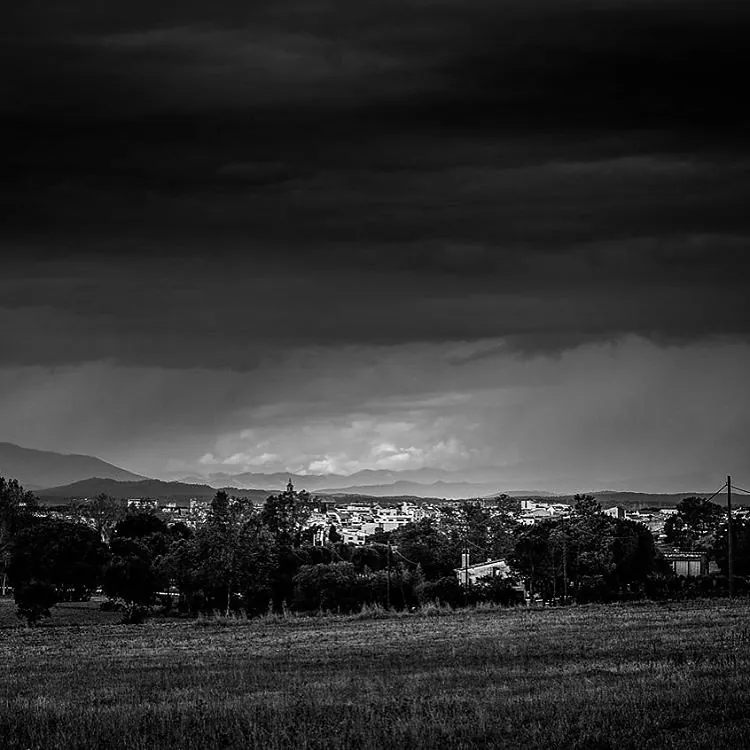
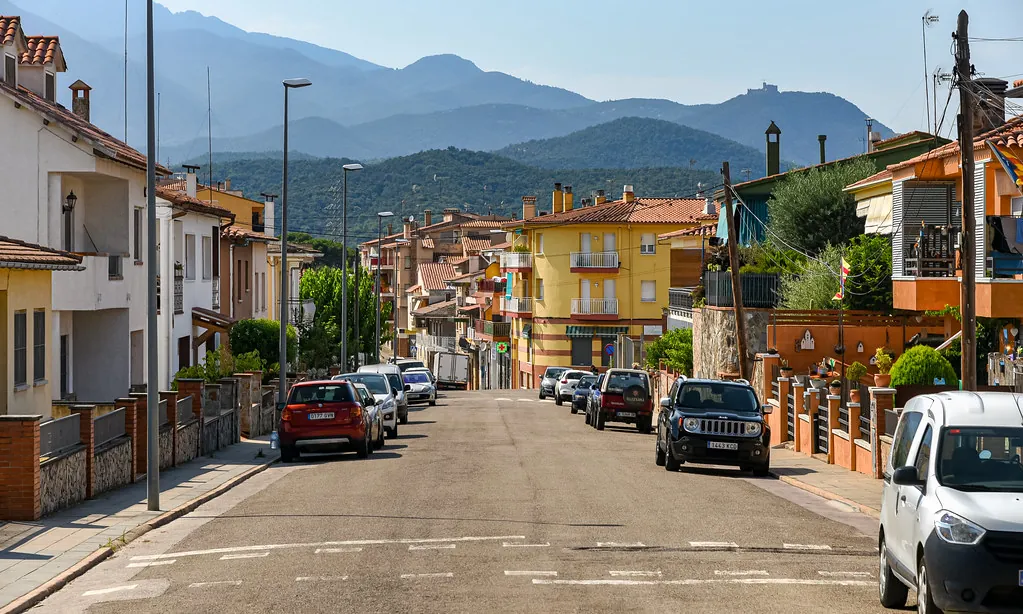
On the Monday before the first weekend of December, the main square fills with the smell of nutmeg and anise. It is ratafía season. In Santa Coloma de Farners, this traditional liqueur belongs to everyday life rather than being staged for visitors. This is the capital of the Selva comarca, a town of nearly fourteen thousand people where daily routines still feel close to home, from shoppers heading to the market with wheeled trolleys to the long-standing use of thermal waters that have been part of local life for over a century.
Santa Coloma does not present itself as a place of big landmarks or packed itineraries. It is a town you understand quickly, through a short walk, a drink, and the rhythm of its streets. The historic centre is compact, while later expansion reflects the growth of the 19th century, when cork and textile industries shaped the area beyond the old core.
Getting around and finding your way in
Reaching Santa Coloma de Farners is straightforward. The C‑35 road brings you to the outskirts in a short time from Girona. The challenge comes once you arrive by car. The centre is small and parking spaces disappear quickly in the morning.
A practical option is to leave the car near the sports hall or close to the station. From there, it is an easy walk downhill, and within a few minutes you arrive at the Plaça Major.
The old town does not stretch far. Walking from one end to the other takes no more than ten minutes. It is more about a brief wander than a long exploration. The wider streets and larger neighbourhoods outside the historic centre reflect the town’s later growth, particularly during the period when cork and textile production drove expansion.
Up to the Castell de Farners
The Castell de Farners sits about three kilometres from the centre, in the direction of Sant Hilari. You can drive most of the way up and then finish the final stretch on foot.
Expect ruins rather than a fully preserved castle. What remains are sections of wall, a heavily worn tower, and an open space with wide views across the plain of the Selva. The structure dates back to medieval times and has been in ruins for centuries.
Halfway up, you come across the sanctuary of the Mare de Déu de Farners. Its oldest part is Romanesque, while other sections have been rebuilt over time. It is sometimes open, though not consistently.
The walk and the setting matter as much as the destination. The surroundings shift from town to hillside, and by the time you reach the top, the perspective opens out across the landscape.
Ratafía and local sweets
Ratafía here is not treated as a curiosity. Many households still make their own, using green walnuts and a mix of herbs that often remains a family secret.
Ask around and it is easy to hear about bottles left to macerate on balconies for months. Some recipes include a wide range of plants, while others add coffee or citrus peel. There is no single formula, and that variety is part of what keeps the tradition alive.
Alongside the liqueur, there are a few local sweet specialities. One is the coca dulce de Farners, a flat cake with sugar on top. It has nothing to do with the savoury cocas found elsewhere in Catalonia. Another is a type of flower-shaped biscuit that has been made in the town for more than a century.
These foods are not presented as novelties. They are part of everyday baking and seasonal habits, tied to moments of the year rather than to a fixed display.
Thermal waters on the edge of town
Thermal waters have long been part of Santa Coloma de Farners. On the outskirts, several historic buildings remain from former spa establishments.
Do not expect modern facilities everywhere. Some of these places retain a distinctly traditional feel, with simple pools and hot water rather than elaborate installations.
Near the road, there is also a public thermal spring where hot water flows freely. It is essentially a tap. Some people come to fill large bottles, others make do with a quick soak as best they can.
The presence of these waters is not hidden or formalised. It sits somewhere between everyday use and quiet continuity, woven into the edges of the town rather than set apart from it.
When the town feels at its best
Autumn is often the most pleasant time to visit. The nearby hills fill with people searching for mushrooms, and the atmosphere in the town itself is calmer than in summer.
Summer brings heat, and the surrounding hills become dry. Even so, there is usually a bit of air moving in the late afternoon from the Guilleries mountains, which softens the day.
Throughout the year, various fairs take place, many linked to ratafía and local produce. When they coincide with a visit, the centre becomes noticeably busier.
Santa Coloma de Farners does not require a long trip on its own. It works best as a short stop if you are already in Girona or travelling through the Selva. Park above, walk down to the square, take a brief turn around the streets, then head up to the castle. That is enough to get a clear sense of the place and how it moves.