

Full Article
about Susqueda
Municipality marked by the reservoir that flooded the old village; wild, solitary setting
Hide article Read full article
The air at seven carries a chill, even in August, and the reservoir lies flat and still between the dark hills. From the forest track, there is no sound but a blackbird in the trees and the wind shifting the tops of the pines. The municipality of Susqueda, in la Selva, Catalonia, feels defined more by its landscape than by its village. Just over a hundred people live here, their stone farmhouses scattered across wooded slopes, linked by tracks that disappear into holm oak and oak.
It is a wide territory, inhabited quietly. In the background, the water of the Ter fills what were once valleys.
The weight of the water
What you see today is shaped by the Susqueda reservoir, built in the late 1960s. The dam, set between steep rock faces, altered everything. From higher ground it’s hard to picture the earlier landscape; now there is only this dark green surface threading between mountains. The ranges of les Guilleries close in with dense woodland—pines, holm oaks, and in the damp pockets, beech. Autumn covers the ground with leaves and brings that damp, fungal scent of old forest. In winter, moss spreads across stone walls and tree trunks, softening every edge.
Several points offer views over the water, often at the end of an unmarked forest track. Signposting is sparse. It helps to have a map and to take things slowly; the roads here are narrow and full of bends, which sets the pace for you.
Stone and silence
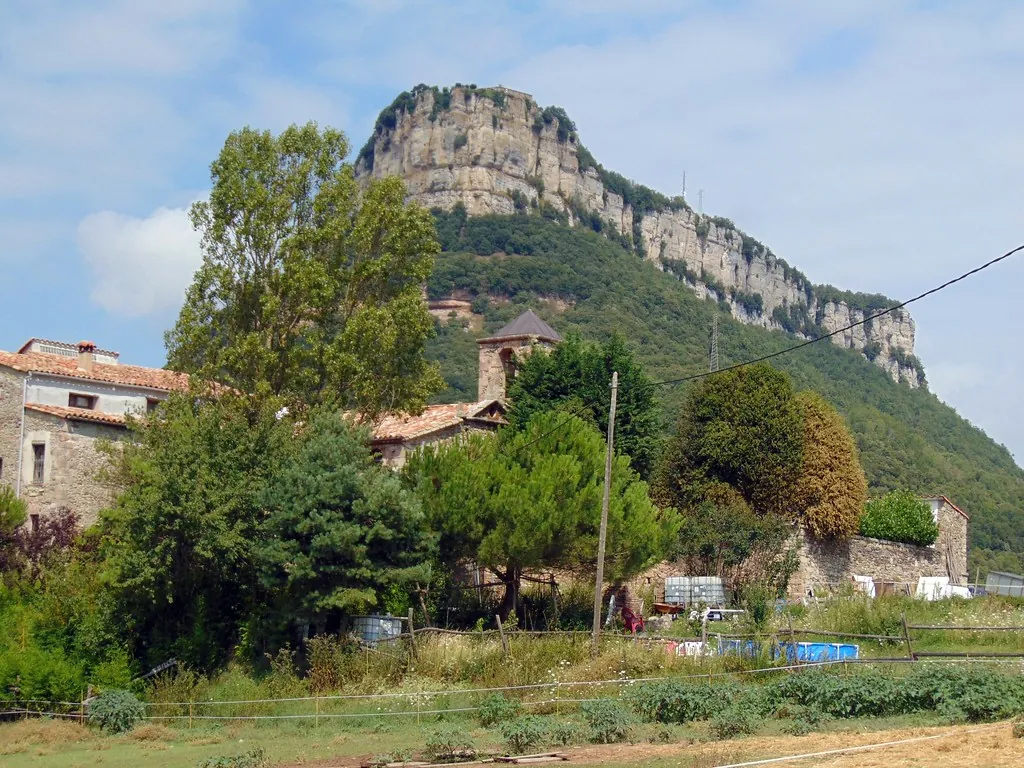
The historic centre of Susqueda is small. The parish church of Sant Martí, its Romanesque origins altered over time, is a clear reference point in a territory where buildings are otherwise miles apart.
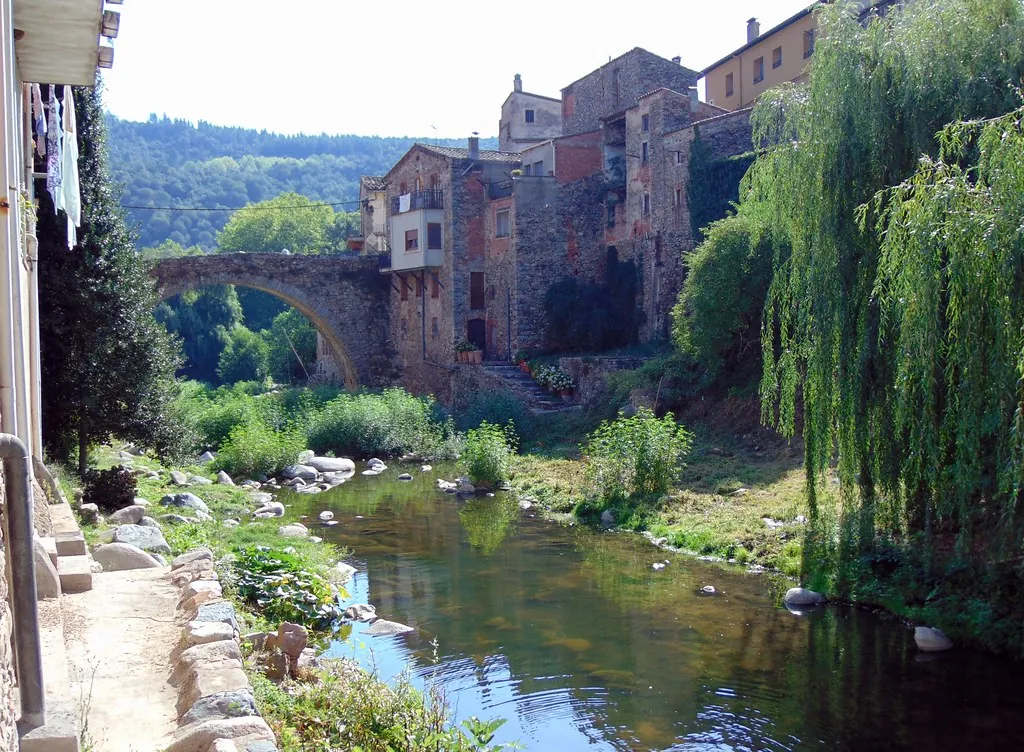
The masías, the stone farmhouses, explain more about life here. Some are still lived in, linked to forestry or sheep. Others stand with collapsed roofs, their walls taken by ivy. Walking the tracks that connect them gives you the scale: long distances, dense woodland, a quiet that rarely lifts. This dispersed pattern is typical of inland Catalonia, where a farmhouse was both home and workplace. In Susqueda, that structure remains visible.
Walking les Guilleries
The forest holds an extensive network of paths. Some follow wide tracks through pine stands; others drop into narrower ravines where the ground stays damp for months.
A common walk tries to circle part of the reservoir or reach viewpoints above the water. The route isn’t continuous—the terrain forces detours—but it gives you changing angles: the water from above, then from eye level. Two things shape the experience. After rain, tracks turn to mud quickly. In summer, the heat builds fiercely in the forest from midday on. An early start changes everything; the light is softer, the air easier to move through.
Signs of life
Water here isn’t just the reservoir. Ravines form narrow streams with small pools and rocky sections. In some parts of les Guilleries, these are used for canyoning—technical descents that require gear and know-how, not a casual undertaking.
Walk early and you’ll see traces: wild boar tracks in soft mud, roe deer crossing a path, birds of prey circling on thermals above a clearing. On the reservoir itself, you might see kayaks or anglers in authorised zones. From the water, the scale shifts; the slopes seem higher, and when the wind drops, the entire woodland reflects on the surface.
A practical landscape
Options for eating within the municipality are limited and spread out. Most people drive to other villages in les Guilleries or along the Ter for a wider choice.
The cooking here relies on what’s local and in season. Mushrooms appear after autumn rains, cured meats hang in winter, heartier stews are for colder months. It’s food for long days outdoors.
Come in spring or autumn if you can. The forest is active, streams run, temperatures are right for walking. Summer shows the landscape at its fullest, but the heat settles heavily by noon. Winter brings a different atmosphere: fog can sit in the valleys for hours, creating a deep quiet while erasing all views.
Susqueda doesn’t revolve around a landmark or a plaza. Its character is in the space between things—between water and rock, between one isolated farmhouse and another