

Full Article
about Tossa de Mar
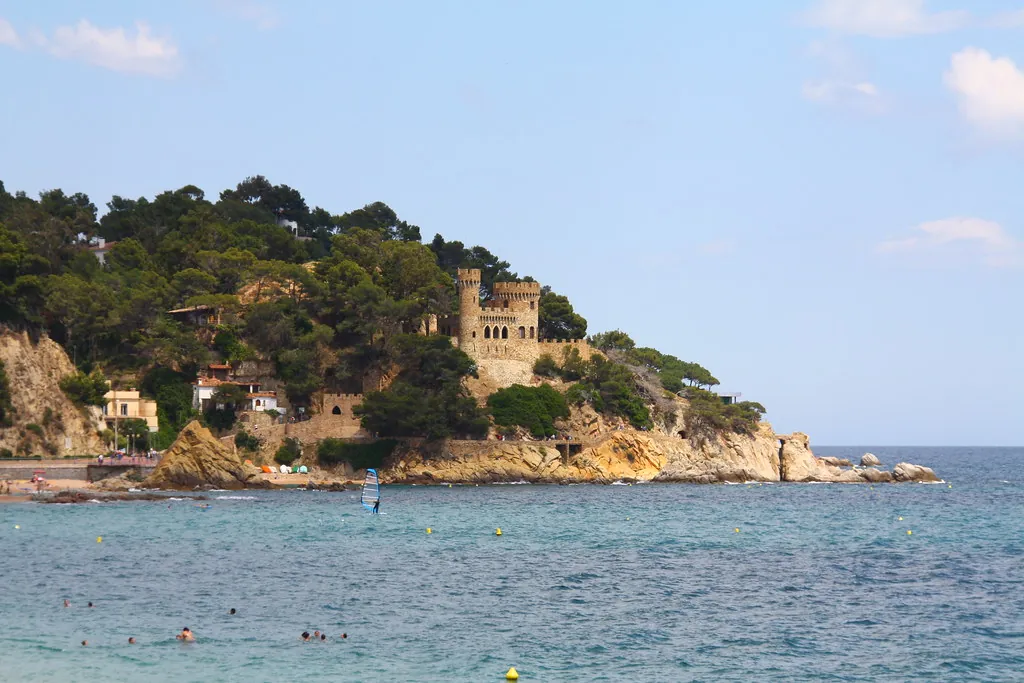
Icon of the Costa Brava with its seaside walled enclosure; Vila Vella
Hide article Read full article
A harbour that shaped the town
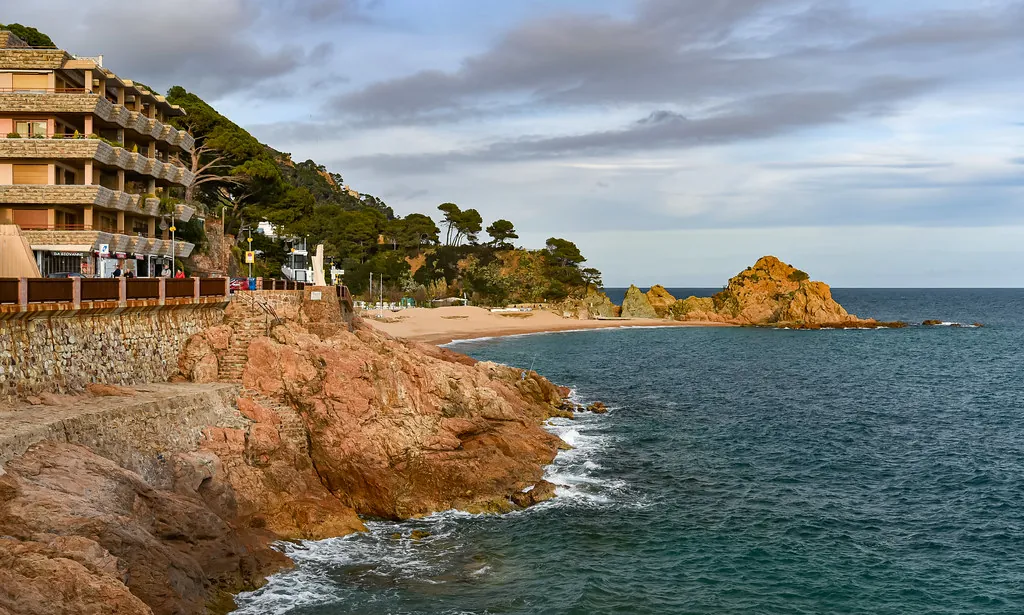
In Tossa de Mar, everything begins with the harbour. This small inlet on the Costa Brava offered shelter to boats long before the town took its present shape. Its natural protection made it a useful stopping point on a rugged stretch of coast, and that function determined what came next.
During the Middle Ages, a walled enclosure was built to watch over the shoreline and defend this anchorage. Houses were gathered inside, compressed between the slope of the land and the sea. The layout that survives today in the Vila Vella follows that defensive logic. It remains the only fortified medieval enclosure still standing along the Catalan coast.
Inside the Vila Vella
The Vila Vella is compact. It can be explored in a short time, yet its plan gives a clear sense of how a medieval coastal settlement worked. The walls date from the late 12th century. Several towers are still standing, along with most of the main perimeter that wraps around the hill beside the sea.
At the highest point stood the castle. Today, only remains are visible, together with the tower where a lighthouse was later installed. From here, the position of the site becomes clear: a direct line of sight over the bay and along the coastal routes.
The streets inside are narrow and steep. Many of the current houses were built later, although the plot divisions are older. In some walls, reused stones from earlier structures can still be seen. These are small details, but they help reveal the different layers that have shaped the place over time.
Beneath the town: Roman Turissa
Long before the medieval enclosure, there was a Roman settlement here. Some sources refer to it as Turissa. A short walk from the centre, the remains of the Roman villa dels Ametllers are still preserved.
This was a well-appointed residence by the sea. Archaeological work has uncovered mosaics, rooms equipped with hypocaust heating systems, and agricultural areas linked to the main house. Its history extends into the late Roman period, around the 4th century.
What stands out is how close these remains are to the modern urban fabric. They appear among contemporary buildings and small cultivated plots. The contrast makes it easier to grasp how long this stretch of coast has been inhabited.
A moment in the spotlight
In the mid-20th century, Tossa began to appear in cultural and artistic circles. Painters and writers spent time here before large-scale tourism reshaped much of the coastline.
Cinema also played a role. A film shoot in the early 1950s drew international attention. Images of the bay and the walled enclosure circulated beyond Spain and helped the town’s name travel further afield.
This period coincided with the first urban changes along the seafront. From then on, tourism started to develop in a more organised way, marking a new phase in the town’s evolution.
Cim i tomba and coastal cooking
Cim i tomba is often mentioned when discussing the local cuisine of Tossa. It is a fish stew prepared with potatoes and an allioli that is blended into the cooking liquid.
The dish is closely linked to traditional coastal fishing. Its name refers to the movement of the pot during cooking. Rather than stirring with a spoon, the pot is gently shaken so that the ingredients combine without breaking the fish. It was a practical method, whether cooking on board or on land, using whatever had come in with the day’s catch.
Today, it is still prepared in homes and during certain local food events in the municipality.
The coastal paths
Several stretches of camí de ronda begin in Tossa. These coastal paths were originally used to watch the shoreline and to connect small coves. At times, they also served to monitor smuggling activity.
The route towards Lloret de Mar follows the line of the cliffs. In places, the rock drops directly into the sea, creating narrow sections along the path. It is not always an easy walk, but it offers a clear sense of the geography that defines this part of the Costa Brava.
Getting your bearings
The historic centre lies beside the main beach. A good way to approach it is to walk the perimeter of the walls first, then move into the interior streets.
For those interested in the deeper history of the area, the Roman villa dels Ametllers complements the medieval visit well. It is only a few minutes on foot from the centre.
In winter, the rhythm of the town changes noticeably. Some local celebrations, linked to old religious vows made in response to past epidemics, are still remembered through pilgrimages between nearby hermitages. These are not events designed for visitors, but traditions the community has continued over time.