Full Article
about Sils
Known for its restored pond; municipality with many housing estates
Hide article Read full article
There is a brief moment when the train pulls into Sils station and doubt sets in. It is not that the place looks unattractive. It is that you expect a traditional village scene and instead step out beside an industrial estate. The warehouses next to the platform seem to greet visitors before the village does. That first impression shapes the story of Sils: a place that hides its character in plain sight.
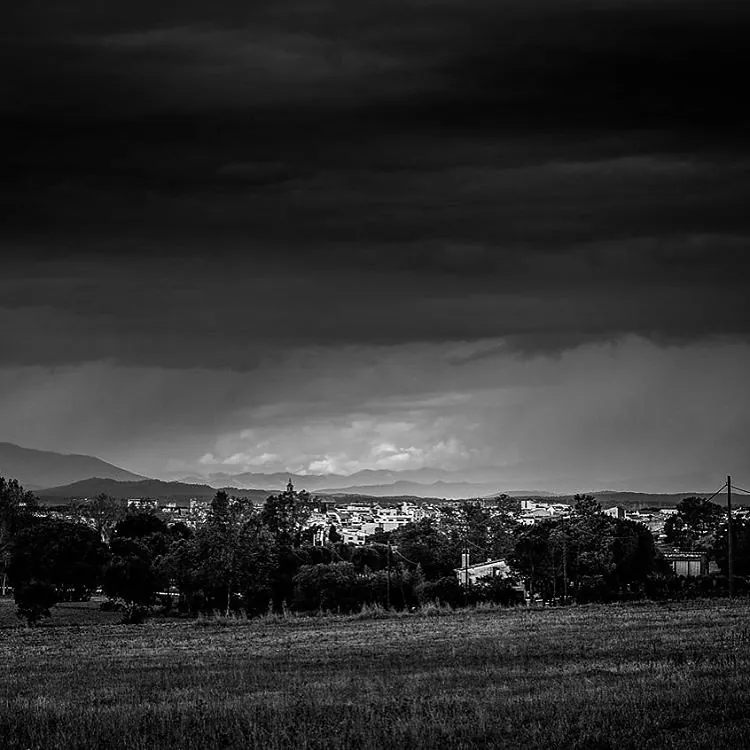
For years, drivers heading along the N‑II towards the Costa Brava have thought much the same. A glance from the road suggests little more than industrial buildings. Yet behind that façade lie two historic centres that have stood here for centuries, carrying on at their own pace as if the 21st century were little more than background noise.
A village that kept its distance
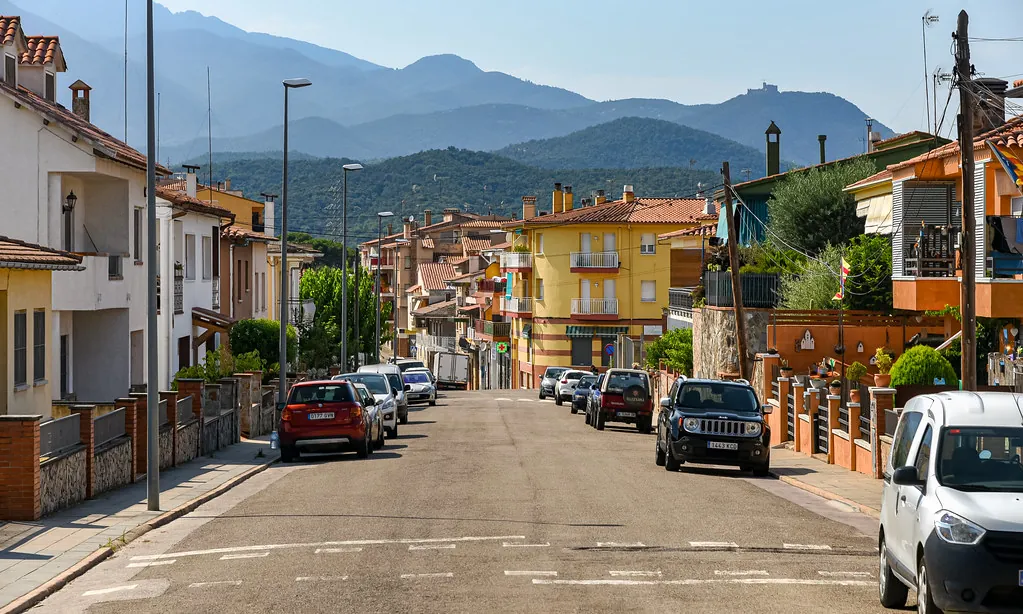
The old quarter of Sils is modest in size, just right for an unhurried walk. Stone houses line the streets, some renovated with a curious blend of modernist ironwork and more traditional details. The parish church of Sant Cosme i Sant Damià presides over the scene with the solemn air of someone who has witnessed generations come and go.
A short distance away lies Vallcanera, the other historic nucleus. It feels even more discreet: a handful of houses scattered among fields, rural tracks and long stretches of quiet. The rhythm here seems slower, as if daily life follows rules of its own.
Until 1868, Sils and Vallcanera were separate municipalities. The idea feels almost domestic in scale, like two siblings dividing a shared room with an imaginary line down the middle. Despite the administrative merger, each retains a distinct atmosphere.
This contrast between industrial outskirts and historic heart defines Sils. The surprise is not that the modern world has arrived, but that the older layers remain intact and largely undisturbed.
The lake that never quite disappeared
The real key to understanding Sils lies beyond its streets, in the Estany de Sils.
Today the landscape consists of fields, drainage channels and wetlands. For centuries, however, a large lagoon covered around 80 hectares of this plain. For local inhabitants, the water was more burden than blessing. Mosquitoes thrived, the land proved difficult to cultivate, and the constant presence of water complicated everyday life. After several attempts, the lagoon was finally drained in the mid-19th century.
Nature, however, is patient. The ground remains damp, and part of the former estany has been recovered as a protected natural area. A walk through the area quickly reveals why water has always defined this place.
More than eighty bird species have been recorded here. The landscape shifts noticeably with the seasons. Spring and autumn bring heightened bird activity, while summer heat and humidity make early starts advisable. Conditions shape the experience as much as the scenery does.
A circular route runs around the wetland. The terrain is flat, the paths broad, with stretches that pass through reeds before opening onto farmland. It is a walk that encourages attention to the margins rather than to the clock. The sound of wind through vegetation replaces traffic noise, and the sense of space feels far removed from the industrial estate by the station.
The Estany de Sils also explains much about the local imagination. For centuries, wetlands inspired caution as well as curiosity. Water concealed depth and movement beneath an apparently calm surface. In a landscape like this, stories were bound to emerge.
A descent to hell
Sils has its legend, and it centres on the estany.
In the 17th century, a farmer named Pere Porter lived in the area. According to local tradition, he made a pact with the devil and, in a tale that fully embraces the realm of legend, descended into hell through the lagoon itself.
The story became part of the area’s oral tradition and circulated for many years in written form as a moralising tale. Its message was direct: beware of debts, strange agreements and certain paths in life.
When walking through the wetter parts of the former estany, with reeds shifting in the breeze and soft ground underfoot, it is not hard to see how such a narrative took hold. The terrain still carries a faint air of uncertainty. What appears solid may not be entirely so. The boundary between land and water blurs, and imagination fills the gaps.
The legend of Pere Porter remains one of those local stories that tie landscape to belief. It does not require elaborate explanation. The setting does much of the work on its own.
Classic cars by the roadside
Another unexpected element of Sils appears beside the N‑II. In an old roadside hostelry, a private collection of classic automobiles has been assembled over decades. The vehicles include early 20th-century cars, historic racing models and luxury designs that seem to belong to another era.
The juxtaposition feels unusual. One moment you are among wetlands and agricultural land; the next, you encounter machines that evoke a different chapter of technological ambition. It is not the first association that comes to mind when thinking of the comarca of La Selva, yet it forms part of Sils all the same.
As with much here, the key lies in looking past first impressions. The industrial estate by the station, the drained lagoon, the roadside collection of vintage cars: each element hints at a place shaped by layers rather than by a single identity.
Planning time in Sils
Reaching Sils is straightforward. Trains from Barcelona take about an hour and arrive close to the centre. By car, most visitors approach via the N‑II or the AP‑7 before turning off towards the village.
A simple plan works best. Begin with a walk through the old quarter of Sils, then head towards Vallcanera to appreciate its quieter setting. After that, allow ample time for the paths around the Estany de Sils. The flat terrain suits anyone who enjoys walking without steep gradients, and birdwatchers will find plenty to hold their attention.
As for meals, many visitors opt for something simple or continue on to nearby towns in the comarca of La Selva. Sils lends itself more to wandering and observing than to elaborate schedules.
At first glance, it may seem defined by warehouses and passing traffic. Spend a little longer here and another picture emerges: historic nuclei that predate modern infrastructure, a wetland that refuses to vanish entirely, and a legend rooted in shifting ground. Sils does not compete for attention. It reveals itself gradually, once you step beyond the station platform.