Full Article
about La Palma Debre
Ocultar artículo Leer artículo completo
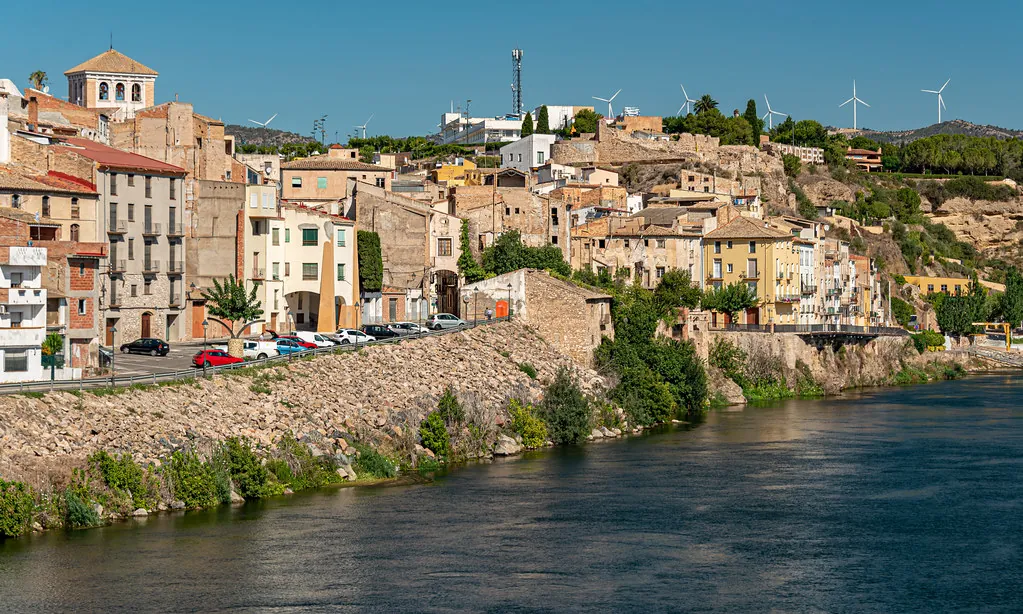
The church bell strikes midday and the only other sound is a tractor changing gear on the road out of town. La Palma d'Ebre doesn’t do background noise. At 341 residents, the village head-count is lower than most British secondary schools, and the pace of life runs on agricultural time rather than the tourist clock.
This is the interior of Catalonia, 335 metres above sea-level and 40 minutes’ drive from the nearest Costa Dorada beach. The Ebro River slips past three kilometres away, close enough to irrigate almond and olive terraces but far enough to leave the village high, dry and mercifully free of mosquito-plagued marshland. What you get instead is a dry-stone patchwork of smallholdings, pine-clad ridges and the occasional flash of white blossom when the almond trees wake up in late February.
A Village that Fits in Thirty Minutes
The urban centre – if you can call two streets and a square that – was laid out long before cars were imagined. Stone houses shoulder right up to the roadway; their ground floors still contain the original wooden doors tall enough for a mule and cart. Park by the church, walk downhill past the bakery (open 07:00-13:00, closed Wednesday) and you will emerge at the lower fountain where village women once did the weekly wash. Loop back via Carrer Major and you have seen it all without breaking stride. There is no ticket office, no audio guide, no gift shop. Refreshments are limited to the bar in the square – two outside tables, one television permanently tuned to Barça, coffee €1.20.
That simplicity is either the appeal or the warning, depending on what you expect from a Spanish holiday. La Palma d'Ebre will not fill a memory card with monuments. The 18th-century parish church is handsome in the way country churches are: thick walls, a single nave, bell turret added later when money allowed. Inside, the paintwork is faded terracotta and the air smells of wax and dust. It opens only for services or by asking at the ajuntament (town hall) across the square. Someone usually turns up within ten minutes, key in hand, happy to switch on the lights for whoever shows interest.
Walking the Terraces
The real gallery is outside. A lattice of caminos rurals radiates from the last houses into almond, olive and garbanzo plots held in place by hand-built stone banks. None of the paths is National-Trust-signposted; you follow tractor ruts painted red by the soil and trust that every track eventually hits a tarmac lane. Distances are short but gradients steady – 100 m of climb every kilometre is normal – so the going feels more strenuous than the map suggests. Spring brings the reward: whole hillsides flick from brown to white overnight as almonds flower, and the air fills with enough pollen to make non-hay-fever sufferers sympathise with those who suffer.
Serious walkers can stitch together a six-hour circuit that drops from the village to the Ebro at Ginestar, follows the river for a stretch, then climbs back via the hamlet of Rasquera. Carry water – fountains are seasonal and cafés non-existent once you leave the valley road. Mountain-bikers appreciate the same web of tracks; the surface is firm and the lack of traffic absolute, though loose stone on corners demands decent tyres.
Wine, Oil and Almond Cake
Agriculture here is small-scale but proud. Most families keep a few hundred olive trees; cooperative presses at Móra d'Ebre and Tivissa turn the fruit into peppery green oil sold in five-litre plastic jugs for €22. Almonds are harvested in September, laid out on flat roofs and threshed with a stick the way their grandparents did. The nuts reappear in pastries at festival time: coca d'ametlla, a chewy almond cake sold by the square in the bakery, keeps for a week and travels well in a pannier.
Wine drinkers should reset expectations. The Ribera d'Ebro denominació is better known for bulk reds than cellar-door experiences, yet a handful of growers now bottle their own. Celler Sabaté at nearby Ginestar opens for tasting on Friday afternoons; its Garnatxa Blanca carries enough citrus to cut the heat of a summer afternoon and costs €7 a bottle if you haul it away yourself. British visitors often discover they can ship a mixed case home for roughly what a decent Rioja costs in Waitrose.
When the Village Throws a Party
Come August the population triples. The fiesta major (around 15 August, check locally) drags back adult children who left for Barcelona or Tarragona work. Events follow the standard Catalan template: foam party for toddlers, sardana dancing in the square, late-night disco under canvas, and a correfoc – devils with fireworks – that screeches through the narrow streets scattering sparks. Outsiders are welcome but accommodation inside the village is limited to two rental flats above the bakery; most visitors base themselves in Móra d'Ebre ten minutes away by car and drive in for the fireworks.
Autumn brings the Festa de l'Oli Nou (early November) when the first pressing of the year is blessed in church and drizzled over toasted bread rubbed with tomato and garlic. Entry is free; you pay €2 for the bread and as much again for a glass of wine. The ceremony lasts twenty minutes, the eating and drinking considerably longer.
Getting There, Staying There
No train reaches the village. The closest British-friendly airports are Reus (55 min drive) and Barcelona El Prat (1 h 45 min). Car hire is essential; buses from Barcelona stop at Móra d'Ebre but only twice daily and not at all on Sundays. Road access is via the C-12, a fast but bendy riverside highway that keeps lorry traffic on the far bank. In winter the hills can trap cloud, lowering visibility to 100 m; summer sends temperatures into the mid-thirties with little shade away from the river.
Accommodation is thin on the ground. Apart from the two bakery flats (€60 a night, two-night minimum) you will be staying in rural casas rurals scattered across the district. Most have pools, require a week’s booking in high season and drop their rates by forty percent between October and Easter. Wild camping is tolerated beside certain forest tracks provided you arrive after dusk, leave at dawn and take every scrap of litter with you.
Worth the Detour?
La Palma d'Ebre suits travellers who prefer their Spain without a programme. If you need museums, guided tours and Instagram backdrops, keep driving to Tarragona or Girona. If you are happy to trade a checklist for quiet lanes, generous oil poured from an unlabelled bottle and a village where the bar owner remembers your coffee order the next morning, the detour pays off. Arrive with a pair of walking boots, an appetite for almonds and no fixed timetable. The Ebro countryside will do the rest, gently, slowly, on its own terms.