Full Article
about Vilanova Descornalbou
Ocultar artículo Leer artículo completo
The bakery shuts on Monday. Remember that and everything else in Vilanova d’Escornalbou feels simple. At seven the church bell counts out the hour, dogs bark once, then the lane falls quiet again. You are 226 metres above the Mediterranean, far enough inland that the sea is only a pale stripe on the horizon, yet close enough that the afternoon breeze still smells of salt and thyme.
A Village that Still Checks the Sky
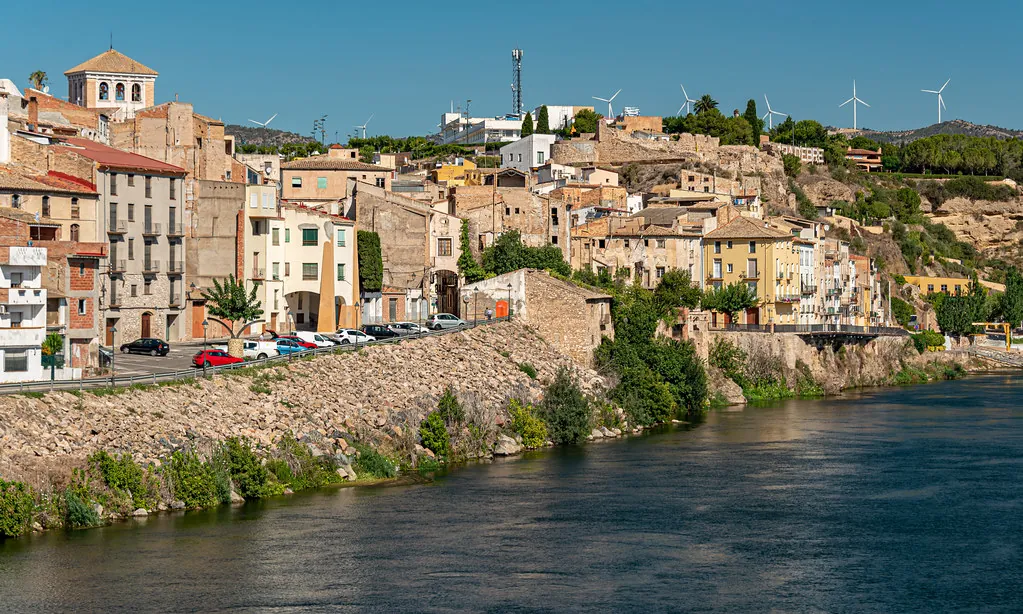
Arrive from Reus airport—fifteen minutes on the C-14 if the lights are kind—and the temperature drops three degrees as you leave the coast. Hazelnut orchards replace hotel billboards; stone terraces replace roundabouts. The village spreads along a saddle of land beneath the hump-backed Serra de l’Argentera, its terracotta roofs interrupted by the occasional aluminium greenhouse. Nobody calls it “unspoilt”; they just never got round to spoiling it.
Vilanova’s grid is two main streets and four cross-lanes. Parking is wherever the verge is wide enough. House numbers jump about because they were assigned chronologically, not geographically—number 54 sits next to 17, which is handy trivia when you are hunting for the only lettable cottage with a pool. Mobile signal collapses in the lower lanes; download offline maps before you set off for bread.
Shops keep farmer time: open 08:30-13:30, closed until 17:00, open again until 20:00. The bakery window displays the same four products each morning: tall loaves with thick crusts, coques de recapte (aubergine-topped flatbread), almond biscuits the size of saucers, and a pyramid of fresh hazelnuts still in their frilly husks. Buy before 10:00 or the locals have cleared them out.
The Monastery that Invented the Horizon
Everything here once answered to the Monestir d’Escornalbou, a fortified Benedictine complex that squats on the ridge two kilometres above the village. From the bakery door you look up and see its square tower pinned against the sky like a compass needle. The climb is 160 metres of steady gradient on a stony track—thirty-five minutes if you are fit, fifty if you stop to photograph orchids. Take water; the only fountain on the route was capped in 2018.
Inside, the cloister smells of cypress and old paper. Eduard Toda, a diplomat with a magpie eye, bought the ruin in 1910 and stuffed it with Gothic choir stalls, Persian tiles and a first-edition Cervantes he later swapped for land rights. Guides speak Catalan first, Spanish second; English is tackled cheerfully if there are enough visitors to justify switching language. Entry is €5, cash only, exact change smiled upon. Views from the bell-step run from the Ebro delta to the high Pyrenees—on lucid winter days you can pick out the snowy silhouette of Canigó 180 kilometres north.
Pedals, Boots and Rabbit Stew
The village sits on a lattice of farm lanes mapped by the Baix Camp council. Pick up the free leaflet at the ajuntament: four circular walks, 6-14 km, colour-coded with times that assume you stop to swear at the grazing sheep. The hazelnut route (Ruta de les Avellanes) is the flattest, circling through orchards and past a 12th-century charcoal-making pit now colonised by ferns. Spring blossom is late here—expect white drifts in mid-April rather than March—and the farmer will let you pick windfall nuts in October if you ask in Spanish, not loud English.
Road cyclists rate the back road to Riudoms: 23 km of silky asphalt, total climb 280 m, traffic one tractor per hour. Hire bikes in Reus (€18 a day) or bring your own; the village has no shop capable of replacing a ruptured inner tube. Mountain bikers head south into the Montsant foothills where limestone tracks are marked with cairns and occasional unexploded ordnance signs—civil-war trenches, not current war, but still worth obeying.
When legs tire, the only bar on Plaça Major serves a three-course menú del día for €14. Monday’s stew is conill—rabbit with hazelnuts and tomato. If that feels too Watership Down, request pollastre instead; the owner keeps frozen chicken thighs for fussy teenagers and visiting Brits. House wine comes in a 500 ml carafe and tastes better after the second glass, which is roughly when you notice the television is showing a Catalan soap from 1997.
Winter Fires and Summer Silence
January brings Festa de Sant Antoni. Locals drag pruned olive branches into the square at dusk, build a three-metre pyre and roast onions in the embers while a brass band plays something between a hymn and a dirge. Dogs, geese and one bemused alpaca receive a priest’s blessing; spectators drink sweet moscatell from plastic cups. The event finishes by 22:00 because, as the mayor admits, “we’re cold and we’ve run out of wood.”
July’s Festa Major is louder: disco on Friday, sardana dancing Saturday, paella for 400 on Sunday afternoon using a pan the size of a satellite dish. Book accommodation early; every cousin who left for Barcelona returns with children and inflatable mattresses. August is different. Half the houses shutter, the bar reduces its hours, and the village reverts to a slow soundtrack of cicadas and the occasional thud of falling almonds. Temperatures can reach 38 °C; without air-con you will sleep on the tiled floor like the locals did before electricity.
How to Do Nothing Productively
Come in late September and you can buy hazelnuts straight from the cooperative at €4 a kilo, still in their shells. They’ll lend you a handheld cracker shaped like a garlic press; crack enough for the flight home and the plane smells like Nutella. October light is sharp, ideal for photography; by November mist pools in the valley and the monastery floats above it like a cancelled appointment.
Rain arrives suddenly in spring—March can dump 80 mm in two days, turning farm tracks to peanut butter. The village has no taxi rank and buses are school-only. If you drink too much of that carafe wine, be prepared to walk home or phone the one driver who moonlights after 22:00 (€15 flat fee, WhatsApp only). Sunday everything shuts; self-cater or drive 18 km to Cambrils where Lidl sells Marmite for the desperate.
Leave on a Tuesday morning and the bakery will be open again. Buy an almond biscuit for the road, then climb the monastery track once more. Half-way up, look back: hazelnut terraces fall away below, the sea glints to the south, and the village is a handful of roofs giving nothing away. It is not hidden, not undiscovered, simply placed where the hurry ran out of road.